

Remember Afghanistan?
It's easy to forget for some, given the whirlwind of world news and Washington scandal hijacking the headlines.
But there are still about 14,000 U.S. troops in Afghanistan, a level lower than the nearly 100,000 in 2010, but higher than the 2015 drawdown level of about 9,800.
They've been fighting a war that has lasted 17 years for Americans — and decades for Afghans.
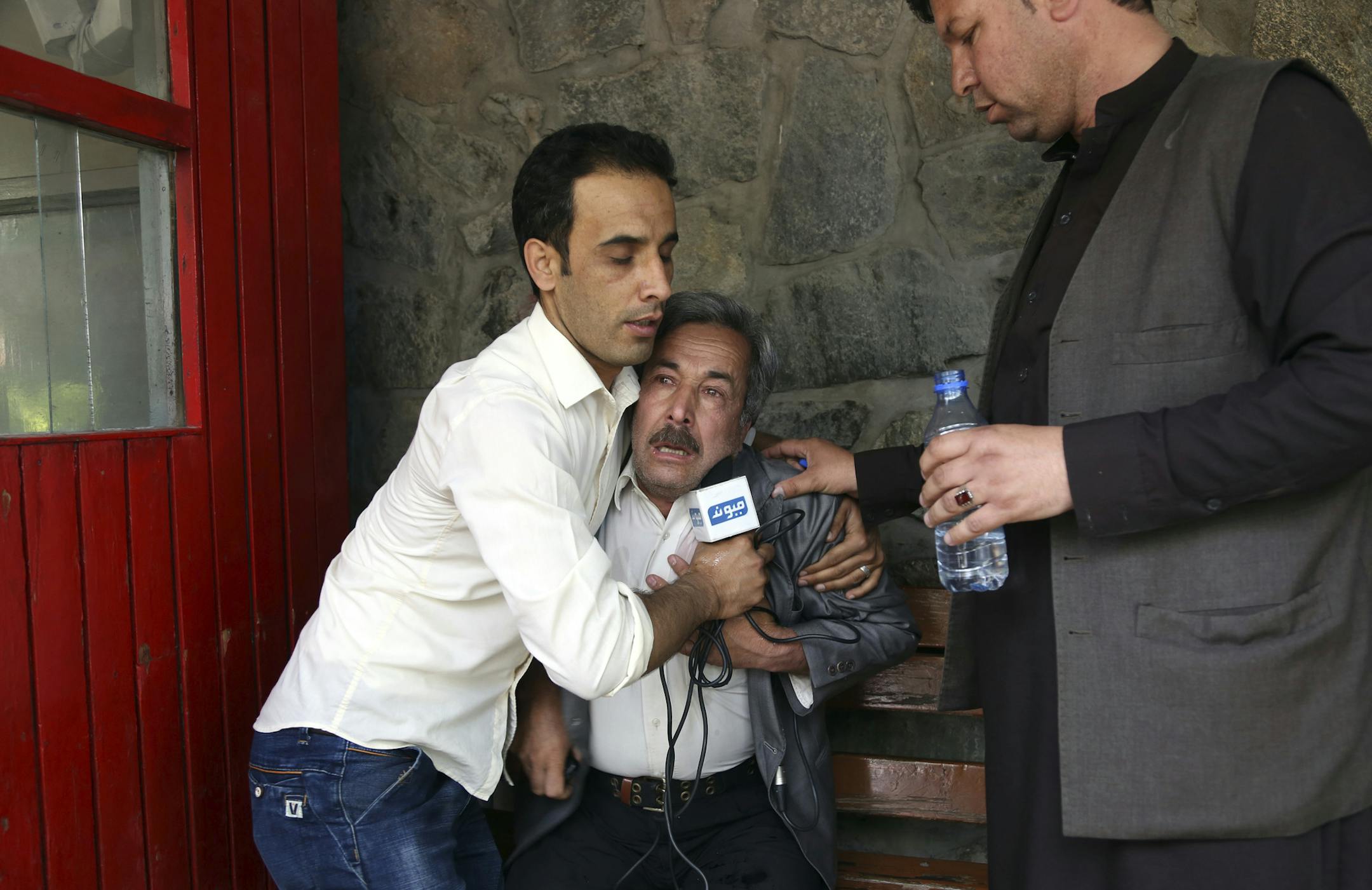
The country's conflict pierced the consciousness of some on Monday after a U.S. service member was killed in eastern Afghanistan and after nine journalists were slain by a suicide bomber in Kabul. A 10th was shot in a separate attack in what was the deadliest day for journalists since 2002.
It wasn't the expected extremists in the Taliban claiming credit for killing reporters, but an offshoot of the Islamic State of Iraq and Syria, a scourge well-known to the region but relatively new to the enduring, if not endless, Afghan conflict.
It was the second ISIS blast in eight days: Monday's assault claimed 25 victims overall, and 57 Afghans lining up to register to vote were killed just a week prior. Because both the Taliban and ISIS indiscriminately kill, conflating the two is understandable. But the terrorist organizations "are generally in competition with each other," said Frances Z. Brown, a fellow in the Democracy and Rule of Law Program at the Carnegie Endowment for International Peace.
Both target journalists in part because the country's "independent media is a genuine success story of post-2001 Afghanistan," Brown said in an e-mail exchange. "With support from the international community, the Afghan media has developed into a vibrant, professional sector that is widely utilized and trusted." In fact, an annual survey of Afghans suggests that the media is behind only religious figures in who the public trusts. So terrorist groups, Brown believes, "want to undermine this visible, authentic manifestation of progress and modernity in Afghanistan."


