

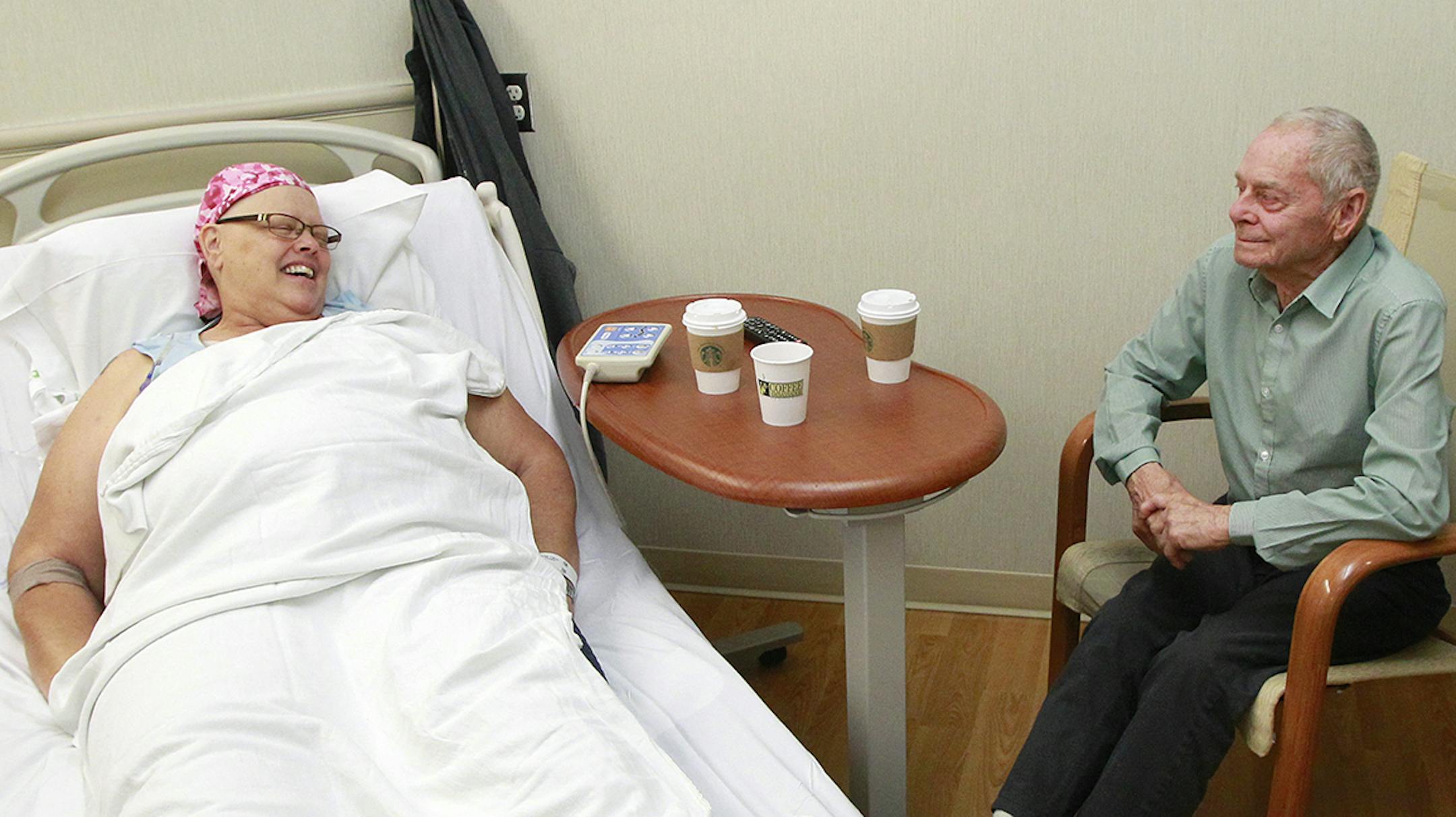
SAN DIEGO – She first noticed the odd rash in February and figured it probably had something to do with her clothing.
A mammogram showed no internal warning signs, so Elaine Deboe carried on with her busy life working for Caltrans and enjoying time with her large extended family. "I didn't think too much of it," she said.
By the fall, the rash had spread, taking on a bumpy, orange-peel texture. Her doctor referred her to a dermatologist who diagnosed inflammatory breast cancer.
Suddenly, what seemed like an annoyance was an aggressive threat. "The toughest part has been not knowing what my outcome is going to be," Deboe, 56, said.
She is among a few with this particularly insidious form of breast cancer that presents not as a lump embedded deeply in tissue but as an anomaly on the surface.
"Inflammatory breast cancer presents more with a reddening of the skin of the breast, a swelling of the skin of the breast, kind of a heaviness, sometimes a tenderness of the breast," said Dr. Thomas Buchholz, medical director of Scripps MD Anderson Cancer Center.
According to the National Cancer Institute, inflammatory breast cancer makes up 1 to 5% of all invasive breast cancer cases. The American Cancer Society estimates the disease will be diagnosed in 3,000 to 13,500 American women this year.
In 2006, Buchholz was part of a team at M.D. Anderson in Houston that founded the first center dedicated to studying why this relatively rare condition surfaces in some women but not others. More than a decade later, Scripps, in a collaboration with Anderson, is starting its own center with a goal of sharing data.


