

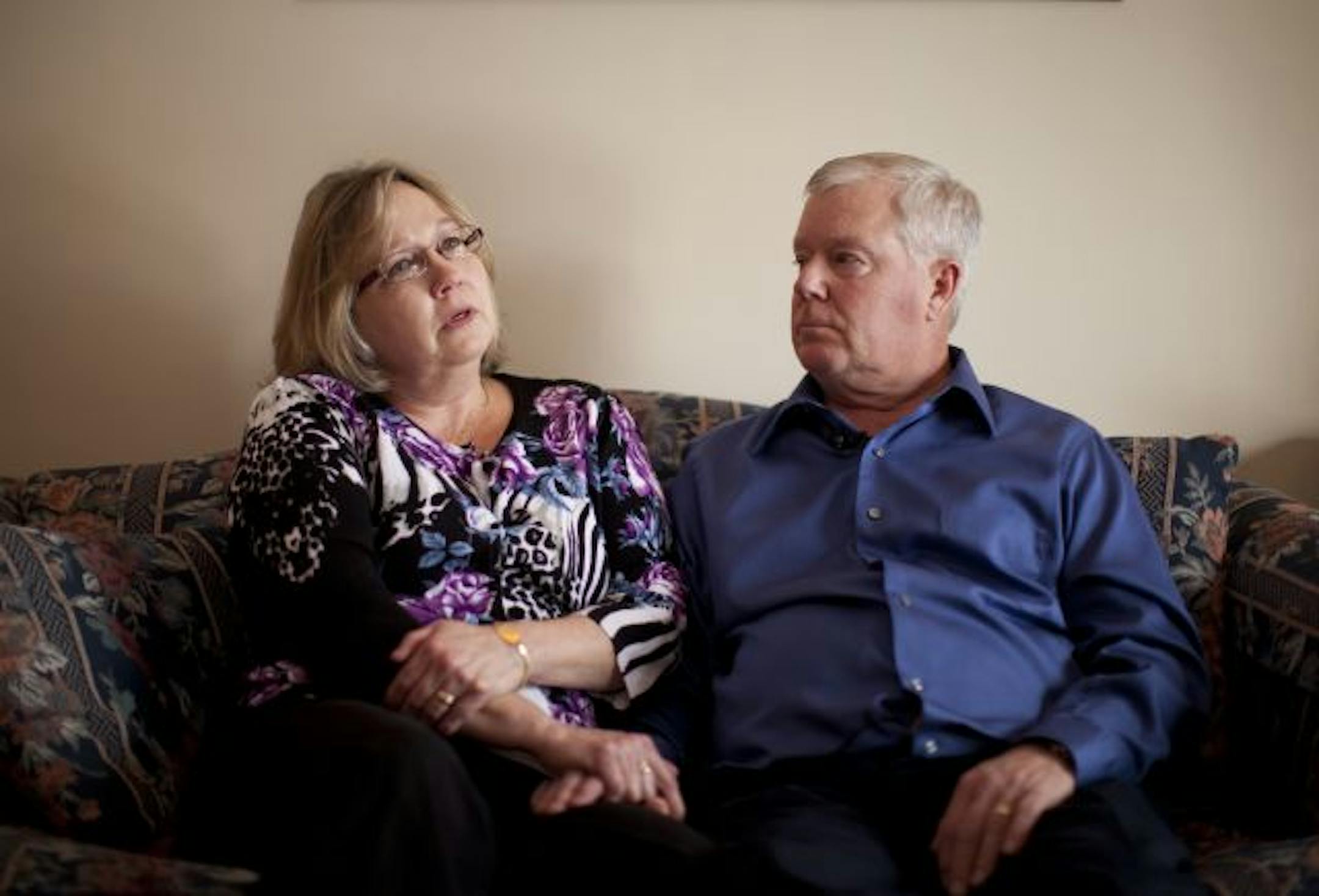
Tom McCartney suspects it was the children's toys on the front lawn that explain why a serial rapist chose to terrorize his family on a stormy June night in 1975.
McCartney and his wife, Janet, were watching TV when they turned to see a man with a sawed-off shotgun and a mask standing in their living room. The man, John Rydberg, ordered the newlyweds to bind each other's hands and feet; he then pulled pillow cases over their heads and raped them while their 3-year-old son slept upstairs.
In emotional testimony Thursday, Tom McCartney recounted the chilling incident in vivid detail before pleading with a federal judge to consider the plight of rape survivors before reaching a verdict in a trial that could decide the constitutionality of the Minnesota Sex Offender Program (MSOP).
At one point, McCartney swiveled in his witness chair and asked U.S. District Judge Donovan Frank, "If you're really convinced that you want to let these people out, then why don't you take them home with you? Why should we be the guinea pigs?"
The account by McCartney, the first assault survivor to testify since the trial began five weeks ago, is part of the state's effort to show that indefinite confinement of certain sex offenders in high-security treatment centers is justified, given the violence of their offenses and the deep nature of their disorders. At the same time, the state is trying to demonstrate that it operates a viable treatment program based on sound clinical methods — and is not just re-punishing offenders by confining them after their prison terms.
A group of sex offenders has sued the state as a class, alleging that their indefinite confinement, combined with a lack of regular court review of their cases, violates their constitutional right to due process. If Frank rules in favor of the offenders, he could order dramatic changes to the 20-year program, including an accelerated process for discharging offenders and ongoing court oversight.
In a review last year, a panel of four authorities on sexual deviancy concluded that some of MSOP's offenders met the legal criteria for discharge into the community. The experts said they were not being released because the state's discharge process had become overly bureaucratic and political, among other reasons.
Offenders who took the witness stand in earlier testimony described an atmosphere of hopelessness, in which the program's failure to discharge offenders contributed to their unwillingness to cooperate in treatment. Only three offenders have been provisionally discharged from the program in its 20-year history, and no one has been completely released.


