

Ramstad: Minnesotans’ moderation, not radicalism, is working against Trump’s immigration crackdown

Minnesotans fought back from the bottom up, not the top down. The resistance has not been overly organized and yet incredibly disciplined.

Columnist Icon
The Minnesota Star Tribune
January 31, 2026 at 1:00PM
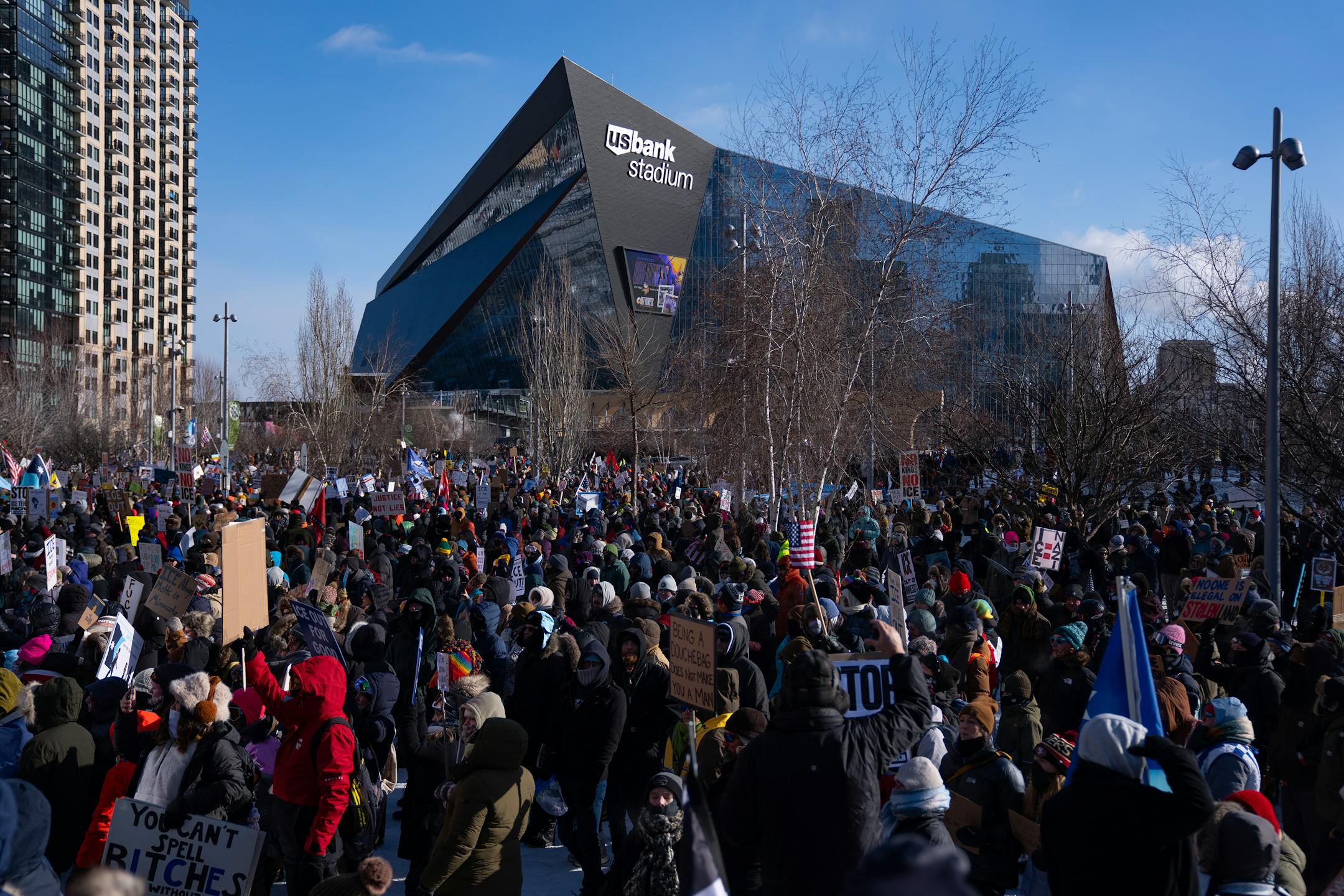
Thousands of people gather Jan. 23 at Minneapolis Commons, with temperatures around minus 10 degrees, to protest the Trump administration's immigration crackdown. (Alex Kormann/The Minnesota Star Tribune)

So much was wrong from the start of the Trump administration’s crackdown on undocumented immigrants in Minnesota — which went far worse because of how it was carried out — that it’s easy to overlook something that has gone mostly right: the resistance to it.

This could change because at any time a person or an organization can do, or even just say, something to swing public opinion.

But two months into Operation Metro Surge, I predict future historians, political scientists and even business executives will study and model how everyday Minnesotans outsmarted and discombobulated federal agents and the vast propaganda machine supporting them.

After every column I’ve written about this crackdown, I’ve gotten emails from some readers saying the problem is not the Border Patrol or Immigration and Customs Enforcement agents, it’s Minnesotans.

They blame Gov. Tim Walz, Minneapolis Mayor Jacob Frey, sanctuary cities, separation of power ordinances and the people out there witnessing and protesting the raids and interrogations of ordinary people. They parrot President Donald Trump’s criticism that Walz is fomenting violence against federal agents.

Walz does not speak perfectly, but he has never encouraged violence. His critics portray Walz’s defense of people gathering to watch, record and yell at federal agents as incendiary. He is neither the problem nor the person who deserves most of the credit for the pushback.

Minnesotans have produced a bottom-up movement, less organized and more organic than critics say. Yet it has remained incredibly disciplined and focused.

As I have popped around various news conferences, protests and just talked with people, I’ve heard Minnesotans speaking in meta-like terms.

They say they’re angry. Then they say they recognize they are angry. And then they say they are the angry characters in a bigger drama.

They’ve expressed caution about how they will be perceived and about going too far.

“I’m terrified that people are going to misconstrue our intentions to be some political lightning rod,” said Andy Shannon, co-owner of Bench Pressed, a letterpress and stationery store in south Minneapolis. We talked the day before his shop joined hundreds of small businesses by closing in a protest Jan. 23.

His wife, Jane, who co-owns the business, said they decided to close because they knew some immigrant business owners near them were afraid of closing, fearing federal agents would target them for retribution.

This awareness about perceptions is just like President Donald Trump, whose approach to his job so often seems shaped by his experience on reality TV — always mindful of the audience and building drama for the next episode. In rallies, news conferences and speeches, Trump frequently “weaves” away from his talking points to muse about how he will be portrayed in the media or assessed by voters.

The success of the resistance in Minnesota has vexed Trump, supporters and conservative pundits. On the day federal agents shot and killed Alex Pretti, National Review Editor-in-Chief Rich Lowry posted on social media, “The Left is in a cycle of constant self-radicalization — the resistance to ICE creates the predicate for tragedies that are used to justify ever-more resistance and the demand for the de-facto nullification of federal immigration law in Minneapolis.”

It was a complete misread. Only a few extreme voices in Minnesota call for no deportations or complete defiance of immigration laws. And there’s nothing radical about objecting to thousands of masked federal agents marauding through shopping mall parking lots asking people to prove they are citizens — and shooting people who don’t like what they’re doing.

With the help of time and calm, smarter people than me will unpack why the resistance to this crackdown succeeded. But here’s a few early ideas.

First, the reasons for the crackdown were never legitimate. Fraud and crime became distorted pretexts for what amounted to political theater chiefly aimed at influencing the November election, which Trump seems desperate over. He has predicted he will be impeached again if his party loses control of Congress.

Second, the leaders of the crackdown were very bad at their jobs. Homeland Secretary Kristi Noem, Border Patrol Cmdr. Greg Bovino and ICE leader Marcos Charles will be case studies in business schools and law enforcement academies of leadership failure.

Third, Minnesotans have a long history of community organizing. It has been fine-tuned in the 2020s by the George Floyd slaying and riots, and frothy legislative sessions.

Fourth, thanks to social media, selfies and vast arrays of security cameras, everyone is on stage now in public and they know it. The constant chronicling of federal agents’ actions undermined them completely.

But I think the most important reason was put best by Andy Shannon of Bench Pressed:

“Because the community that’s here is going to be the community that’s here long after they’re gone,” he said.

Sign up here to follow Evan’s columns by email.

about the writer

about the writer

Evan Ramstad

Columnist

Evan Ramstad is a Star Tribune business columnist.

See Moreicon

More from Business

See More
card image
Leila Navidi

Whether damage from a storm or general wear and tear from age, replacing or repairing your roof can be costly.

card image
card image