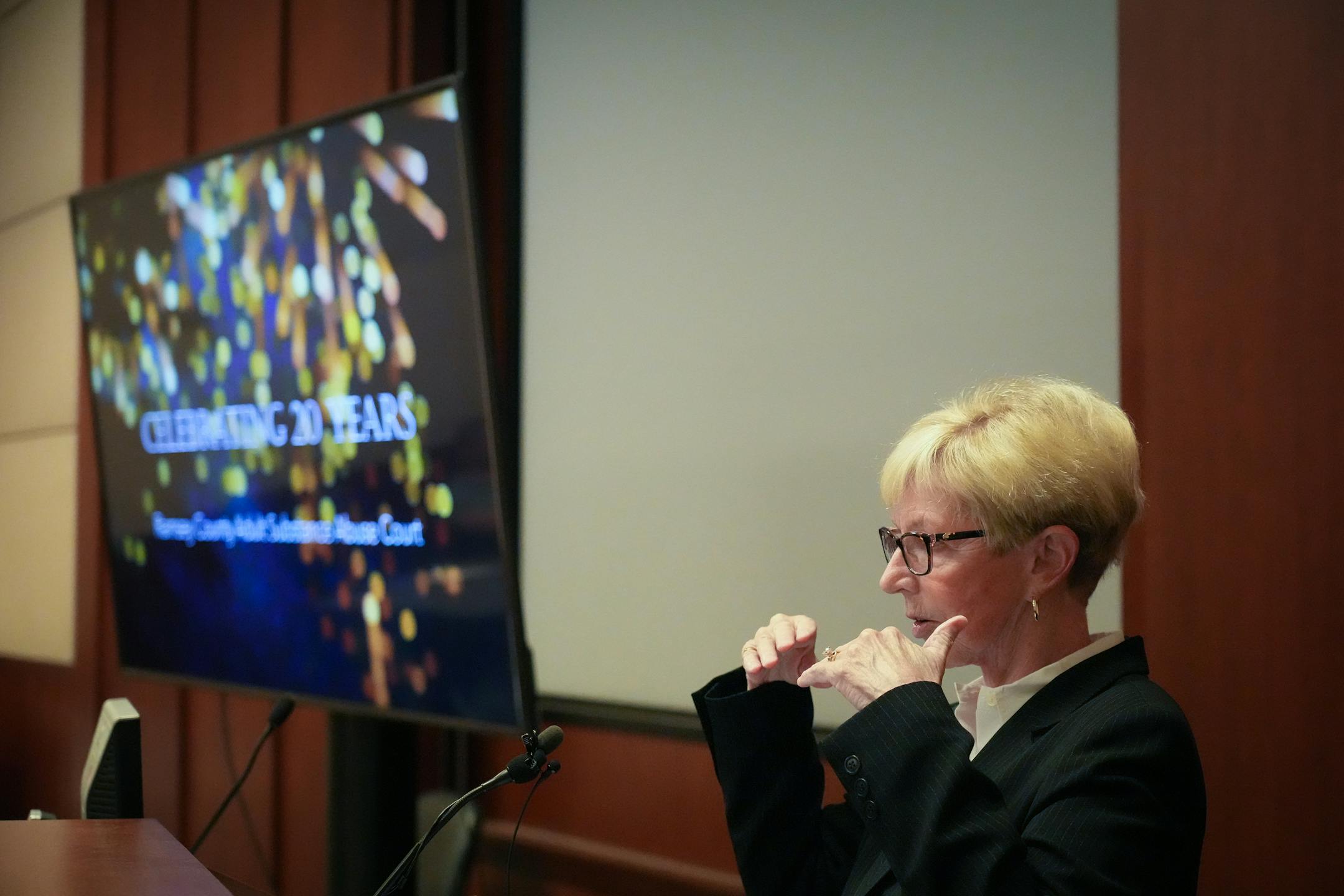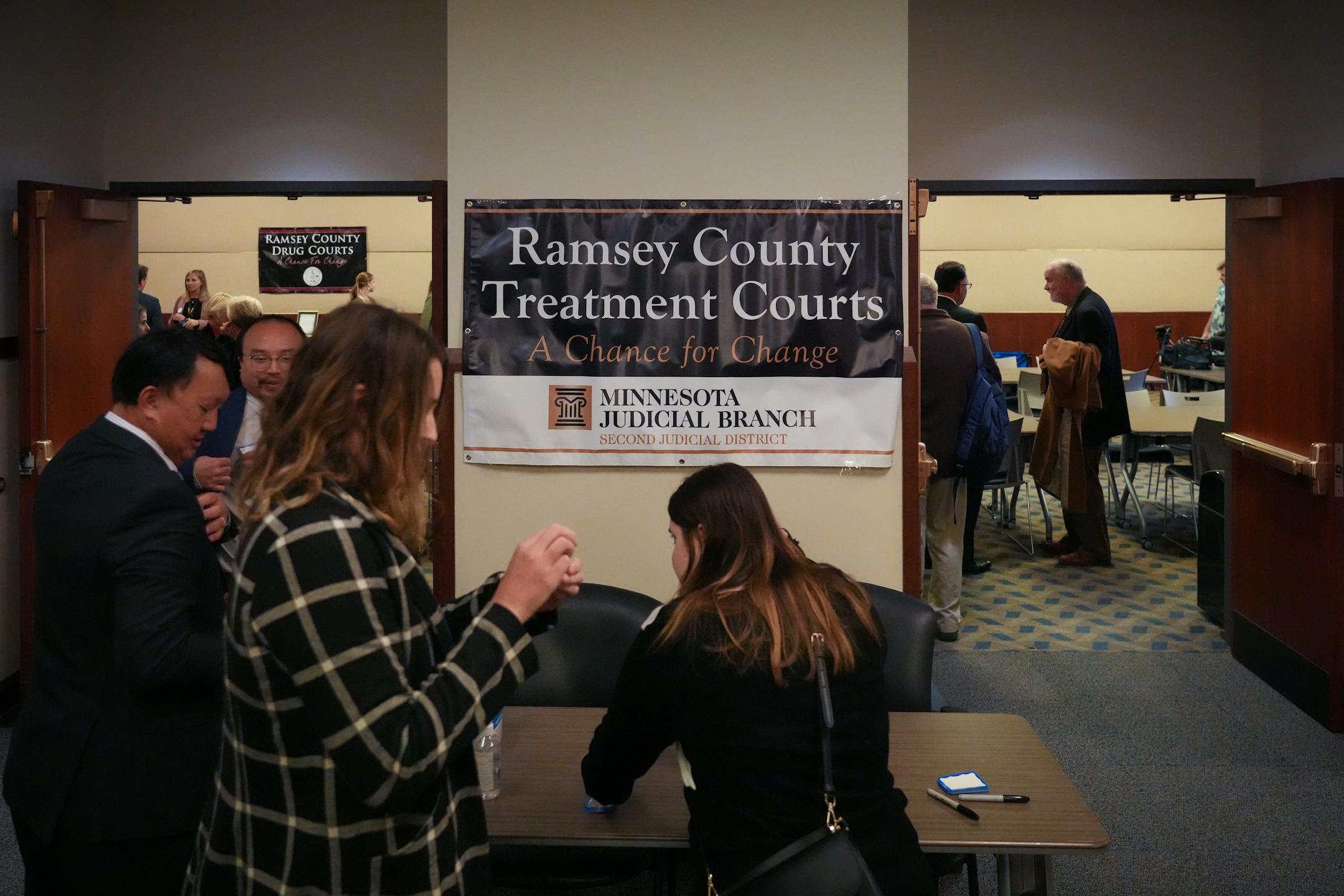
Vilye Yang knows how the Ramsey County drug court works. He counts himself among the hundreds who veered off the dangerous path of addiction thanks to it.
As he stood before the group of court workers and fellow addicts in recovery Friday, Yang, 37, told the story of how he was born and raised in St. Paul as the son of Laotian immigrants. Recreational drug use with friends, he said, ballooned into a decadelong addiction that felt like "a very long and lonely road."
That road soon landed him in jail, where a representative of Ramsey County's Adult Substance Abuse Court offered him a way out in return for entering its treatment program. It was there that he learned how to wash clothes, budget his food, care of himself, and most important, stay clean.
"When I was in jail, and when I was in treatment and in drug court, [the] only thing I was thinking about was, 'Please God, just give me a little bit of normal. I just want to have a normal life,'" Yang said. "I just want to live a normal life, normal job, and just for things to be normal. It took a long time for that to really happen."
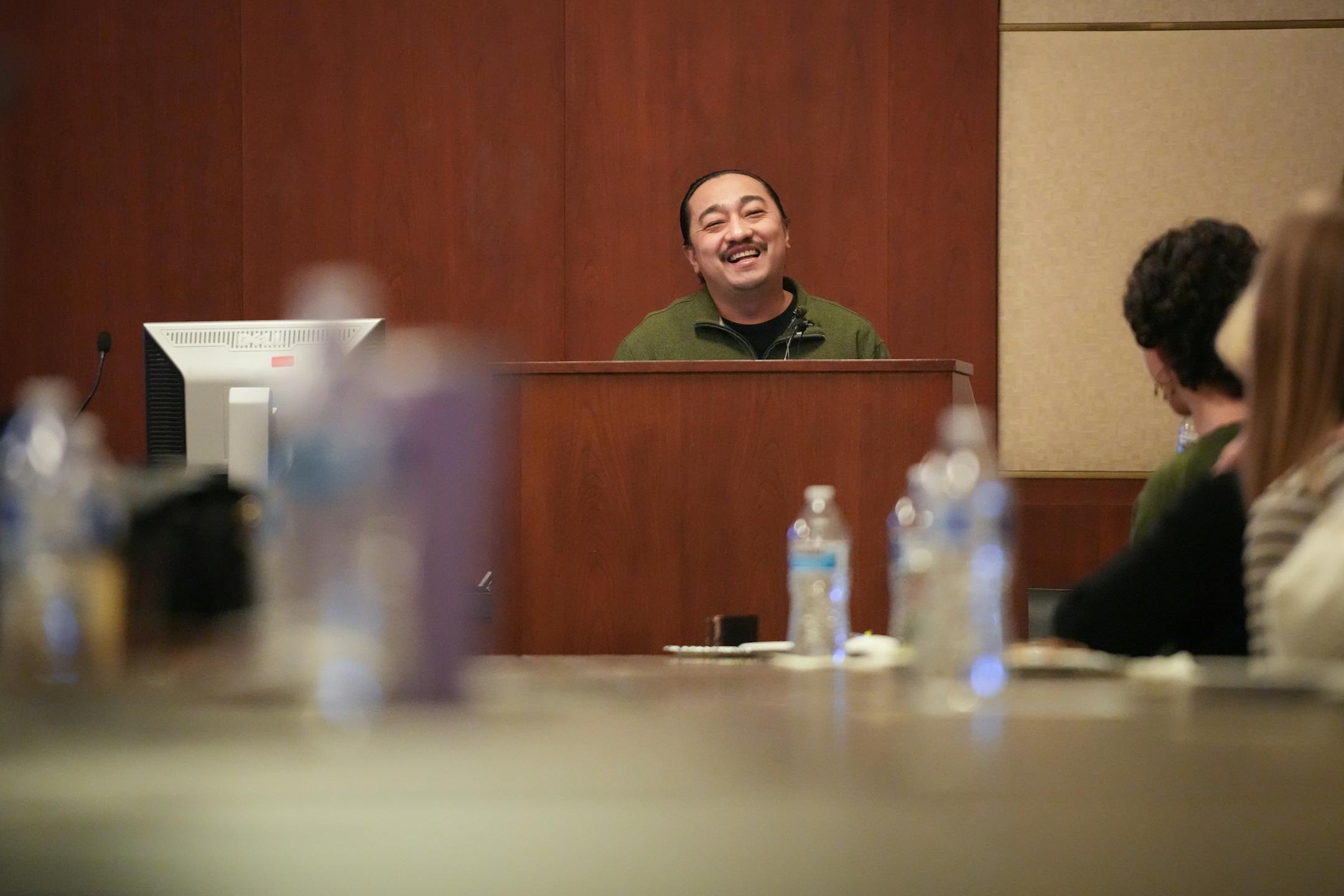
Yang was among dozens gathered Friday in the Ramsey County Courthouse to celebrate the 20-year anniversary of the Adult Substance Abuse Court, a drug court that partners substance use offenders with social workers, probation officers and others in order to help offenders find sobriety.
Old and new graduates gathered for the event, catching up on each others' lives and to hear testimonials about the court's effectiveness. Chief Ramsey County District Judge Leonardo Castro said the court is critical for helping people with substance abuse and mental health disorders.
In 2020, he said, more than 91,000 people died from drug overdoses in the United States. In the country's prisons, 65% of all inmates have a substance abuse disorder, and $80 billion is spent on incarceration annually. He cited federal data that shows participating in treatment court can reduce offenders' chance of recidivism by up to 26%.
"So it doesn't matter what angle or what perspective you have as it relates to treatment courts ... [they] are necessary, and they work," Castro said.