2:11
2:11A week after the threat of a teachers strike became all too real in St. Paul, members of the public — from parents to former school board members to minority group advocates — finally had their chance to speak Tuesday.
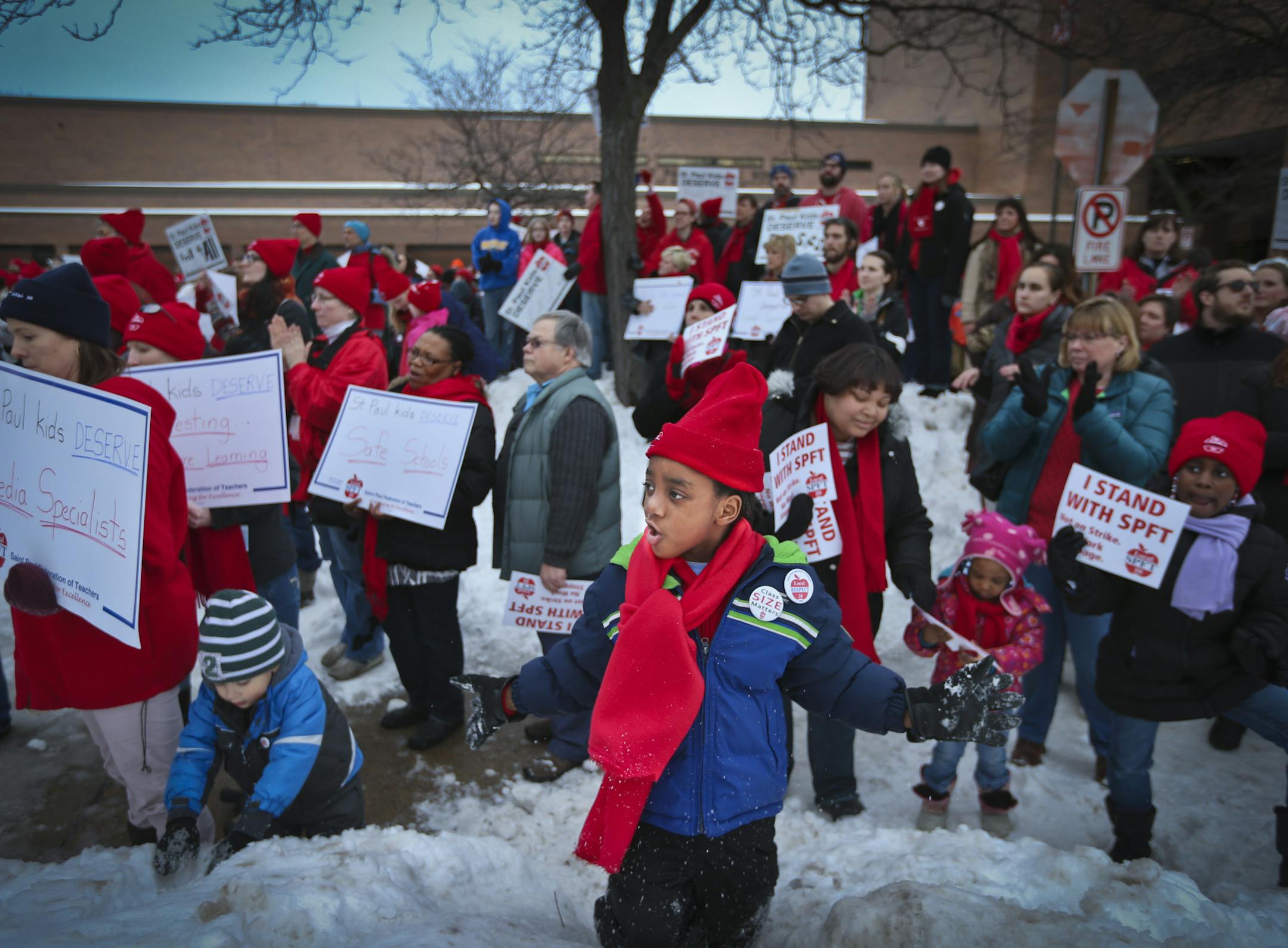
Parents rallied with scores of union members outside school district headquarters, several offended by a letter sent last week by Superintendent Valeria Silva laying out what could happen if teachers went on strike, decrying her proposed actions as "fear tactics."
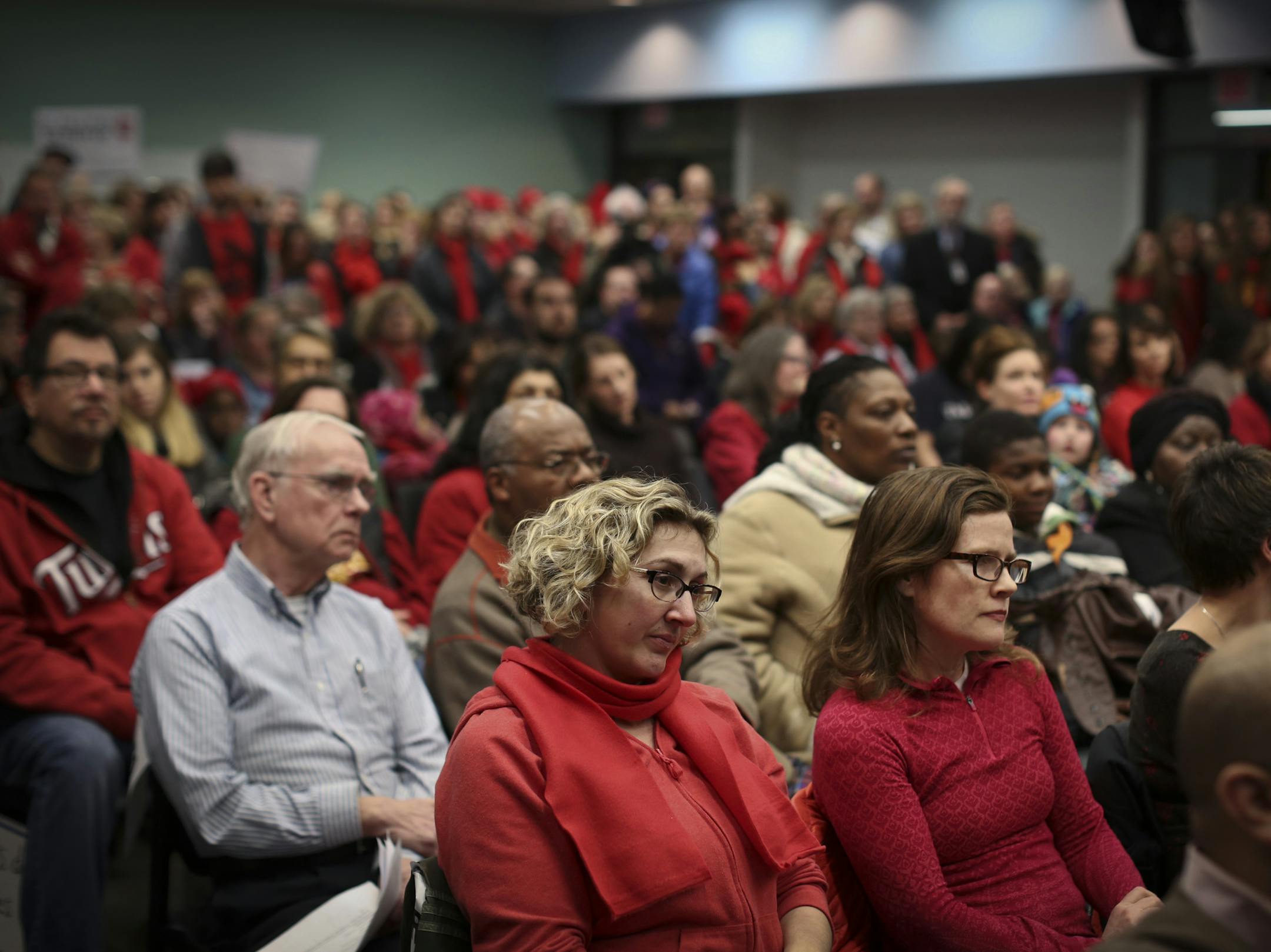
Inside the building, during the school board's monthly meeting, several of the parents spoke, too, in support of teachers and in opposition to the district, before giving way to others — black community leaders among them — who struck a more conciliatory tone, urging both sides to do all they could to stay at the table and avoid a strike.
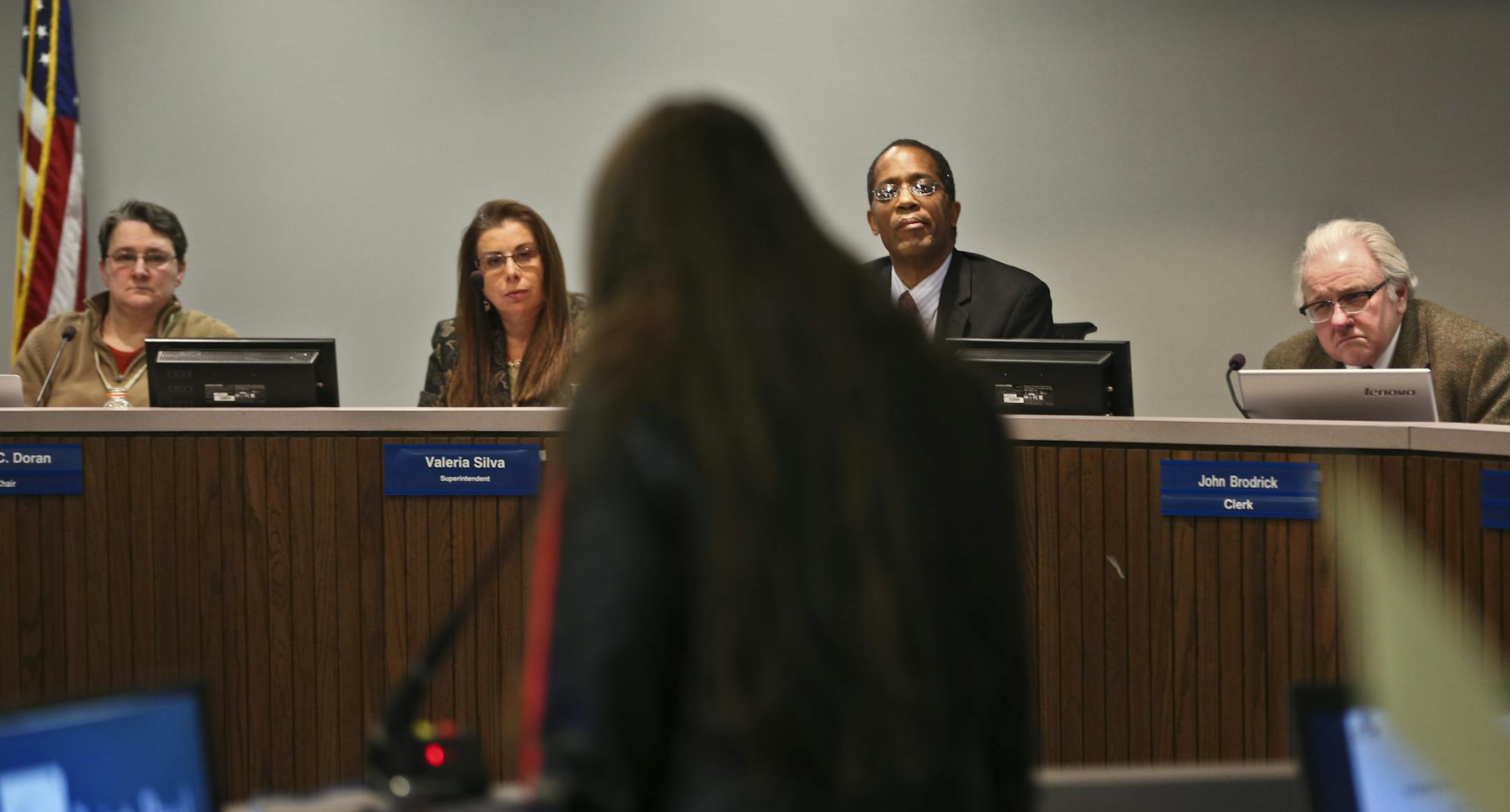
After listening for an hour, the school board tabled a resolution approved in committee a week ago that would have set the stage for school closings, the possible extension of the school calendar and layoffs of nonessential employees if teachers were to walk out. The board's vote came without discussion and was unanimous.
School Board Member Louise Seeba, mindful of an all-important mediation session set for Thursday between the district and the St. Paul Federation of Teachers, said that postponing action on the resolution gave the two sides the best chance for productive talks.
Thursday's mediation session took on added importance last week when the union's executive board agreed to call for a membership vote next Monday on whether to give leaders permission to call a strike. But Mary Cathryn Ricker, the union's president, said then that the strike-authorization vote also could be called off if the two sides make significant progress on union goals Thursday.
District cites rising costs
But while the board put off action on the strike-preparations resolution, district administrators on Tuesday also put finer details on what Silva has described as an unaffordable union contract proposal. The total cost of the two-year package also rose in the process, from the $150 million cited a week ago to $158.6 million, including $31 million for the class-size reductions coveted by the union.
Jackie Turner, the district's chief engagement officer, also said that the class-size caps sought by the union would result in overcrowding at high-demand schools such as Capitol Hill, Crossroads Montessori and Farnsworth Aerospace, forcing as many as 196 students in the case of Capitol Hill to have to go to another school.