

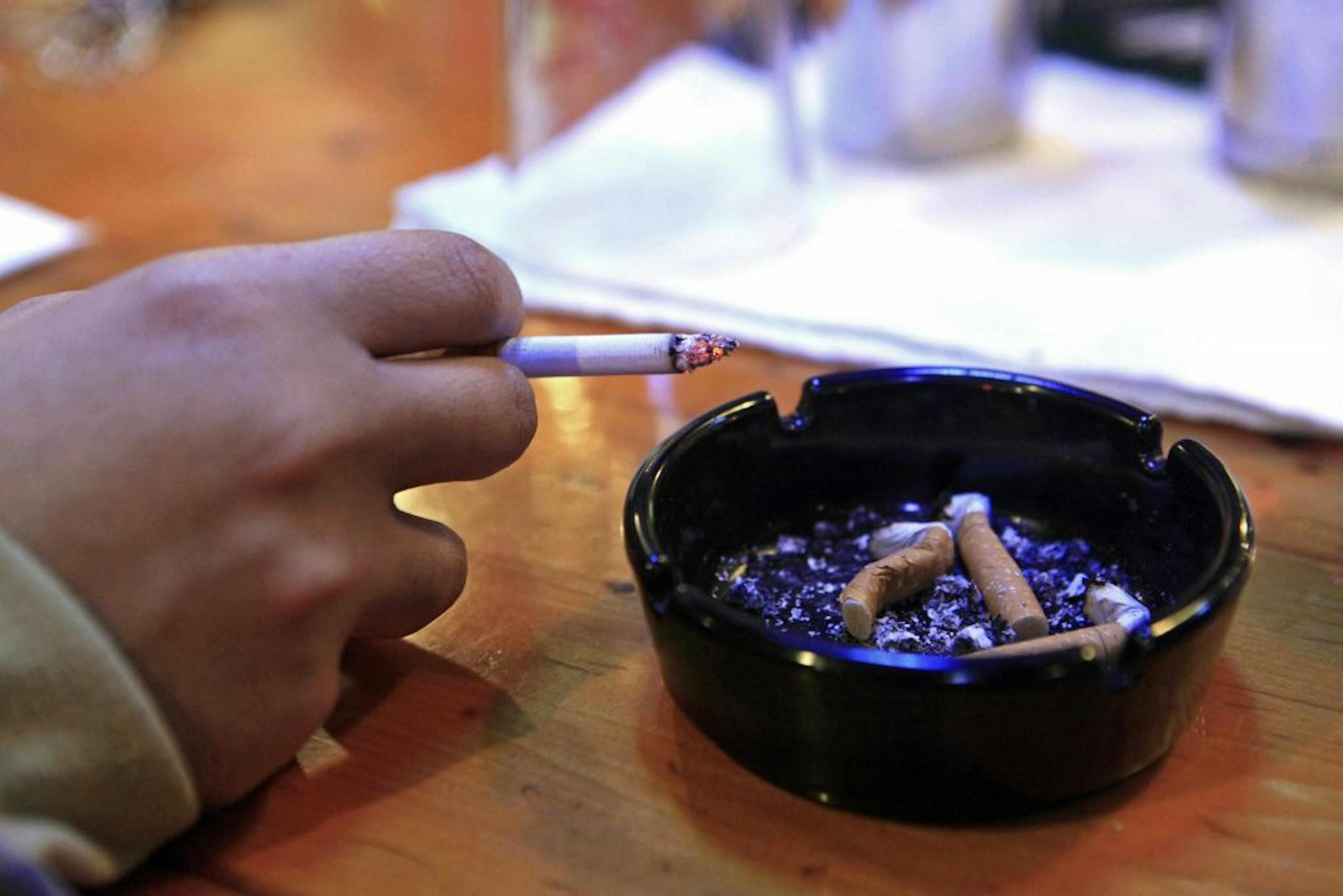
A poised University of Minnesota student testified at the State Capitol this week about the impact her father's death to esophageal cancer had on her life. He was a smoker who died prematurely when she was just 14.
"He wasn't there when I graduated from high school," said Kaila Narum of Andover. "And I won't get a father-daughter dance at my wedding."
Narum was the youngest and most powerful of nine witnesses who urged legislators to raise cigarette taxes as a matter of public health. It's a measure supported by this page; numerous studies show that high cigarette prices motivate adults to cut back or quit smoking -- and deter young people from ever starting.
For some of the same reasons, the 2013 Legislature also should raise taxes on alcohol sales. Alcohol-related costs to the state are staggering -- millions more than the tax revenues currently collected from sales, according to the Minnesota Department of Health.
While the tobacco lobby is formidable, Minnesota's liquor lobbyists have seemed invincible. Two years ago, they helped shoot down a two-penny-a-drink statewide liquor tax proposed by St. Paul Mayor Chris Coleman. The tax would have raised $48 million a year, some of which Coleman proposed using to fund the public cost of the Vikings stadium.
Gov. Mark Dayton wants to raise the state's cigarette tax by 94 cents per pack, which he says will generate $370 million in revenue over two years even with a projected decrease in total sales. But Rep. Ann Lenczewski, DFL-Bloomington, is calling for a $1.60-per-pack increase, which would raise $440 million. In the Senate, Minority Leader Carla Nelson, R-Rochester, is proposing a $1.29-a-pack hike.
A coalition of 30 health and other groups, including the Mayo Clinic and HealthPartners, support the tax hikes. They say increasing prices by at least $1.50 per pack would save more than 25,000 lives and about $1.65 billion in long-term tobacco-related health costs to the state. Michael Bromelkamp, a CPA and principal with Olsen Thielen in St. Paul, told the House Taxes Committee that Minnesota employers lose nearly $3,400 for every employee who smokes because of higher health care costs, missed work and lower productivity.
Minnesota's tobacco statistics are grim: 5,100 residents die annually from tobacco-related illness, some 53,000 high school students smoke daily and 77,000 young people will try tobacco this year. Dr. Courtney Jordan Baechler, a cardiologist, told lawmakers that one-third of those who become regular smokers will eventually die because of it.


