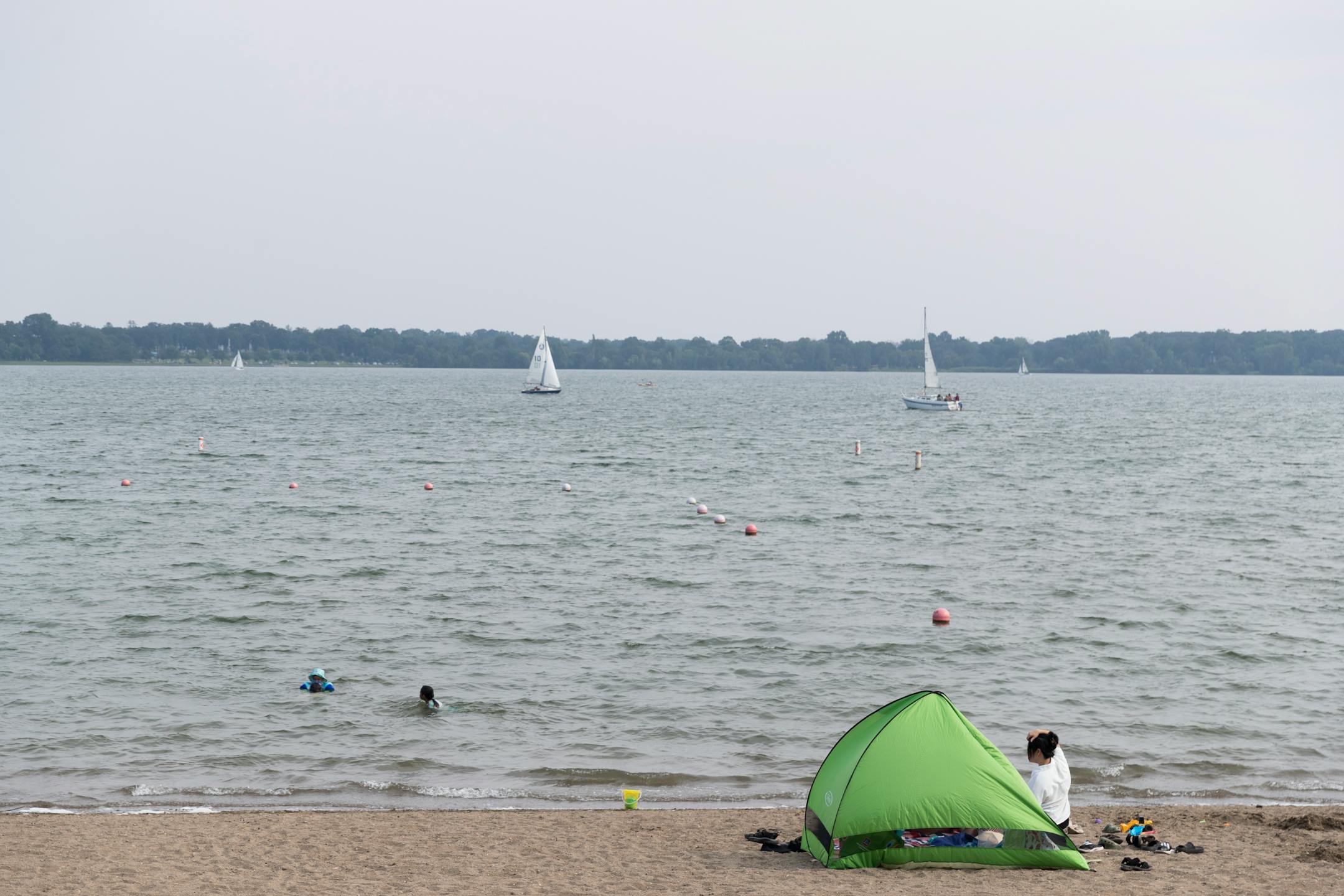
Rainier summers are closing Minneapolis beaches more often as bacteria levels spike

Five beaches have been closed at least once this year. More likely to come in August, the month when closures are most common.

The Minnesota Star Tribune
August 6, 2025 at 10:00AM
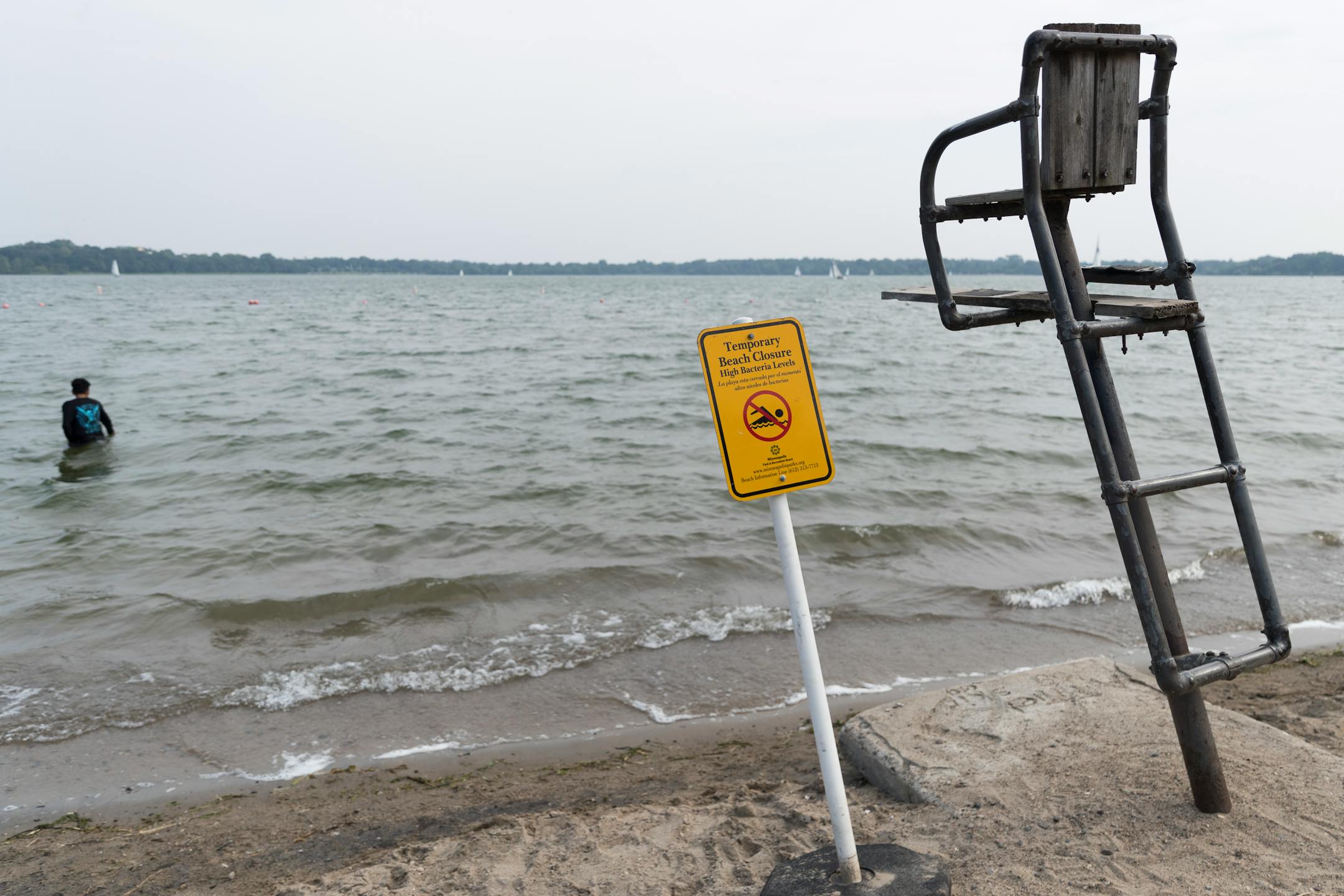
A sign indicates a beach closure at Bde Maka Ska North Beach in Minneapolis on Saturday. (Rebecca Villagracia/The Minnesota Star Tribune)

Another heat wave is on the way, but Minneapolis residents hoping for relief at the city’s beaches may find those efforts frustrated by another staple of summer in the city: beach closings.

Nearly half of the 12 beaches at Minneapolis lakes have been closed at least once so far this season, some remaining closed for weeks, after testing indicated the possibility of waterborne illnesses.

On Tuesday, the Minneapolis Park and Recreation Board announced two beaches remained closed for the second week in a row. Lake Hiawatha beach is now on its sixth week being closed.

Closures like this have become more frequent in recent years, especially after heavy rains, according to a Star Tribune analysis. More rain means more runoff that carries bacteria from the waste of people, pets or wildlife into the lakes.

“If we’re closing a beach, we are doing that because we believe that there is a higher chance that people could get sick,” said Rachael Crabb, the Park Board’s water resources supervisor.

Last summer featured the highest number of beach closures in the past 11 years, with a total of 15 — some lasting just a day or two and others lasting months. It’s no coincidence that 2024 also had the most inches of summer rainfall the past 11 years.

Last year was unusual in another respect: bacteria levels remained elevated over extended periods of time, leading to longer closures, according to data from the Park Board’s weekly water quality testing program.

Heavy rainfall storms, like those on July 27 and July 28 this year, are becoming more common with climate change, and bacteria levels in lakes spike as a result.

These lakes get 5 to 7 million visitors each year, and beach closures are frustrating to visitors.

“I like to be proud of my state and the nature in it,” Adam Juntenen said on a sunny Saturday afternoon while his dog splashed in the water at Bde Maka Ska. “I would hope that they would try to figure out what’s causing that and stop it.”

Chao Yu, a Minneapolis resident, sees the lakes as a getaway from the busy city, especially in the warmer months.

“We don’t really have that long for summer,” Yu said. “So [having more beaches closed] definitely would be a little bit sad.”

People swimming at Bde Maka Ska North Beach on Saturday, despite it being closed due to elevated bacteria levels. (Rebecca Villagracia/The Minnesota Star Tribune)

In addition to testing, the Park Board has several initiatives to prevent bacteria from getting into the lakes in the first place. A 2023 increase in the stormwater utility fee, paid by city taxpayers, is helping to improve and maintain stormwater infrastructure, such as retention ponds or other means to filter pollution. The Park Board also has various education programs, such as “Canines for Clean Water” aimed at reducing animal waste getting in the lakes.

“There’s more we can do in overall stormwater management,” said Deb Pilger, the Park Board’s director of environmental management. “Given how important the lakes, creeks and streams are in the city, we really want to be taking our stewardship role of those resources seriously and providing a better level of service.”

The Park Board started the Minneapolis Lake Water Quality Monitoring Program in 1991 to keep people safe from waterborne illnesses. Recently, the Park Board also began testing for the presence of cyanobacteria, or blue-green algae, which has been known to cause illness in kids and pets, especially.

“People want to know the state of the beach and they want to make the best decisions for their health and for their family’s health,” Crabb said.

The Park Board takes weekly samples at each beach between Memorial Day and Labor Day to find the average E. coli level — which also serves as a proxy for fecal contamination. If that average exceeds a certain threshold, it triggers a closure. This is typically an indicator of a storm or other event causing a spike.

They also combine five evenly spaced samples to generate an adjusted bacteria level average over an extended period of time. That threshold is lower, but can also lead to closures, and is more concerning because it might be a sign of a larger water quality problem.

People, pets and wildlife are the most common sources of bacteria in the lakes. Human waste is generally well managed, but extreme cases like a sewer line break nearby or a portable toilet tipping over can cause contamination, in which case the Park Board will preemptively close the beach before testing.

More often, contamination comes from pet and wildlife waste that gets into water from runoff. An urban space like Minneapolis can be particularly susceptible because runoff is a bigger problem due to more impervious surfaces — like roads, parking lots and buildings — and more people also typically means more pets, and more pet waste. Also, the beloved green spaces in Minneapolis are attractive to wildlife, like geese.

The increase in rainfall in recent years is exacerbating all that, delivering more pollutants to the lakes, said John Bilotta, senior research and extension coordinator with the Minnesota Stormwater Research Program at the University of Minnesota Water Resources Center. “Certainly this year is a good example of that,” he added.

Extreme precipitation events — which is when an area gets a larger amount of rain in a short time period than what it’s used to — have been happening more frequently since the 1950s, according to the EPA.

Some lakes have additional factors that contribute to more frequent closures.

Lake Hiawatha, whose beach has been closed a total of 388 days in the last 11 years, is the only lake that is directly connected to Minnehaha Creek, which is a stormwater outlet for a dozen cities. It’s been closed this year since July 1.

Alicia Soto chose to live next to Lake Hiawatha because she likes to paddleboard often, but she said it’s been closed part of season the last six years she’s been there.

“It’s frustrating, because I’m right here. It’d be easier to go here and now I have to drive somewhere else to go to one of the other lakes,” Soto said late last month, after reading the yellow signs at the beach that indicated it was closed.

The Park Board is part of a partnership to improve water quality in Minnehaha Creek, which would also help reduce Hiawatha’s bacteria levels. They are also trying to deter geese, with things like strobing lights and trained dogs, since the waste they leave behind is a significant bacteria contributor. They’ve had varying levels of success.

“It’s just that we and geese like a lot of the same things,” Crabb said.

In August, geese tend to gather on the beaches before flying south for the winter. Crabb said they tend to see one beach each season that’s more “goosey” in August. This pre-migration pattern can contribute to the high amount of closures in August.

While the testing program can check background bacteria levels, Crabb said the biggest threat of a waterborne illness is from another swimmer who is sick or who has had diarrhea in the past week.

“That’s something we can’t test for because that’s changing all the time,” Crabb said.

The Park Board’s website has guidelines they ask swimmers to follow and a Lake Water Quality Map, updated after each week’s testing, to check for beach closures.

about the writer

about the writer

Karina Kumar

Intern

Karina Kumar is an intern for the Minnesota Star Tribune.

See Moreicon