
Railroads quietly benefit from federal projects

Obama administration has invested $600 million in infrastructure improvements that often help the nation's biggest freight lines.

December 3, 2013 at 1:21AM
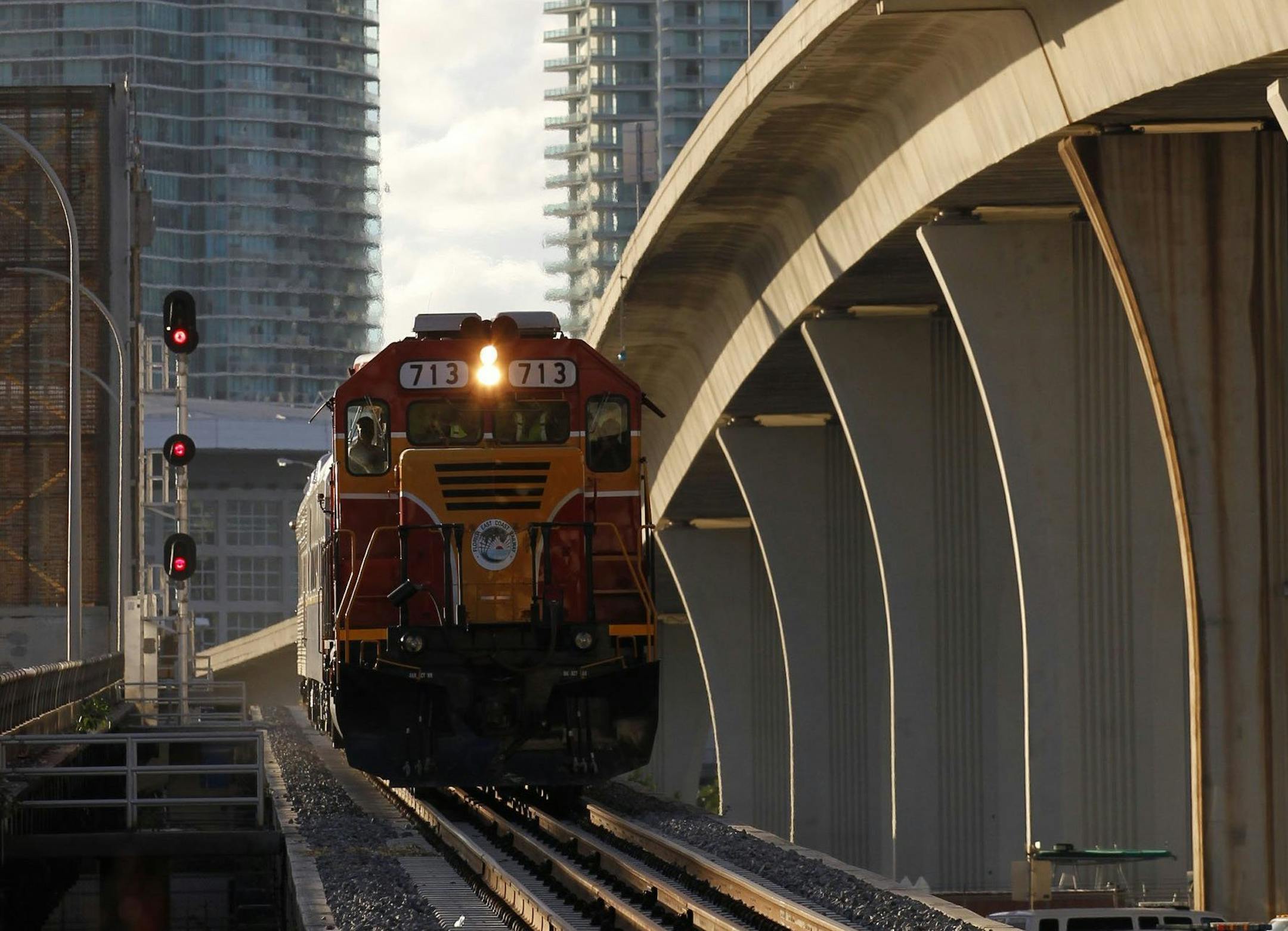
The Port of Miami restored its rail connection, severed by a hurricane in 2005, with the first set of trains arriving back at the port October 1, 2013. A Department of Transportation grant paid for $22 million of the $49 million project. The Miami port is undertaking a massive expansion to accommodate bigger ships. It's scheduled to be ready when a widened Panama Canal opens in 2015. (Carl Juste/Miami Herald/MCT)
Despite ads touting their independence from federal assistance, railroad freight haulers often are aided by infrastructure projects. (The Minnesota Star Tribune)

WASHINGTON – The railroad industry brags in its national publicity campaign that it spends billions of dollars improving its infrastructure "so taxpayers don't have to."

But the ads don't tell everything. The nation's freight rail network has been the quiet recipient of more than $600 million in federal investment during the Obama administration.

According to Federal Railroad Administration numbers, at least half that amount has gone to projects that benefit the nation's four largest railroads, the same companies at the heart of the industry's ubiquitous "Freight Rail Works" campaign.

That doesn't even include tens of millions more that states have contributed for additional investment in ports and high-speed passenger trains that has boosted the nation's freight railroads.

The public dollars have built new overpasses to separate trains from one another, as well as cars and trucks. They've replaced aging bridges, laid new track and upgraded signal systems. They've paid to enlarge tunnels and raise bridges so that shipping containers may be double-stacked. They've built new facilities where cargo containers can be transferred from trucks to trains, or vice versa.

Supporters say these public investments, combined with private capital, are model infrastructure partnerships that will help take trucks off crowded highways, reduce pollution and improve the flow of goods to and from the nation's seaports. But others wonder whether an industry that boasts about how little it depends on taxpayers really needs the extra help.

"We don't run [ad] campaigns like that, and we move 70 percent of all the tonnage in America at some point every day," said Bill Graves, president and CEO of the American Trucking Associations. The trucking industry isn't bashful about pressing for more highway funding, Graves said, while railroads "probably overstate their independence from public investment."

While its passenger rail improvements have been mired in controversy and delays, many of the freight rail investments begun under the economic stimulus of 2009 are at or near completion. The White House is eager to show the results.

"This is the inland version of the widening of the Panama Canal," Vice President Joe Biden said last month at a CSX freight terminal in North Baltimore, Ohio.

North Baltimore anchors the National Gateway, a project partially funded with a $98 million grant from the Department of Transportation. CSX paid for the Ohio facility, while the federal money helped raise overhead clearances on its route to East Coast ports, to allow double-stacked container trains.

Last week in Missouri, Federal Railroad Administrator Joseph Szabo cut the ribbon on a new bridge that added a second track over the Osage River, eliminating a bottleneck between St. Louis and Kansas City. Though the Obama administration paid for $22 million of the $28 million project through its High Speed Intercity Passenger Rail Program, the bridge will benefit the nation's largest freight railroad, Union Pacific, which operates as many as 60 trains a day on the line.

In November, the Port of Miami restored its rail connection, which Hurricane Wilma had severed in 2005. A Department of Transportation grant paid for $22 million of the $49 million project. Port Director Bill Johnson said the grant was essential and that the project wouldn't have happened without it. The Miami port is undertaking a massive expansion to accommodate bigger ships. It's scheduled to be ready when a widened Panama Canal opens in 2015.

"We need a rail system to serve Florida and also the heartland of America," Johnson said. "It's all about connecting."

about the writer

about the writer

Curtis Tate, McClatchy Washington Bureau

More from No Section

See More
FILE -- A rent deposit slot at an apartment complex in Tucker, Ga., on July 21, 2020. As an eviction crisis has seemed increasingly likely this summer, everyone in the housing market has made the same plea to Washington: Send money — lots of it — that would keep renters in their homes and landlords afloat. (Melissa Golden/The New York Times) ORG XMIT: XNYT58
Melissa Golden/The New York Times

It’s too soon to tell how much the immigration crackdown is to blame.