

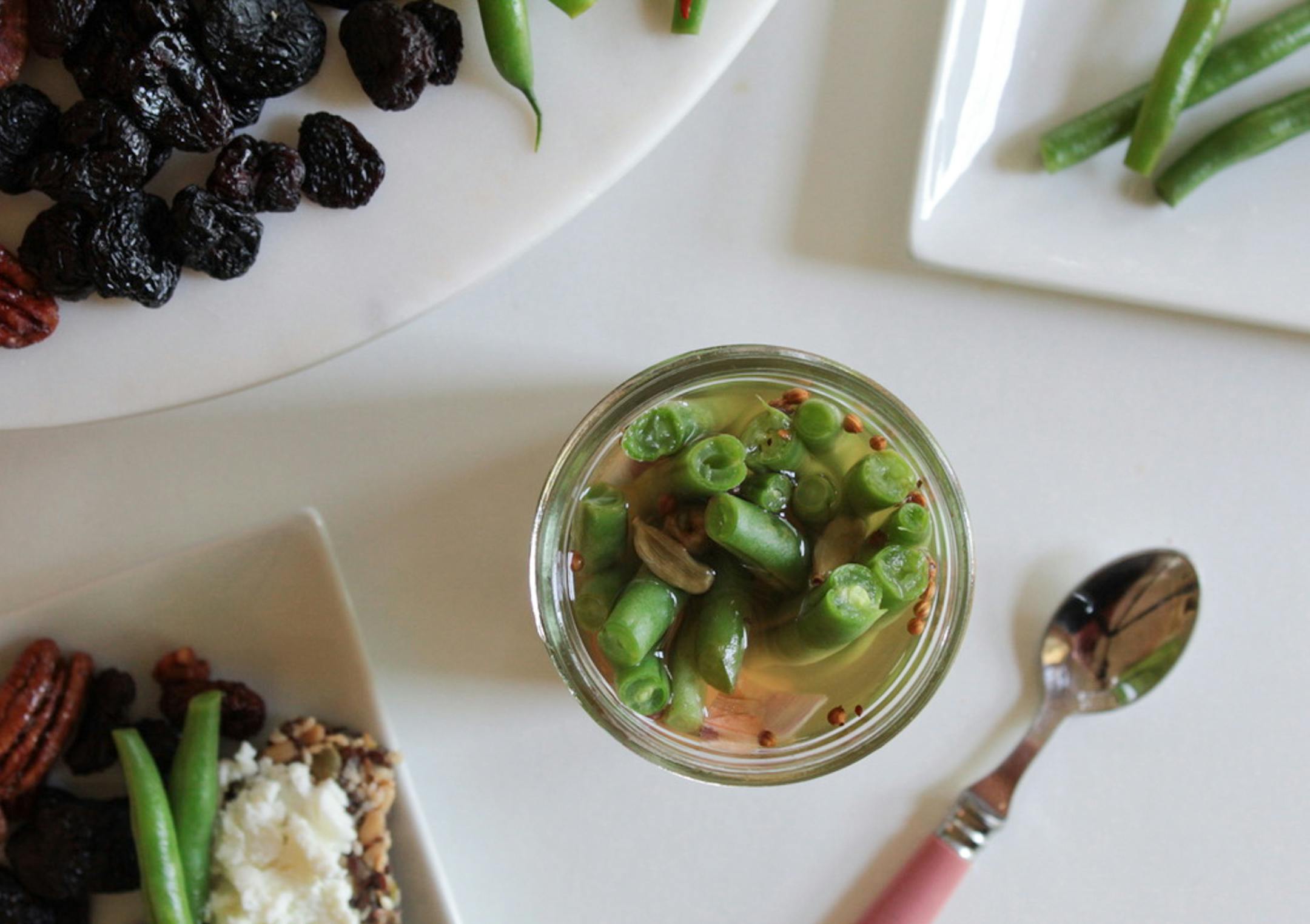
Several jars of pickled summer veggies are useful to have at hand. I keep them in the fridge to perk up pasta salads, top burgers and layer into sandwiches. But making pickles calls to mind vats of boiling water, special tongs for the water bath and the worry about a tight seal.
So, let's not talk about serious pickling. Rather, consider the no-fuss quick-pickle method that relies on an easy mix-and-simmer technique to dispatch our backyard bounty and farmers market haul. The process is straightforward when you have the right stuff.
Start with kosher or pickling salt; these contain no iodine, minerals or added anti-caking agents that will cloud the brine. (Save the pricier mineral-rich sea salt for seasoning.) Vinegar-based brines preserve the vegetables and kill off harmful bacteria. They also give the pickles their flavor, so choose one that suits the vegetable and your taste, i.e. apple cider vinegar is harsher than rice wine vinegar. Because these pickles are stored in the refrigerator and not on the pantry shelf, the pH factor is less important. Avoid balsamic or malt vinegar, though, as they're too dark and give the pickles a muddy hue.
Season the pickles with a few trusty spices and herbs you might already have on hand — black pepper, mustard seed, bay leaves, whole coriander, cumin, fennel, celery seeds, a pinch of red pepper flakes. Think about adding a little fresh ginger, whole or half jalapeño, parsley, dill, thyme, rosemary, cilantro, lemongrass, etc.
Sturdy local vegetables are ideal picklers — asparagus, carrots, radishes, snap peas, salad turnips, Kirby cucumbers, bell peppers and cabbage. Focus on one, or try two vegetables together to see what you like, then mix up the vinegars and spices. Crisp and sharp, these pickles pull the simplest summer dishes into focus and brighten them up.
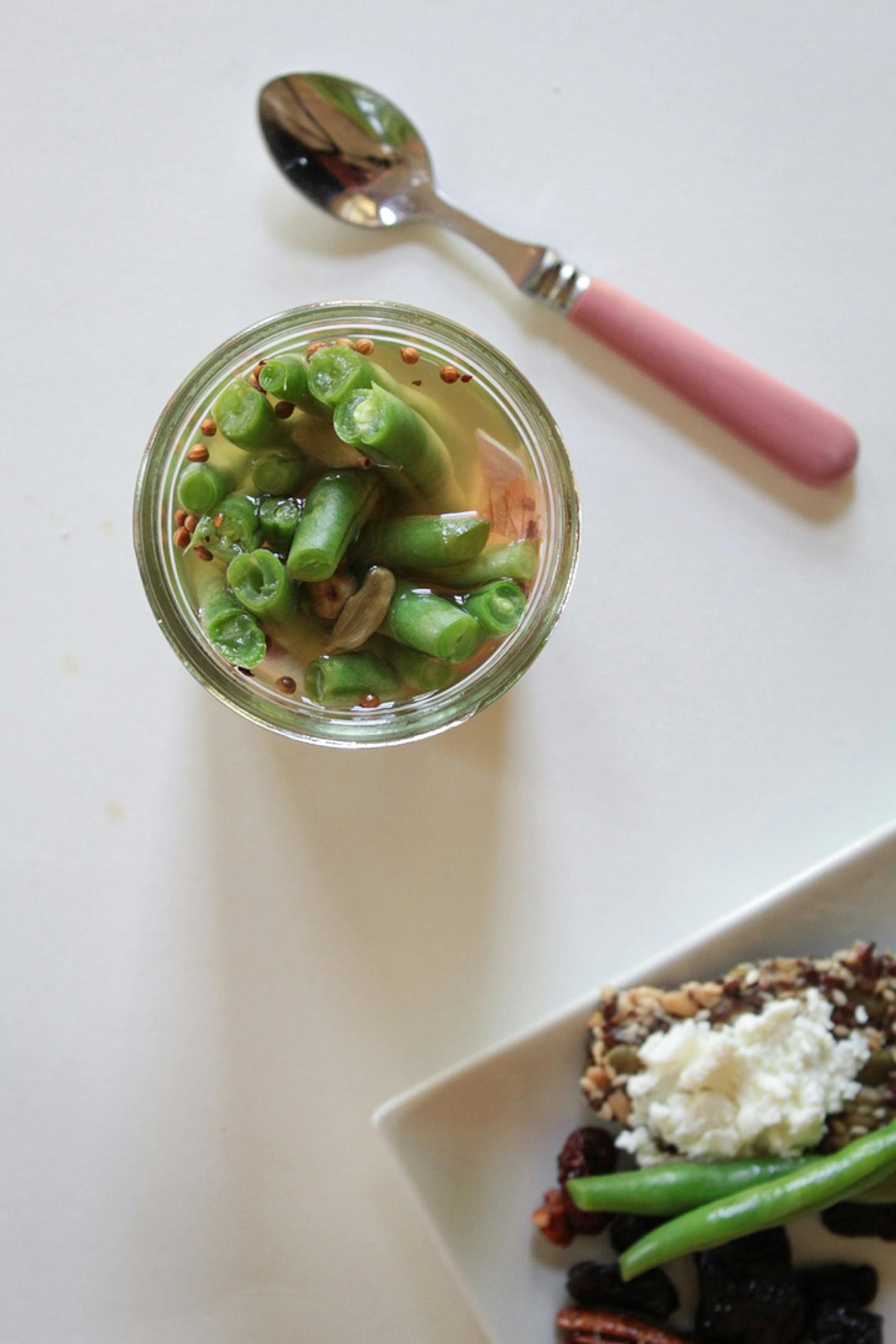
Quick Pickled Green Beans
Makes 2 pints.
These are terrific right out of the jar, chopped and tossed into pasta and whole grain salads, and used instead of a celery stalk to stir a Bloody Mary. Store them in the refrigerator; they're ready to eat after a few hours in the fridge and will keep for about three months. From Beth Dooley.
• 2 lb. green beans, topped and tailed


