
Questions remain as U.S. targets ISIL

Congress must fully vet Obama's Mideast strategy.

September 19, 2014 at 11:33PM
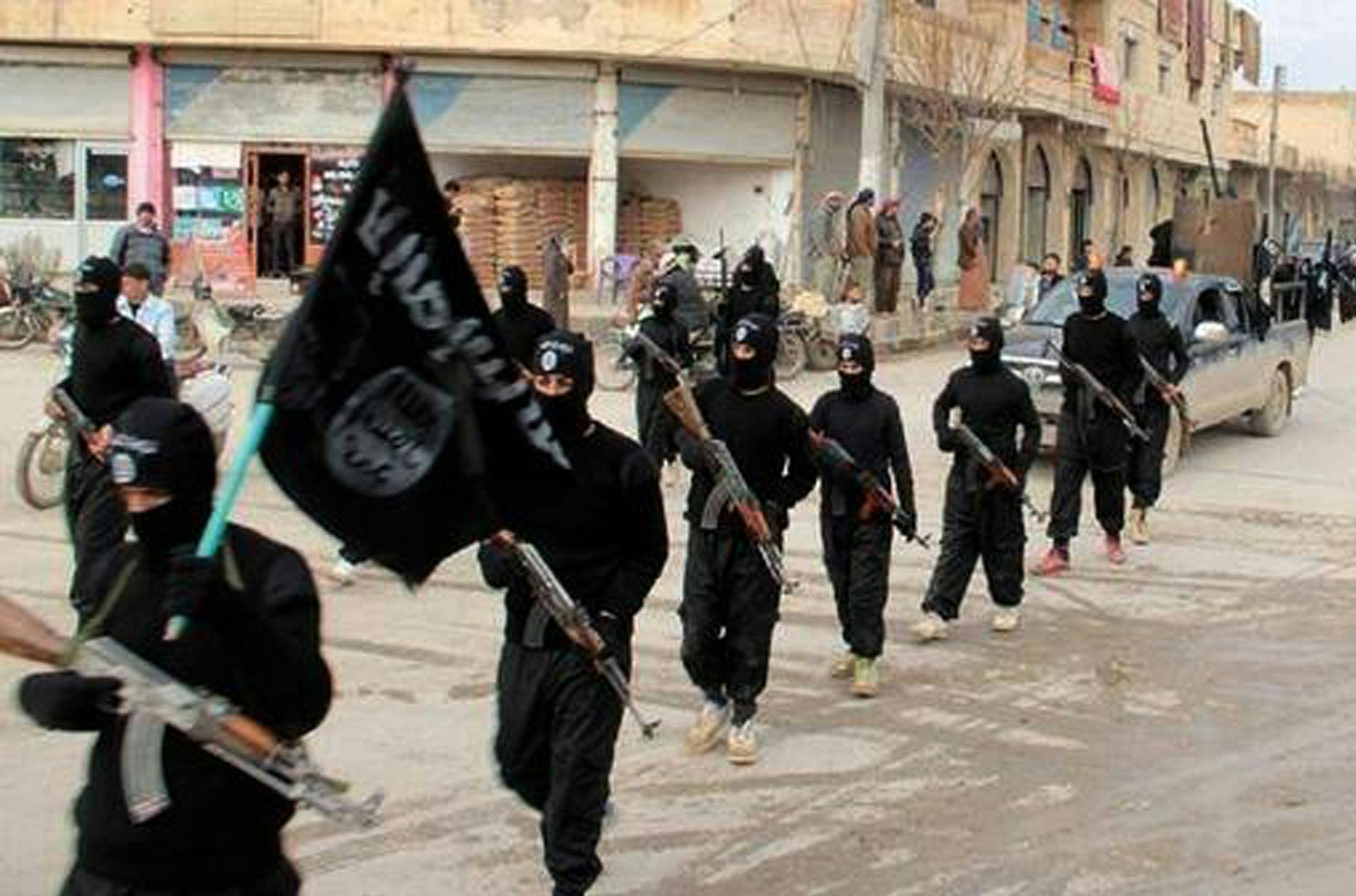
FILE - This undated file image posted on a militant website on Tuesday, Jan. 14, 2014, which has been verified and is consistent with other AP reporting, shows fighters from the al-Qaida linked Islamic State of Iraq and the Levant (ISIL) marching in Raqqa, Syria. Across the broad swath of territory it controls from northern Syria through northern and western Iraq, the extremist group known as the Islamic State has proven to be highly organized governors. (AP Photo/Militant Website, File) ORG XMI
Militants of the Islamic State in Iraq and the Levant. (The Minnesota Star Tribune)

On Wednesday, the U.S. House voted 273-156 to authorize arming and training moderate Syrian rebels to fight the terrorist group known as ISIL (the Islamic State of Iraq and the Levant). On Thursday, the Senate followed suit in a 78-22 vote.

Now comes the hard part.

The fact that unlike nearly every other congressional issue the votes were not neatly cleaved along party lines suggests that a possible subsequent vote to authorize force — war, really — would likely be closer. Events in the Mideast and Washington this week raised fundamental questions that need to be asked before the vote.

Most notably, Congress and the American people need clarification on the role of U.S. troops. President Obama told the nation last week — and repeated in a speech Wednesday at MacDill Air Force Base in Florida — that it will not be a combat mission.

Obama's second pledge came after Gen. Martin Dempsey, chairman of the Joint Chiefs of Staff, said in Senate testimony Tuesday that it may be necessary to deploy combat troops to aid the air war Obama plans against ISIL. Others currently serving or recently retired have openly questioned Obama's strategy. Administration officials scrambled to downplay the appearance of a White House-Pentagon schism. But it's clear one exists.

Adding to the conflict's complexity were words from Iraq's new prime minister, Haider al-Abadi. He told the Associated Press that any use of foreign ground troops is "out of the question."

That may be a relief to Sunni nations, and Israel, concerned about a tacit agreement between the United States and Iran to coordinate anti-ISIL efforts (Iran publicly rebuffed Washington). But most military analysts think the Iraqi defense forces are not up to the task — indeed, many Iraqi troops chose to flee rather than fight ISIL as it rampaged across northern and western Iraq. Kurdish Peshmerga forces are considered more capable, but they are beleaguered, too.

Iraq's most effective fighting force may actually be Shiite militias. But their sectarian nature (and sectarian rule by Iraq's previous prime minister, Nouri al-Malaki) is partly responsible for Iraq's unraveling in the first place. And extensive involvement by the militias is highly unlikely to convince Sunni tribes under ISIL occupation to fight back against ISIL like they did during the "surge" in Iraq.

Despite the diplomatic and military difficulties apparent in Iraq, the strategy there is actually more clear than the one for Syria. Unlike in Iraq, the Syrian government has not invited U.S. forces to intervene to oust ISIL even though the terrorist group is a common enemy.

Conversely, there's open hostility between Damascus and Washington. Obama has called for Syrian President Bashar Assad's ouster, and for good reason: Assad has propogated a war that has killed more than 200,000 people, made more than 9 million refugees or internally displaced and destabilized an already volatile region.

This destabilization has led many Mideast nations to recognize the ISIL threat, but political and sectarian complexity will make it very difficult to mount an effective response. True, many nations are part of the anti-ISIL coalition, and a few have also offered airstrikes. But the overriding sectarian divide that defines Mideast alliances makes it unlikely that any non-indigenous ground forces will be deployed in Syria.

It's also unclear how effective the newly trained and freshly armed moderate rebels will be. The Pentagon hopes to train about 5,000 a year, despite estimates that it will take 12,000 to control a liberated Syria. Liberation won't be easy: ISIL has between 20,000 to 31,500 fighters, according to CIA estimates. And Assad has been targeting the more moderate factions in order to show the West that the alternative to his butchery is an even more barbaric terrorist organization.

So if the moderate rebels aren't an effective enough force, whose boots will be on the ground? And if ISIL is defeated, won't Assad benefit?

These are among many tough questions that Congress must ask as it debates next steps. In typical fashion, Congress prioritized campaigning over governance, and so a vote authorizing military force wouldn't take place until after the election. But Congress can't, and shouldn't, avoid vetting Obama's strategy before it takes any future steps toward another Mideast war.

about the writer

about the writer

Editorial Board

See Moreicon

More from No Section

See More
FILE -- A rent deposit slot at an apartment complex in Tucker, Ga., on July 21, 2020. As an eviction crisis has seemed increasingly likely this summer, everyone in the housing market has made the same plea to Washington: Send money — lots of it — that would keep renters in their homes and landlords afloat. (Melissa Golden/The New York Times) ORG XMIT: XNYT58
Melissa Golden/The New York Times

It’s too soon to tell how much the immigration crackdown is to blame.