
Questions over modified apples that don't brown

January 13, 2014 at 4:21PM
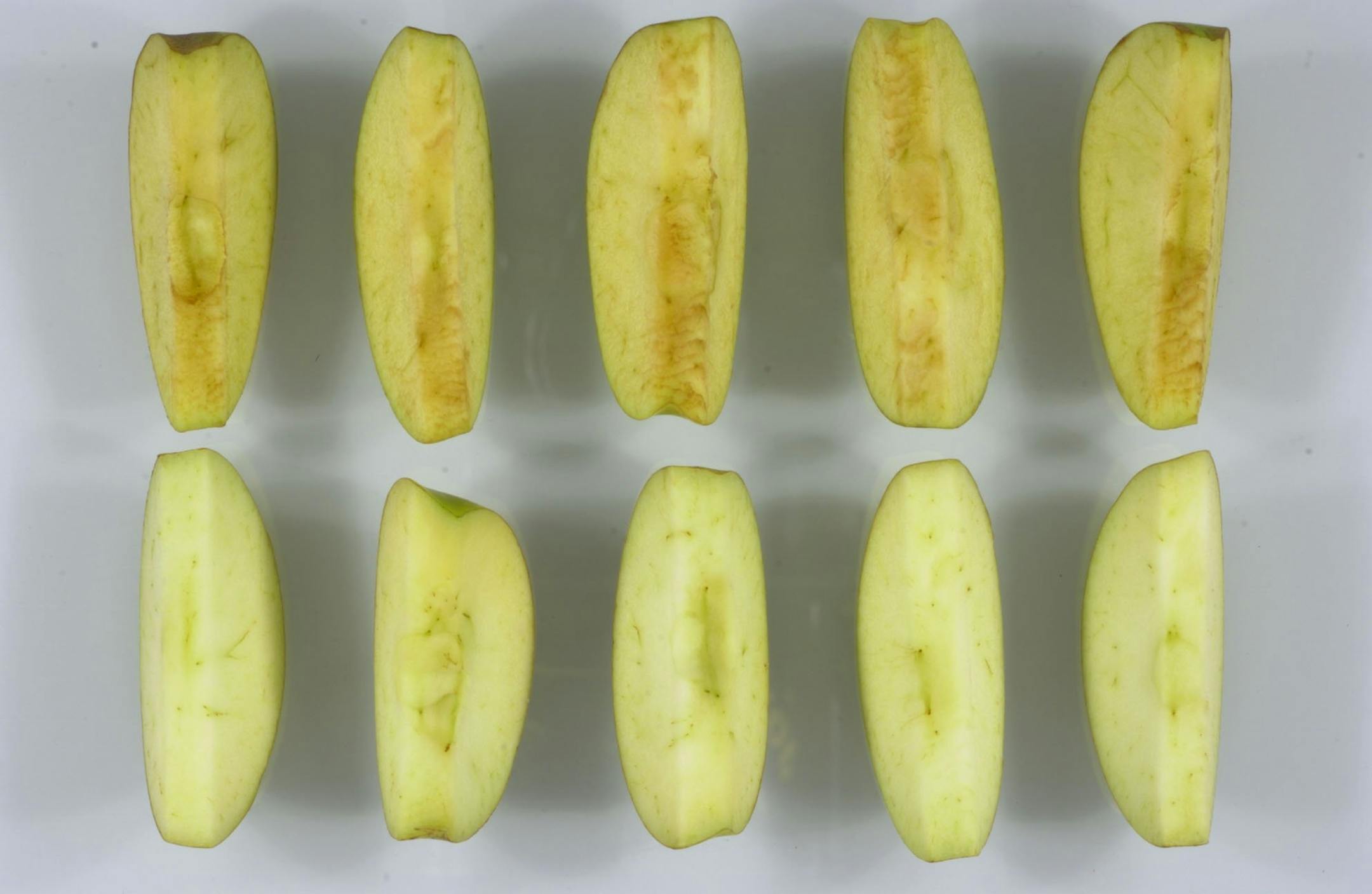
An apple genetically engineered not to turn brown is putting the Agriculture Department and the apple industry on the spot. The department appears inclined to approve the so-called Arctic apple, designed by a small Canadian company. First, though, officials must confront some enduring public distaste for genetically modified foods. Pictured, Arctic Golden slices (bottom) compared to conventional Golden slices. (Okanagan Specialty Fruits/MCT)
An apple genetically engineered not to turn brown is putting the Agriculture Department and the apple industry on the spot. The department appears inclined to approve the so-called Arctic apple, designed by a small Canadian company. First, though, officials must confront some enduring public distaste for genetically modified foods. Pictured, Arctic Golden slices (bottom) compared to conventional Golden slices. (Okanagan Specialty Fruits/MCT) (The Minnesota Star Tribune)

An apple genetically engineered not to turn brown is putting the Agriculture Department and the apple industry on the spot.

The department appears inclined to approve the so-called Arctic apple, designed by a small Canadian company. First, though, officials must confront some enduring public distaste for genetically modified foods. "This is an economic disaster," Henry House, an organic apple grower in Davis, Calif., warned the Agriculture Department.

Organic growers such as House fear that honeybees will spread genetically engineered apple pollen and contaminate organic orchards. Some consumer advocates maintain a more general antipathy toward engineered foods, while industry groups that include the Northwest Horticultural Council in Yakima, Wash., also object to what would be the first genetically engineered apple in commercial production.

'We're closer than ever'

"This is a huge issue, and it has great ramifications for our industry," said Christian Schlect, the president of the Northwest Horticultural Council. "We're concerned about the marketing impact, from consumer impact to the imposition of additional costs."

The U.S. Apple Association, noting that "browning is a natural process related to the exposure to oxygen," has likewise voiced opposition to the Arctic apple.

Thousands have weighed in as the Agriculture Department's Animal and Plant Health Inspection Service considers whether to grant "non-regulated status" to varieties called the Arctic Golden and the Arctic Granny. Approval would give the commercial green light to British Columbia's Okanagan Specialty Fruits. "We're closer than ever to bringing Arctic apples to the market," company officials enthused in a blog post last year.

Company President Neal Carter added in an e-mail that he "expects full deregulation" of the apples this year.

'Special bruising apparatus'

A family-run operation, Okanagan began developing the apples more than a decade ago. Field trials have been conducted in Washington and New York state orchards, representing different kinds of apple-growing climates. The extended testing even included building a "special bruising apparatus" to help assess the apples' durability, according to Okanagan's 192-page petition to the Agriculture Department.
Unlike some other genetically modified crops, the Arctic apple doesn't include genes spliced in from a different species. Its resistance to what scientists call "enzymatic browning," which is what happens when a typical apple is cut or bruised, comes from the insertion of a genetic sequence taken from an apple. The inserted sequence suppresses the browning process.

With federal approval, the company no longer would need special permits before it put the apples into production. If they get the go-ahead, company officials have indicated, the Arctic apples could reach stores sometime in 2015.

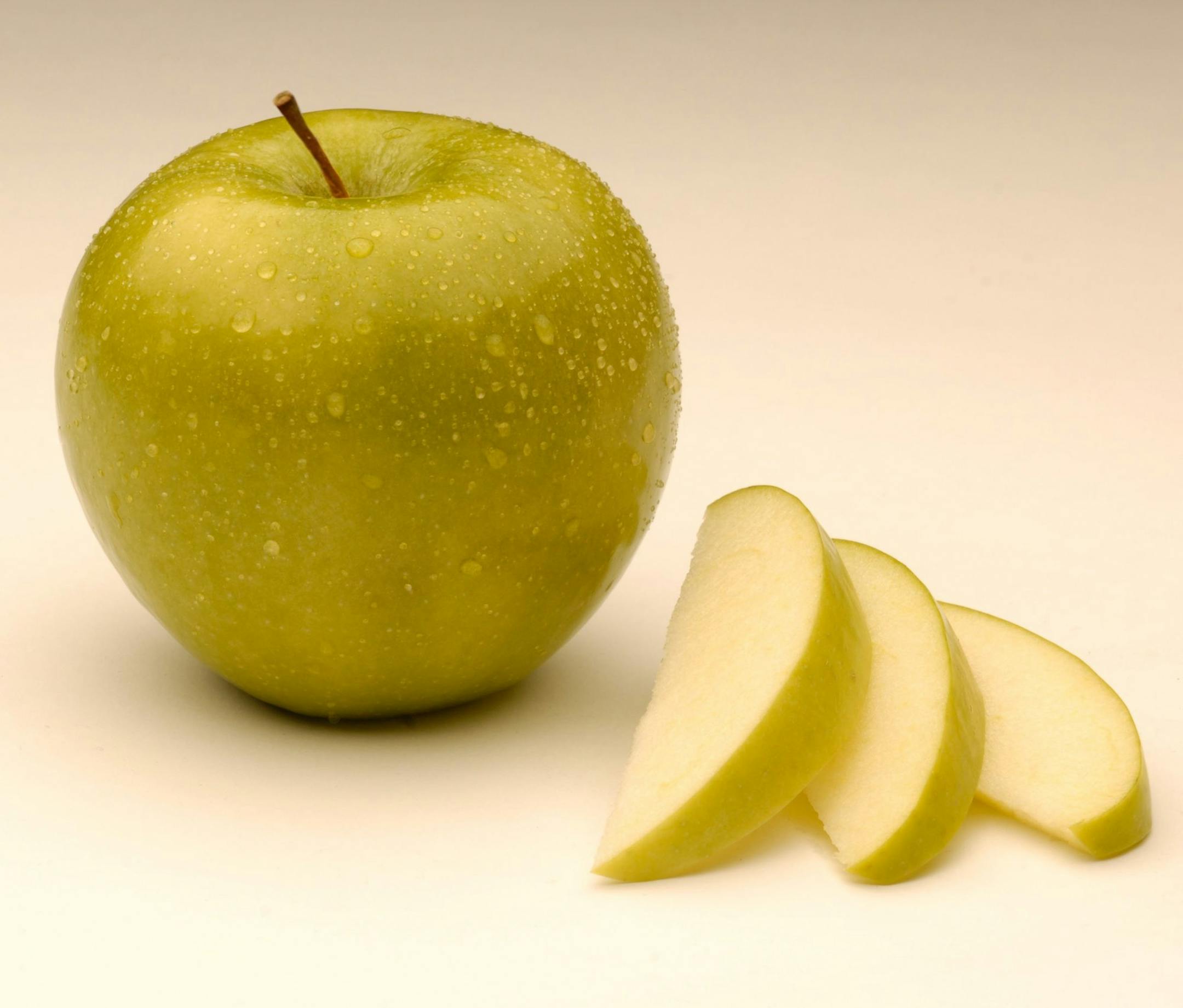
An apple genetically engineered not to turn brown is putting the Agriculture Department and the apple industry on the spot. The department appears inclined to approve the so-called Arctic apple, designed by a small Canadian company. First, though, officials must confront some enduring public distaste for genetically modified foods. Pictured, a non-browning Arctic Granny. (Okanagan Specialty Fruits/MCT)
Thousands have weighed in on a plan to allow genetically engineered apples onto the market. (The Minnesota Star Tribune)
about the writer

about the writer

Michael Doyle, McClatchy Washington Bureau

More from No Section

See More
FILE -- A rent deposit slot at an apartment complex in Tucker, Ga., on July 21, 2020. As an eviction crisis has seemed increasingly likely this summer, everyone in the housing market has made the same plea to Washington: Send money — lots of it — that would keep renters in their homes and landlords afloat. (Melissa Golden/The New York Times) ORG XMIT: XNYT58
Melissa Golden/The New York Times

It’s too soon to tell how much the immigration crackdown is to blame.