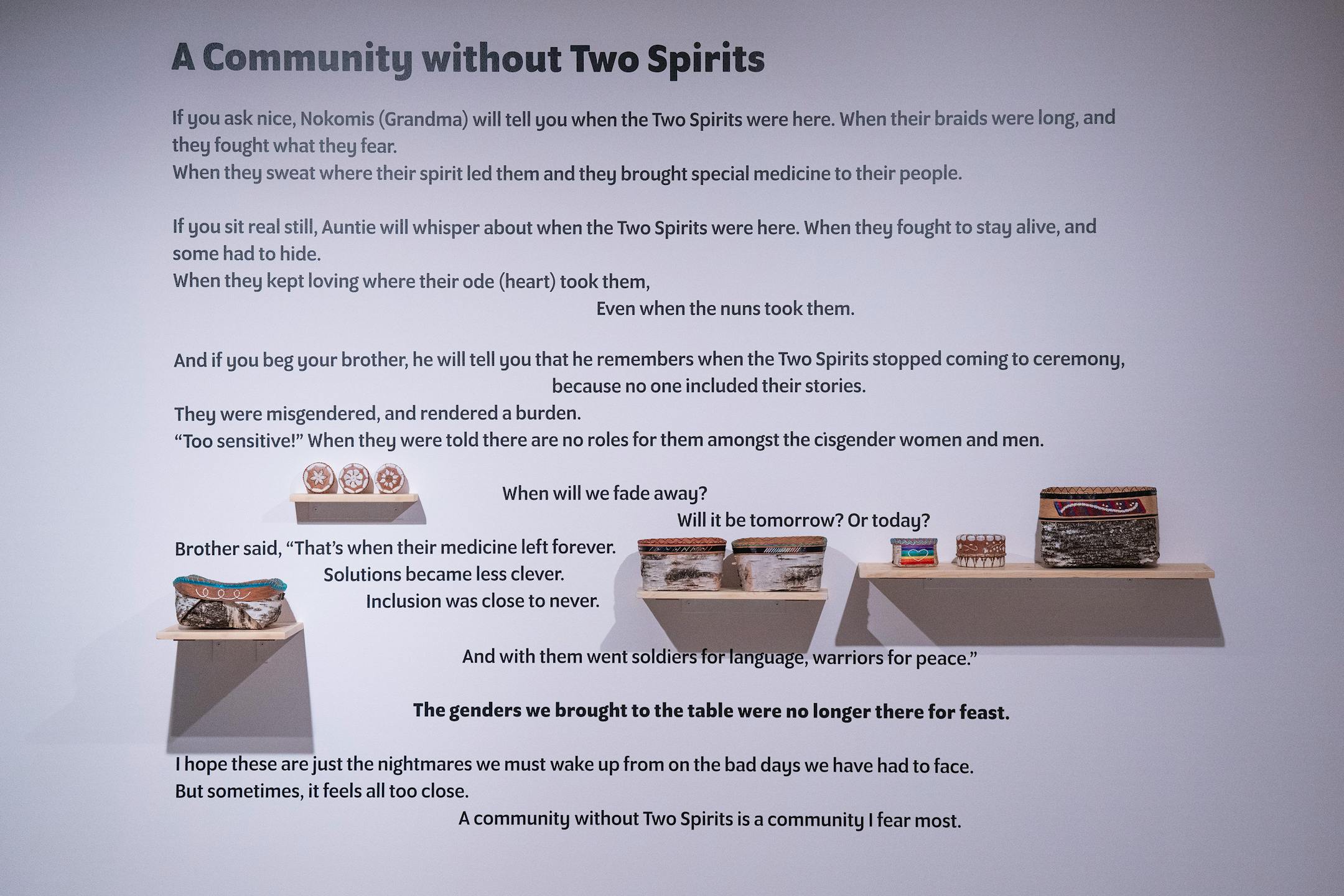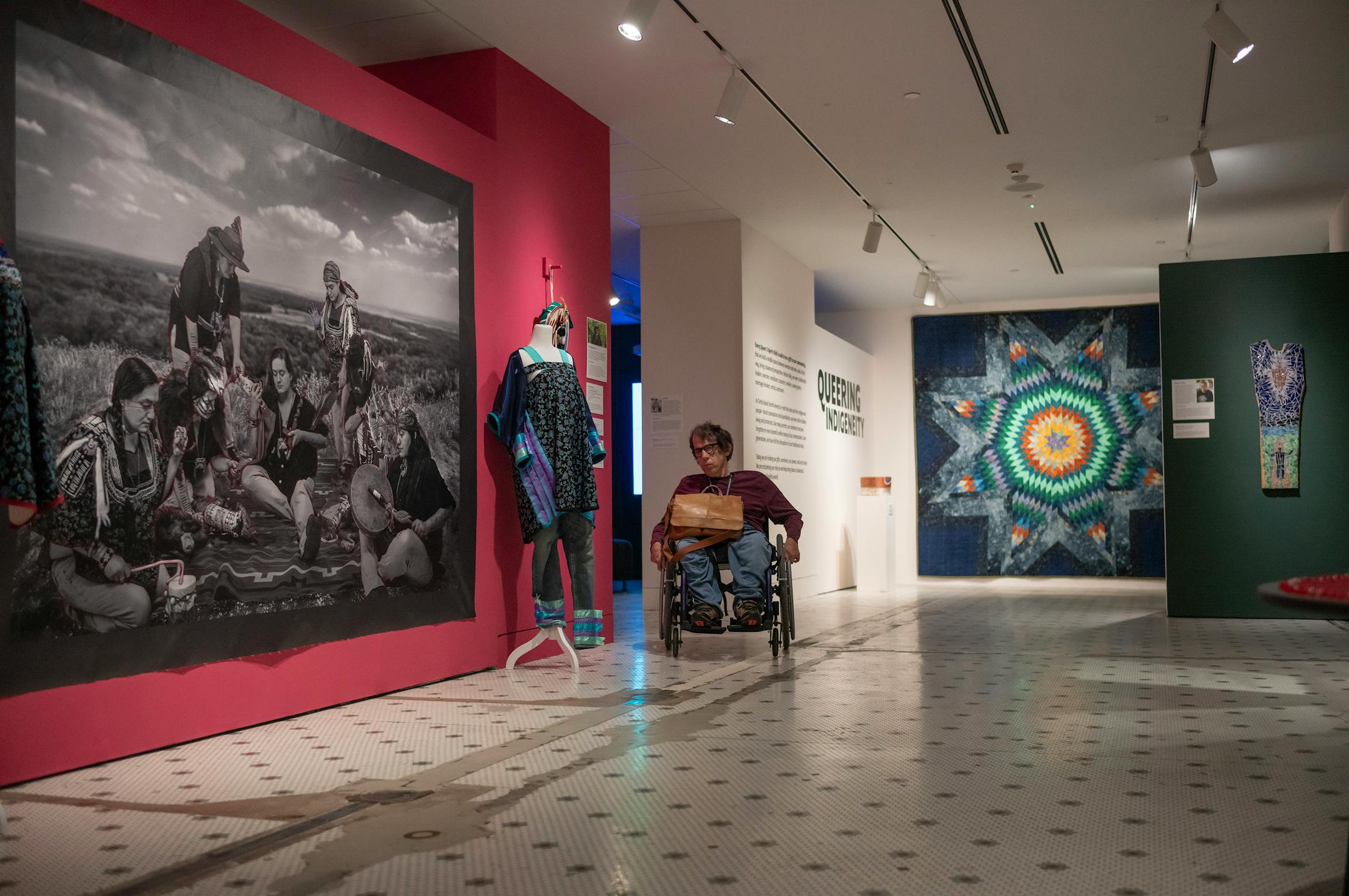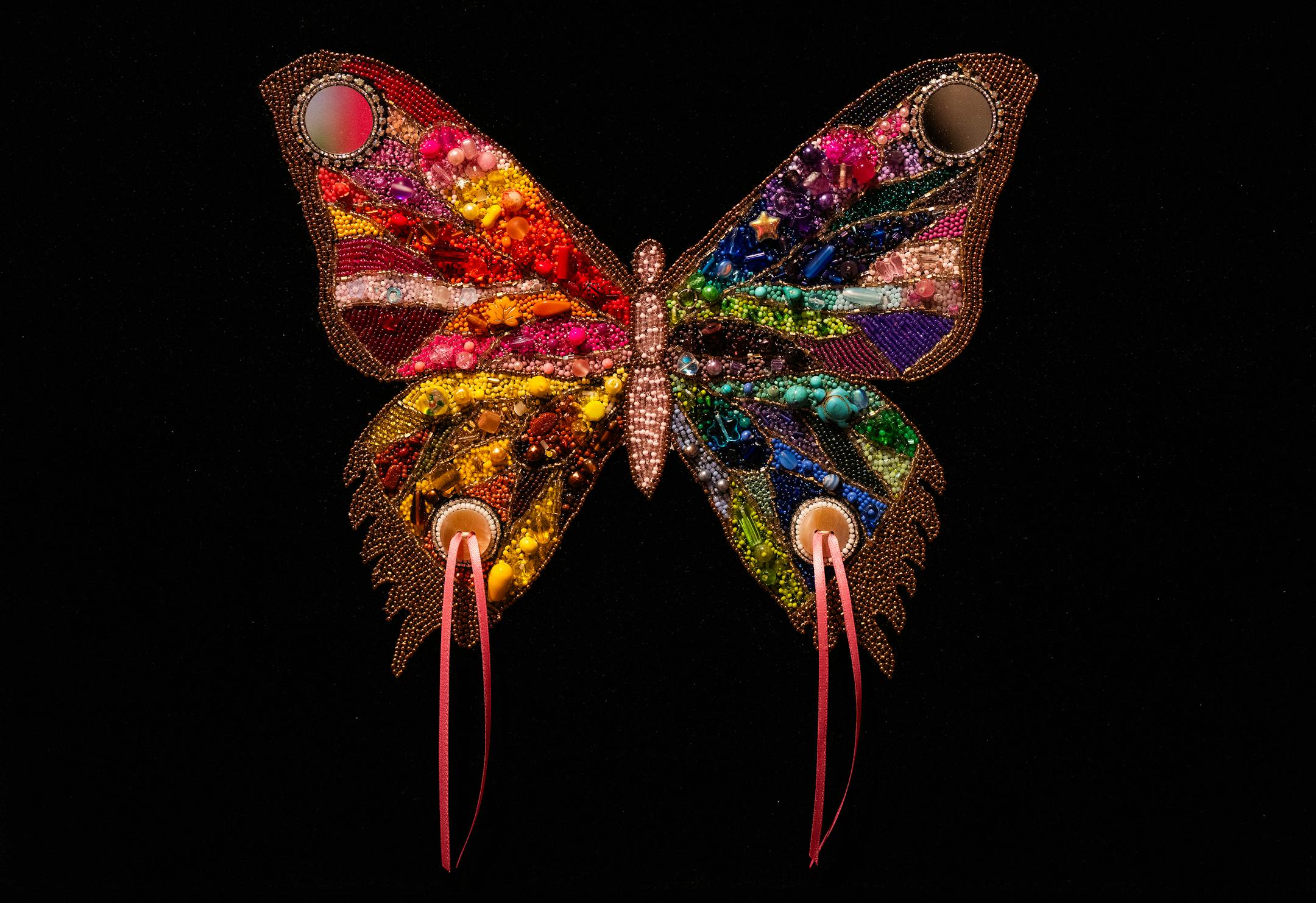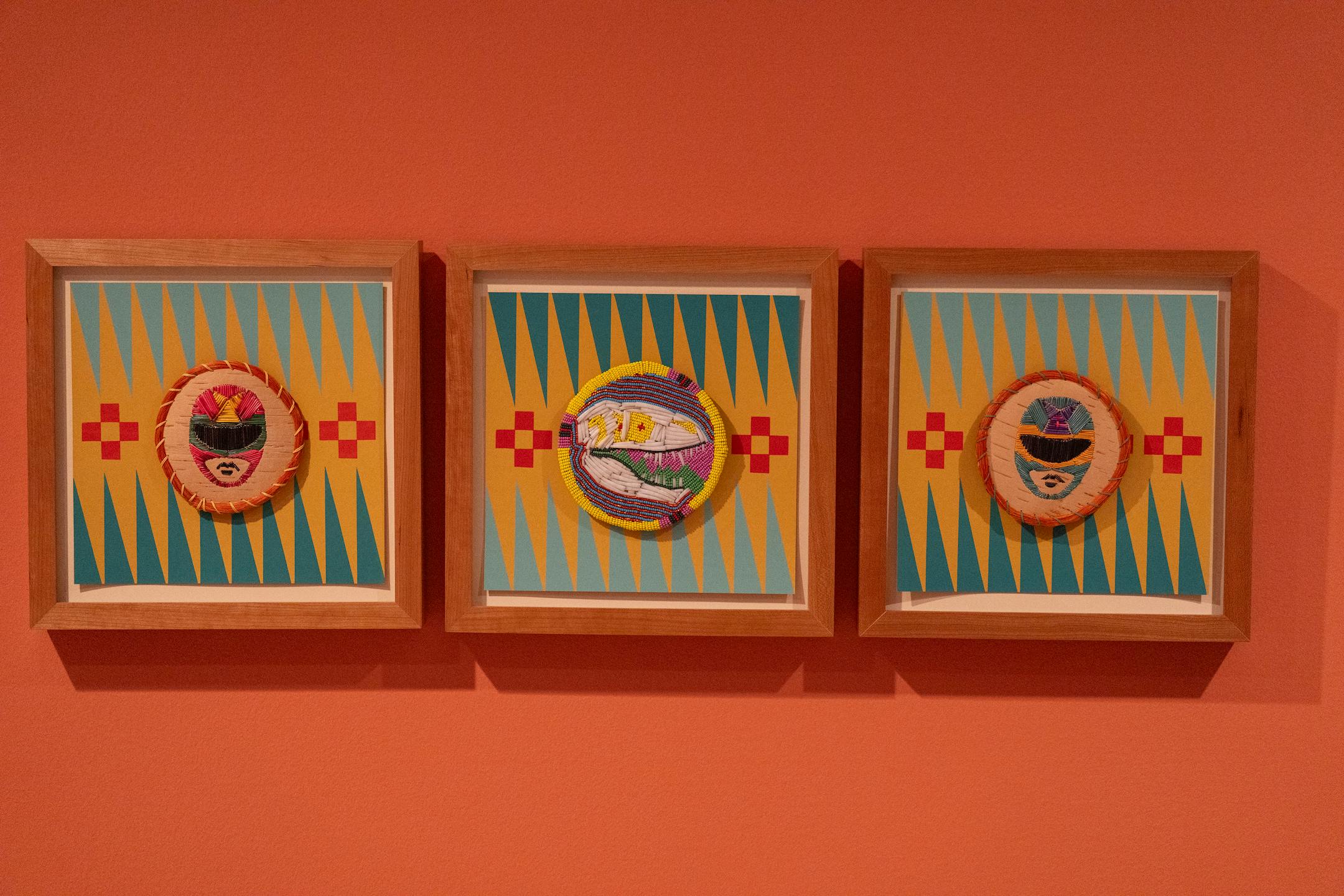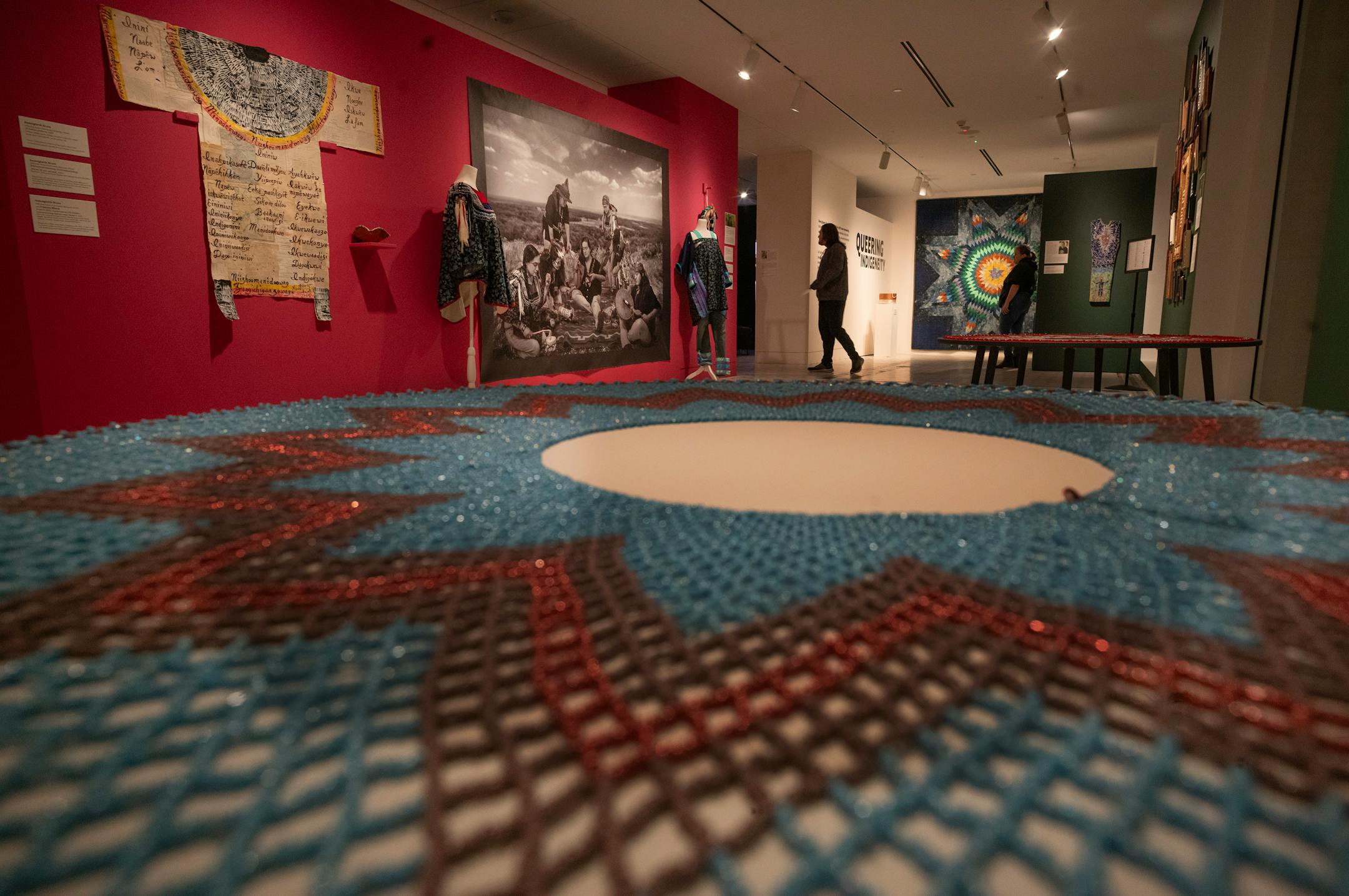
Artist Penny Kagigebi, a White Earth Ojibwe direct descendant, felt called to curate an exhibition of “Native queer” and gender-expansive artists as a way to encourage healing within Native communities.
Over the course of three years, Kagigebi worked with the Minnesota Museum of American Art to make that happen. The exhibition “Queering Indigeneity” features 16 two-spirit, “Native queer” and gender-expansive artists in the Upper Midwest.
Two-spirit, a term that was coined in 1990 at the Inter-Tribal Native American, First Nations, Gay and Lesbian American Conference in Winnipeg, Manitoba, is a pan-Indigenous term for a Native person who carries the spirit of a man and a woman.
That in-between identity has often been left out of conversations, and Kagigebi, who is two-spirit, wanted to bring it back. With the help of the Minnesota Museum of American Art and supporting curator Ben Gessner, she’s done just that.
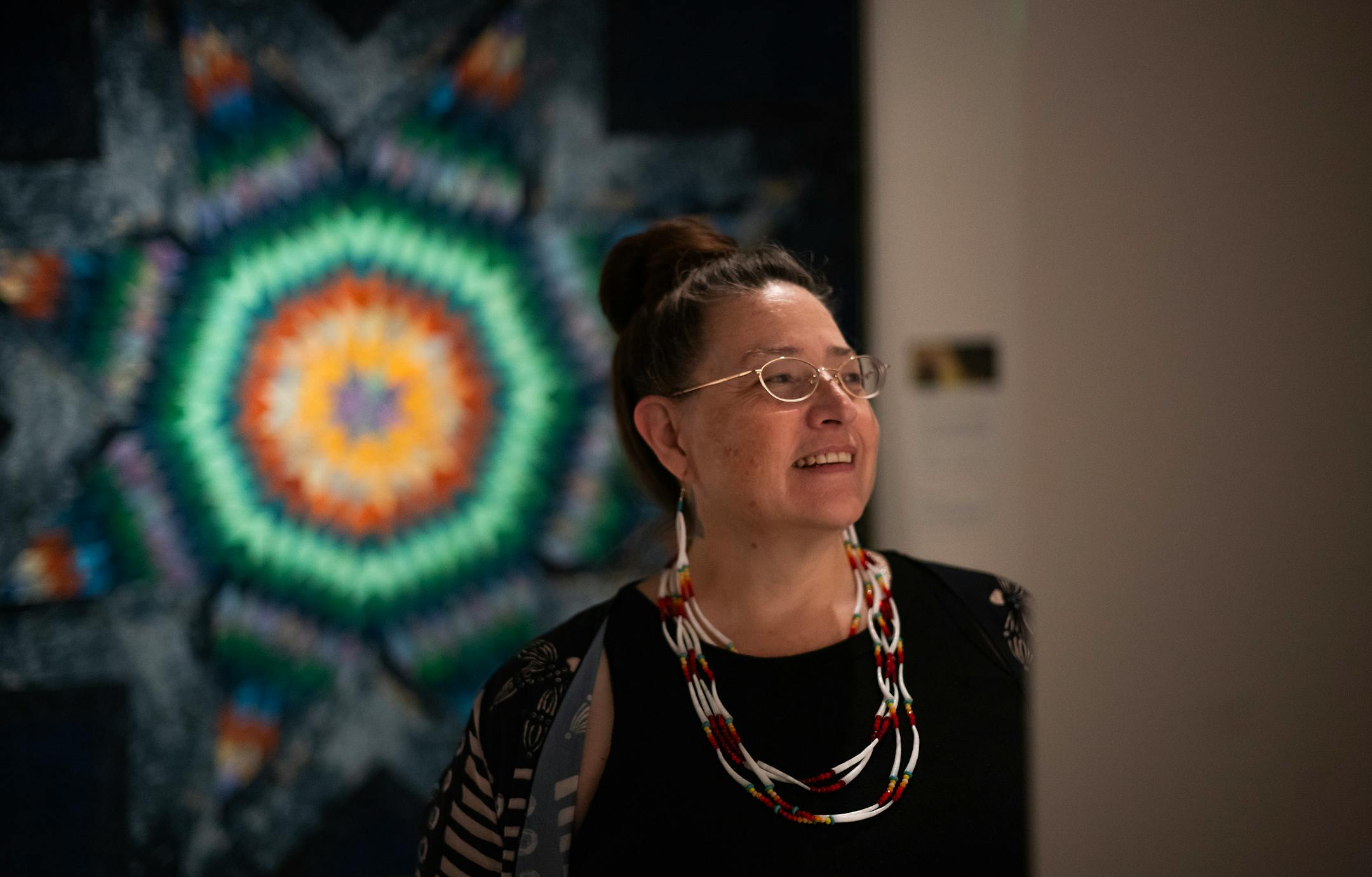
The show is more than just a one-off: It is a multiyear, multigenerational project that will continue after the exhibition closes in August.
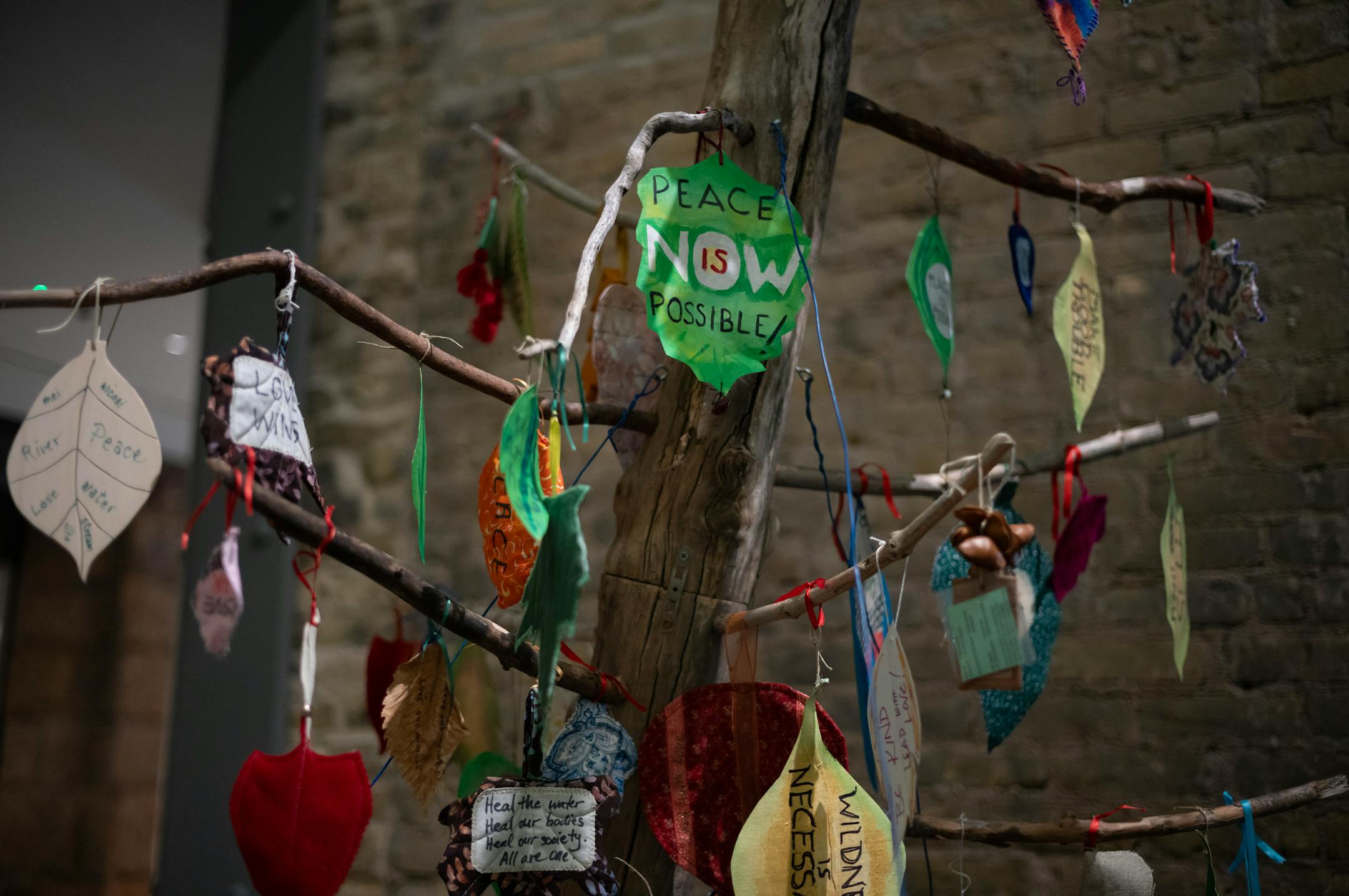
Kagigebi, 60, has been involved in activist work since the 1990s. She sees the term “two-spirit” as inclusive and broad.
In organizing the show, Kagigebi, who lives in Detroit Lakes near White Earth Indian Reservation, “really wanted to focus on the positive, but the work was to undo lateral violence, lateral oppression in the Native community.”
She realized that radical nurturing was needed, and “that’s why there’s such a gulf between those two ― because two-spirit people are missing from our communities.”