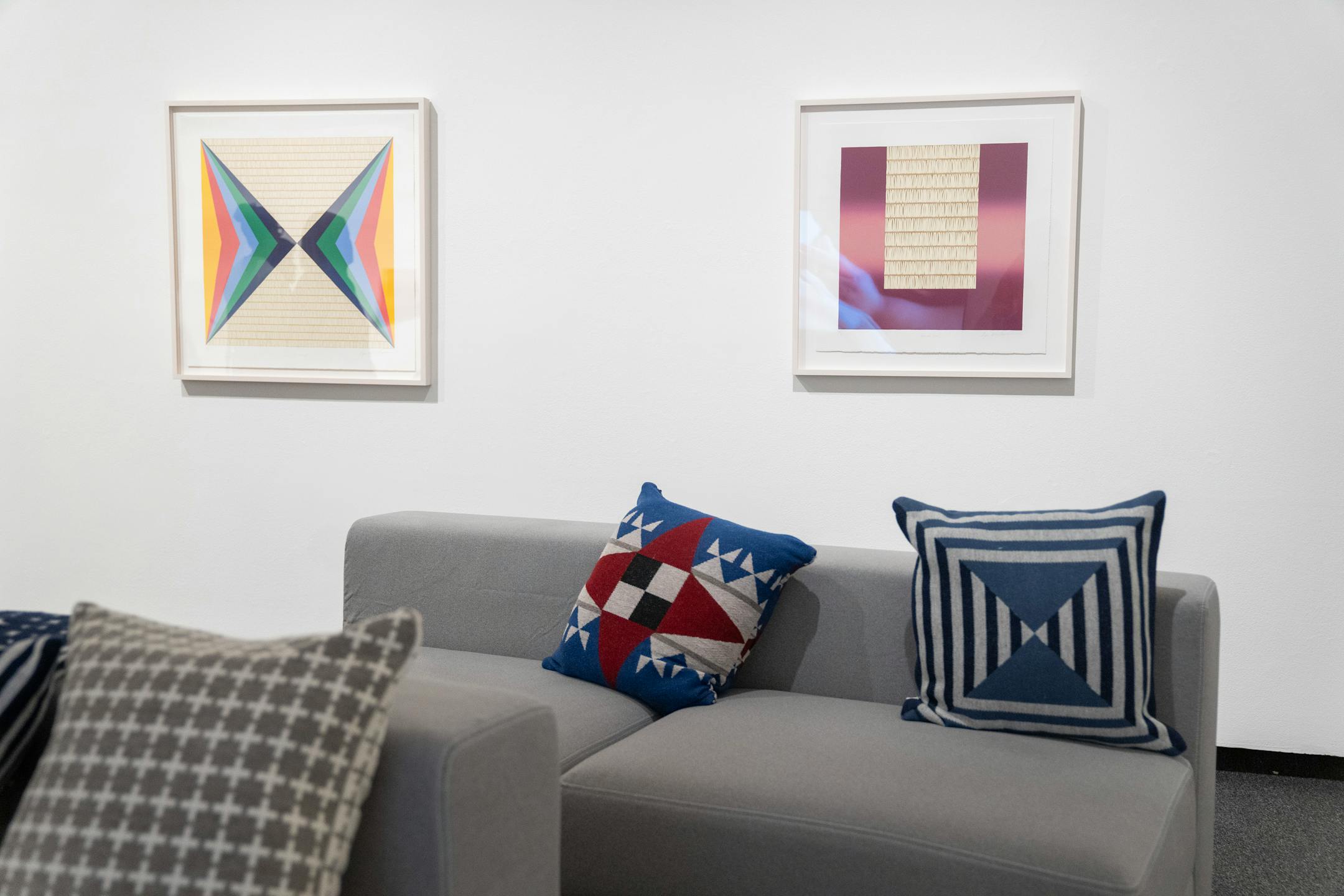
Acclaimed artist Dyani White Hawk’s ‘Love Language’ exhibition comes home to Minnesota

The MacArthur “genius” winner’s Walker Art Center show includes 15 years of artwork.

The Minnesota Star Tribune
October 23, 2025 at 8:29PM
Dyani White Hawk in front of an earlier artwork, "Seeing," 2011, on view in her exhibition "Love Language" at the Walker Art Center. (Alex Kormann/The Minnesota Star Tribune)

Guards at art museums keep quiet watch over visitors, avoid eye contact and sometimes follow people. The atmosphere isn’t always welcoming.

Sičáŋǧu Lakota artist Dyani White Hawk wants to change that.

At her Walker Art Center exhibition, the guards are friendlier. Their standard shirts already have “Hello” printed on them. They now can wear shirts and enamel pins with the text: “háu/háŋ mitákuyepi hello my relatives.”

“I want every person that walks into this space to feel like we’re happy to see you, even if it’s just a smile and a nod,” White Hawk said.

Most of all, she wants to make the space beautiful.

“If it feels beautiful for the Native community, it will inevitably feel beautiful,” she said.

“Love Language” celebrates 15 years of White Hawk and her community on their home turf. The exhibition was co-curated with the Remai Modern in Saskatoon, Saskatchewan, where it will be on display in April.

The partnership is part of “a desire to locate her practice firmly within the Oceti Sakowin homelands that traverse the imposed Canada-U.S. border,” Remai Modern Adjunct Curator Tarah Hogue said.
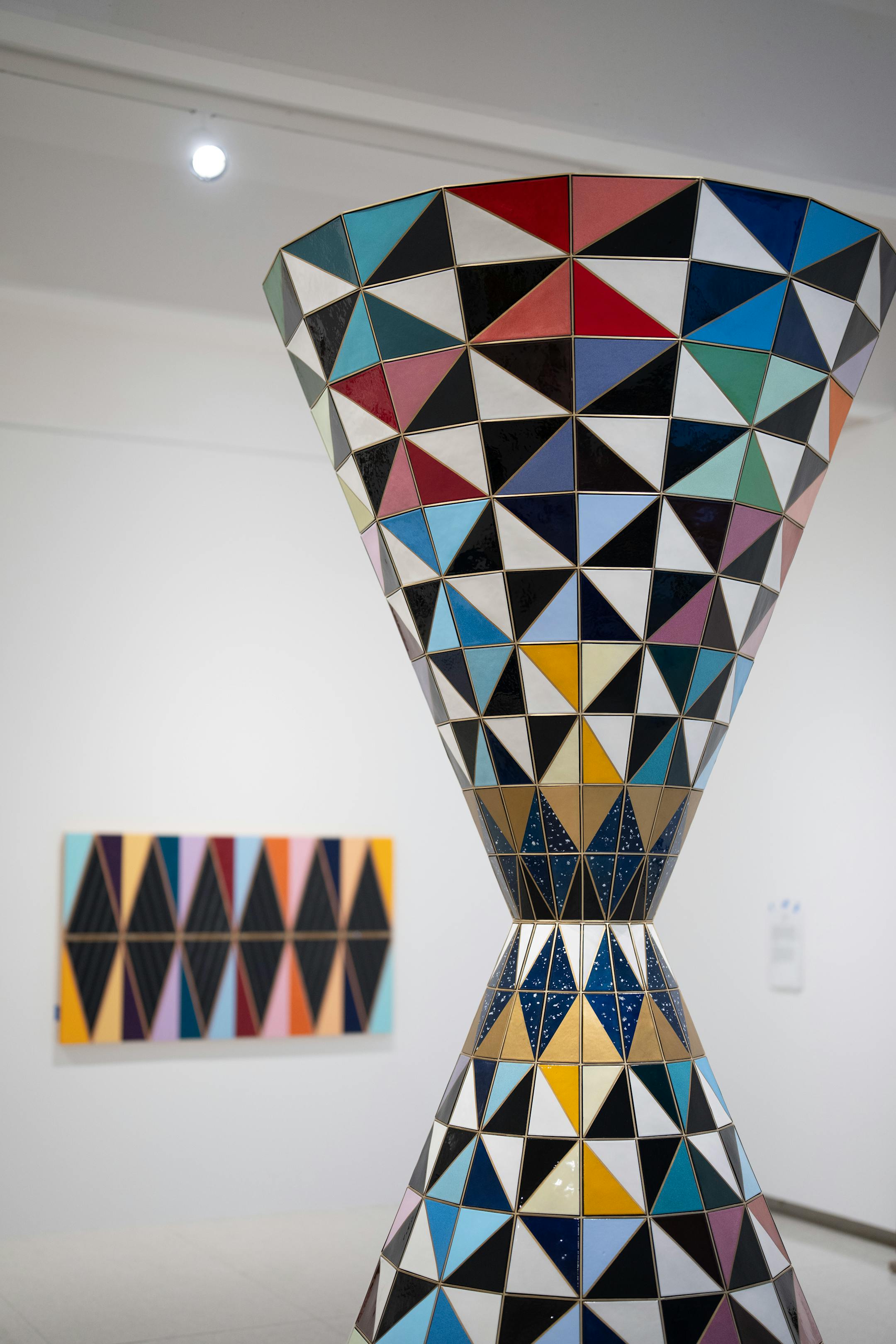
The show includes nearly 100 artworks, from White Hawk’s smaller solo pieces to her monumental beadworks created with community, recent glass mosaic works fabricated in Germany and collaborative videos.

Dyani White Hawk's sculpture "Infinite We," 2025, is one of the newest works in the exhibition. Beyer Projects produced the work. (Alex Kormann/The Minnesota Star Tribune)

White Hawk’s abstract geometric works draw primarily from Lakota women’s art forms and frequently use the Lakota “kapemni,” an hourglass-like symbol made of two triangles. She’s interested in the history of European easel painting and is most curious about where the histories intersect and influence each other.

Walker Senior Curator Siri Engberg realized it was time for a bigger show of White Hawk’s work after the acquisition of her 2020 video installation “Listen,” a collaboration with filmmaker Razelle Benally (Oglala Lakota/Diné).

It features Native women speaking their languages on their homelands. There aren’t any English subtitles. The videos ask viewers to question why they aren’t familiar with the sounds of Indigenous languages, despite living on the same land, White Hawk explained.

"Listen," 2020, is a series of videos featuring Indigenous women speaking their native language on their homelands. (Alex Kormann/The Minnesota Star Tribune)

At the same time, White Hawk started working with a glass studio in Germany, her work was featured in the 2022 Whitney Biennial, and she had several public artworks planned.

It felt time for something bigger at the Walker.

Dyani White Hawk presents 15 years of work in her exhibition “Love Language” at the Walker Art Center. (Alex Kormann/The Minnesota Star Tribune)

“We want people to be able to see our creative communities, to understand our histories, to understand our contemporary existence, to acknowledge that we’re here, and the ways that we’ve been affected by colonization — and the ways we’ve continued to thrive,” White Hawk said.

The exhibition is separated into four parts that overlap: See, Honor, Nurture, Celebrate.

In each section, there’s a video featuring a Native community member talking about that word, bringing their own knowledge and experience to it.

Each artwork also tells a story.

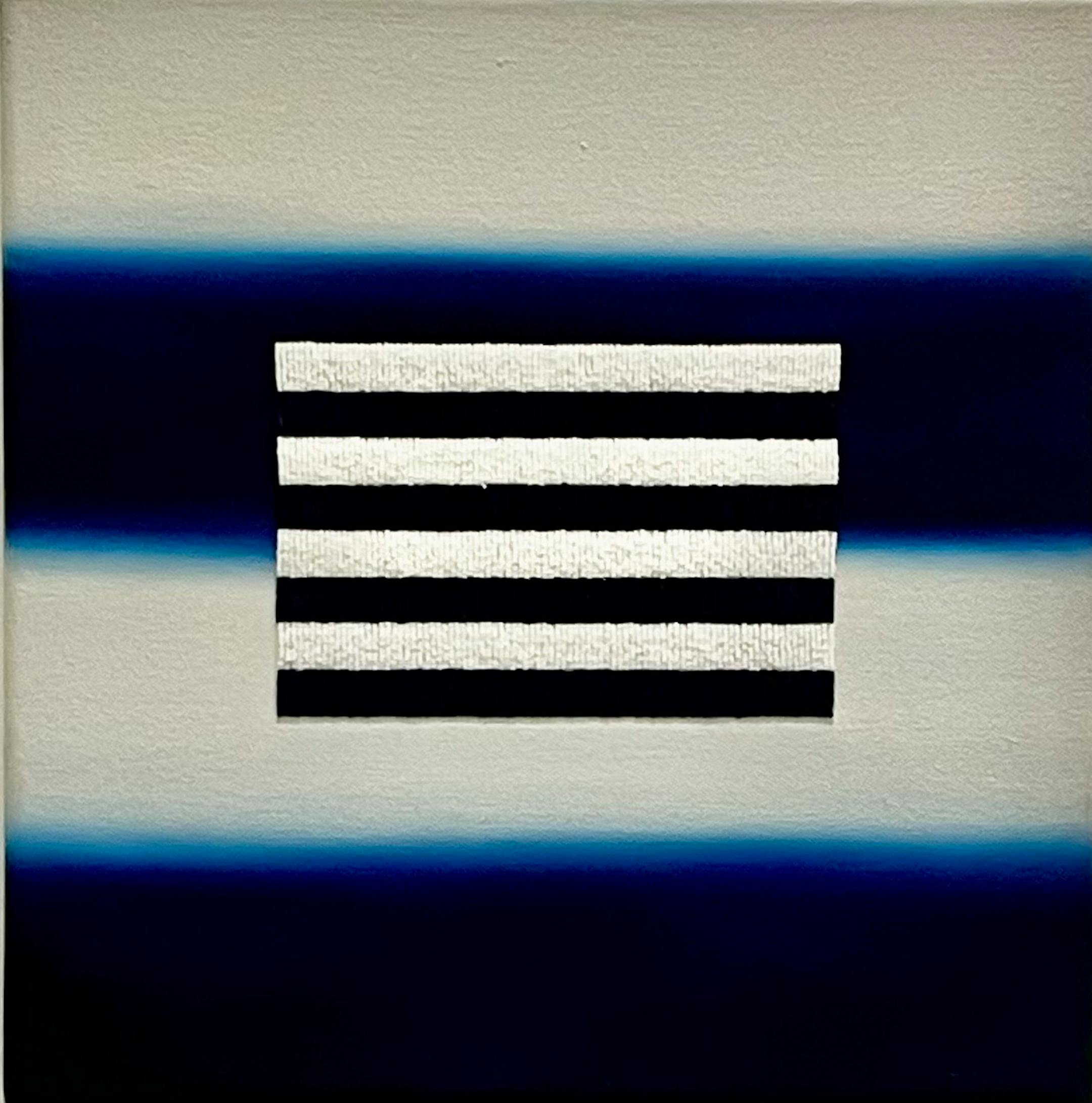
“Untitled, Blue and White Stripes (The History of Abstraction),” circa 2013, is a 12- by 12-inch square with two white stripes, two blue stripes and beaded black-and-white stripes.

Artist Dyani White Hawk's early abstract painting and beadwork "Untited, Blue and White Stripes (The History of Abstraction)," 2013, is located in "SEE," the first section of the exhibition. (Alicia Eler)

“The first and the crispest and the most clear is the beadwork,” Engberg said. “It is on top of the [painterly] abstraction, on top of the gesture, and this is a way of conceptually saying this was always here. [Contributions from Native people] came first.”

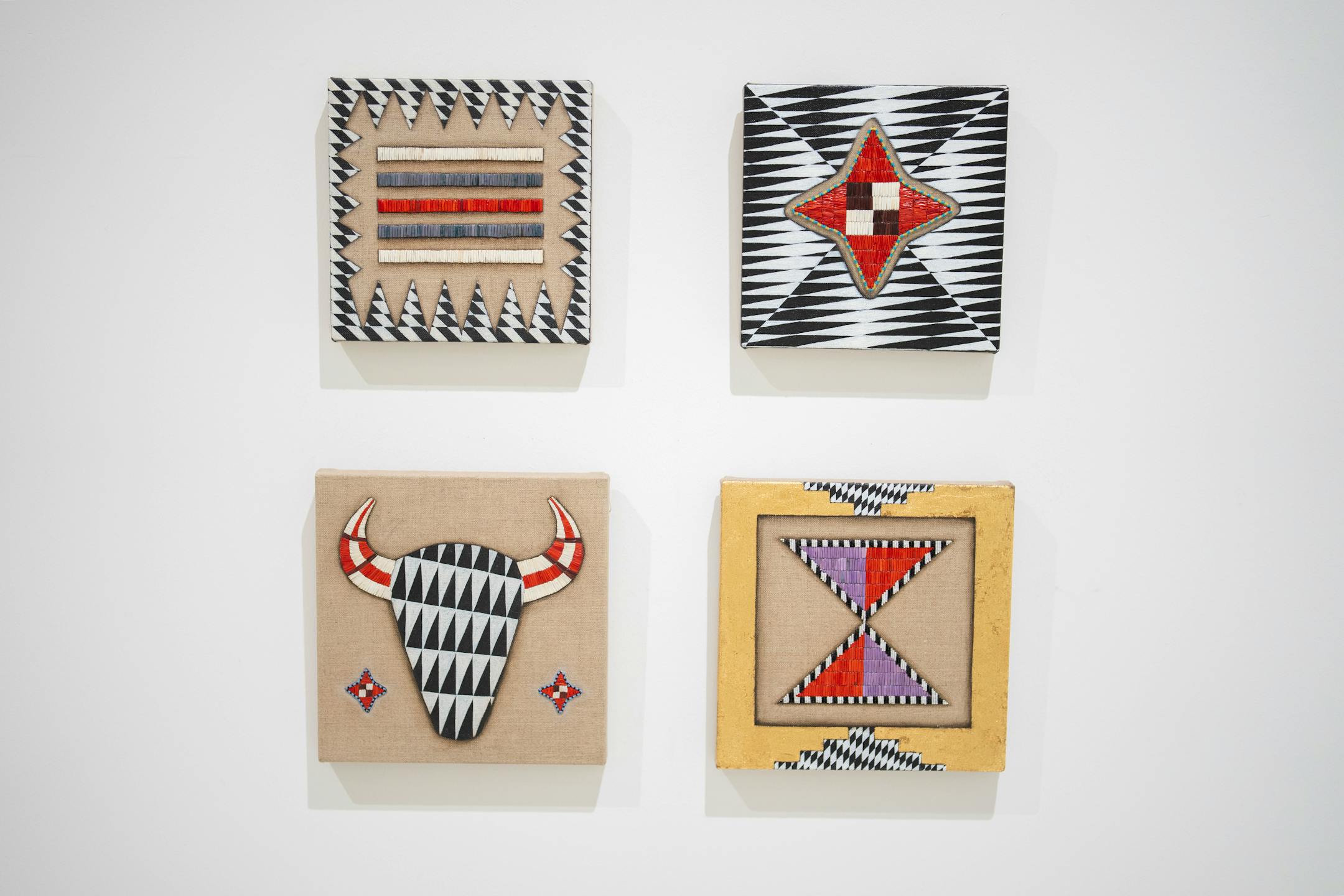
Dyani White Hawk's earlier works from 2015-2016 incorporate porcupine quillwork, a sacred and labor-intensive form she learned in college. The works contain black and white, colors that carry spiritual and cultural significance for Lakota people. (Alex Kormann/The Minnesota Star Tribune)

White Hawk studied at Haskell Indian Nations University and the Institute of American Indian Arts. When she arrived at University of Wisconsin-Madison for a master of fine arts in painting, she was suddenly immersed in Eurocentric art history.

She missed doing beadwork, but at UW-Madison she didn’t want to bead onto moccasins, and then have to defend that, she said.

Instead she started mimicking the form of quillwork into painting.

She noticed how many white male American Abstract painters like Jackson Pollock, Mark Rothko, Barnett Newman were inspired by Native artists but never credited them.

“They were looking to the work because of its mastery, because it was strong enough to inspire the trajectory of their own practice,” she said. “That’s not how it’s written, that’s not how it was presented.”

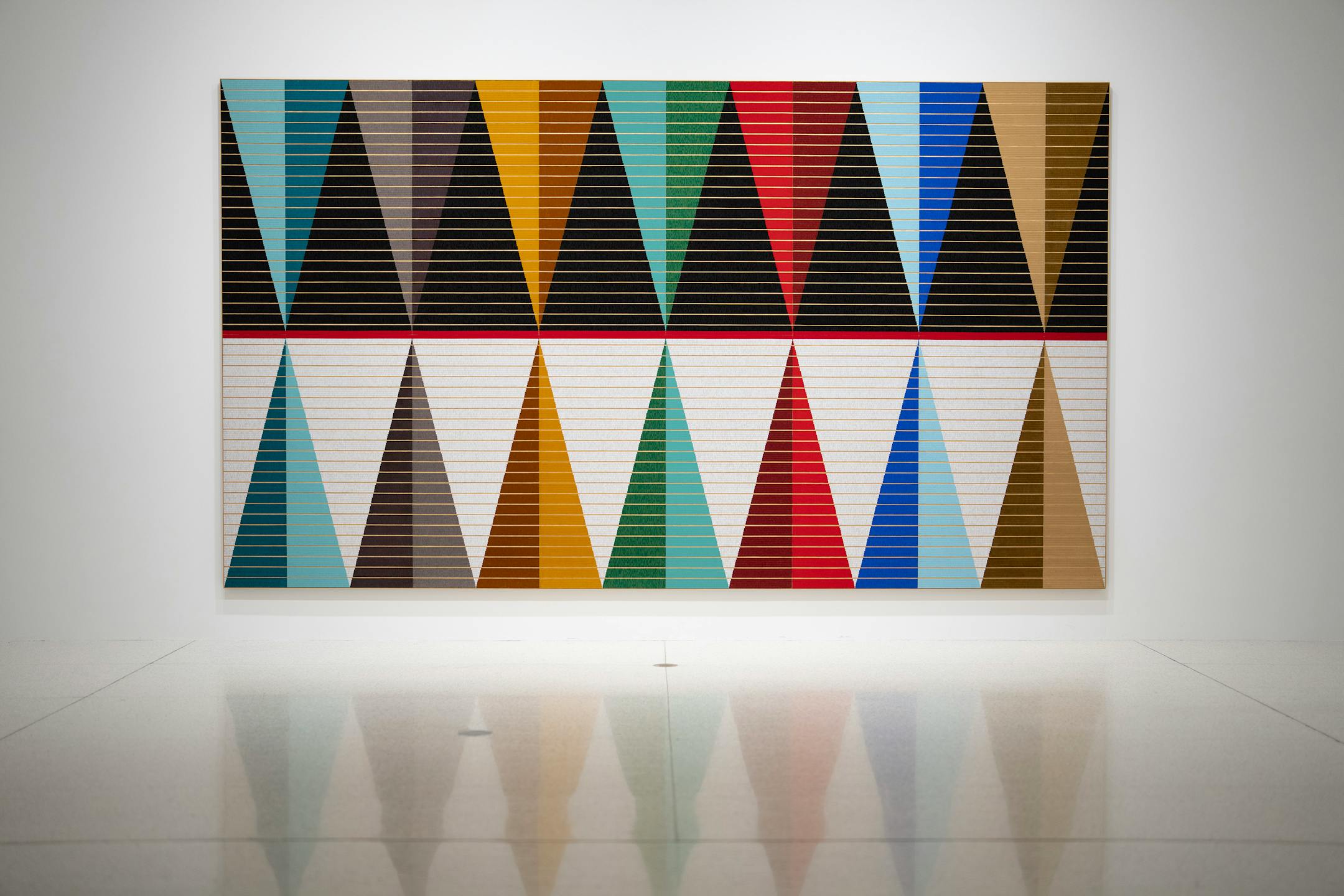
Dyani White Hawk’s collaborative large-scale beadwork debuted at the 2022 Whitney Biennial. (Alex Kormann/The Minnesota Star Tribune)

Over time, her work has become hugely collaborative.

Eighteen people sewed a half-million tiny glass bugle beads into geometric swaths of color on 14-foot-wide panels for her 2022 Whitney Biennial work “Wopila.”

“It’s a natural progression for an artist who was never really interested in individual expression, or didn’t continue in that vein,” said writer Heid Erdrich. “To expand, understand community through working with community — these are beautiful things.”

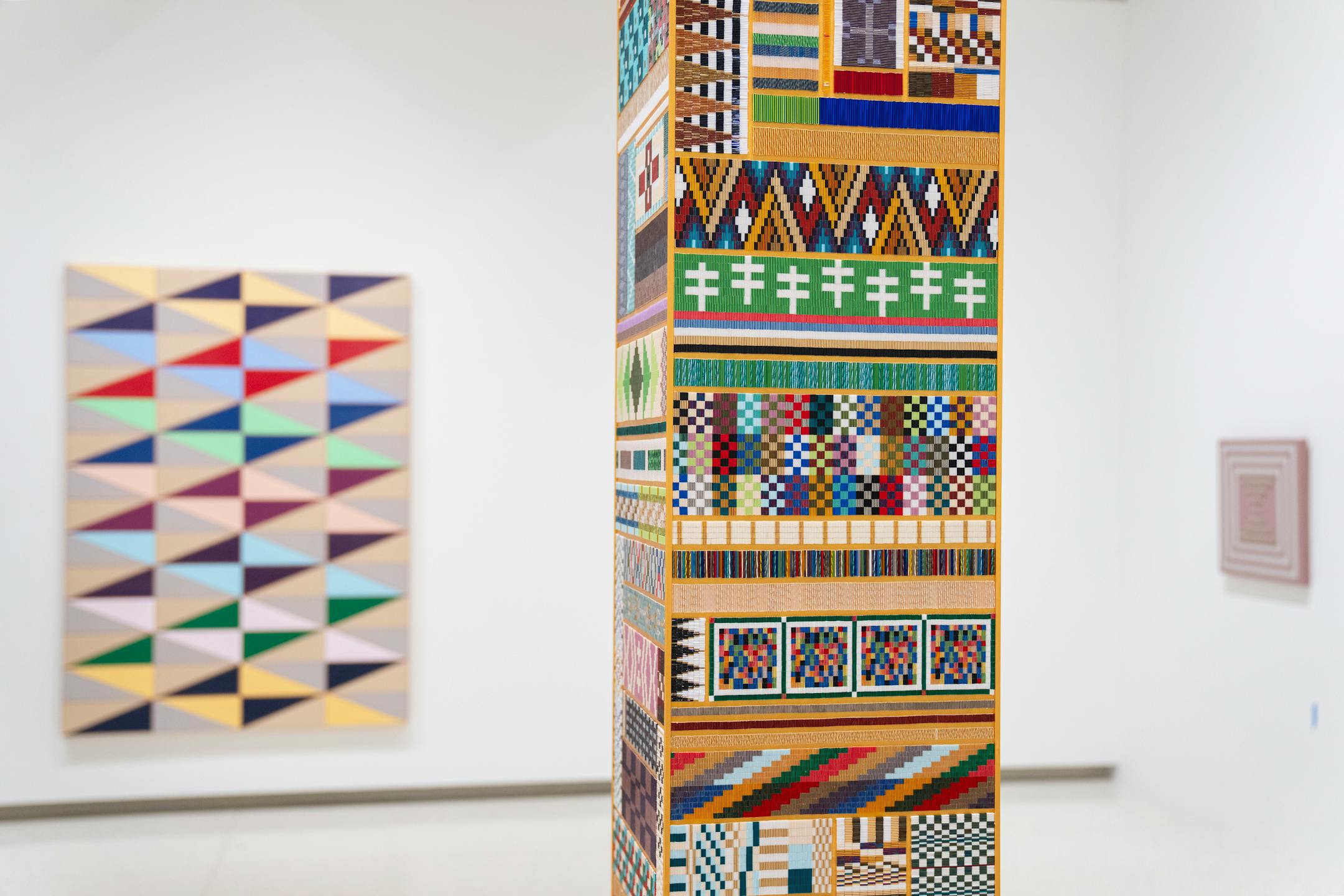
The 12-foot-tall sculpture "Visiting II" pays homage to Ojibwe painters Jim Denomie and George Morrison. Both made totem sculptures, and White Hawk wanted to make a piece that "spoke to the lineage of Indigenous art forms and influences on painting and abstraction," she said. Her studio assistants, including family members and Twin Cities art community members, made this piece. (Alex Kormann/The Minnesota Star Tribune)

Erdrich has a pair of White Hawk’s earrings, from her jewelry and textile design line Četáŋ Ská (pronounced chey-tahn ska), or Lakota for “white hawk.“

Accessibility is important. Visitors can purchase her jewelry and quilts in the Walker gift shop. Quilts produced with Faribault Mill offer comfort and welcoming.

White Hawk brings an element of comfort and calm into the gallery. (Alex Kormann/The Minnesota Star Tribune)

White Hawk — whose art is in collections at the Guggenheim, MoMA, Whitney Museum of American Art, the Minneapolis Institute of Art and more — hopes there will be more healing between Indigenous people and art institutions moving forward and changes in how we tell American history.

These are big, long-term goals, and they will take time.

“But if you come here and you’re just super happy about color, that’s amazing as well,” she said. “Joy. I hope for joy.”

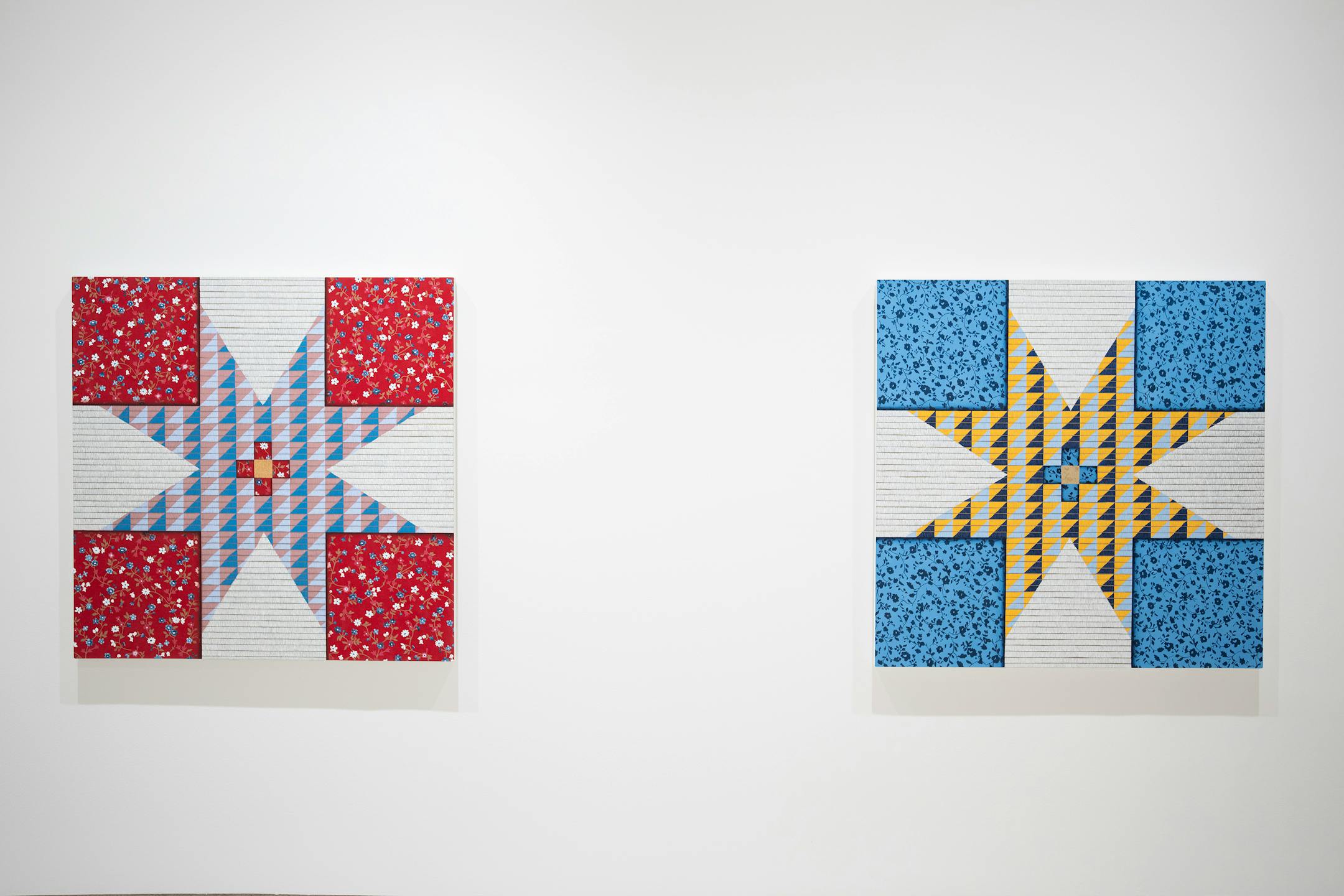
Dyani White Hawk's 2015 paintings "Čhokáta Nažiŋ Wíŋyaŋ (Stands in the Center Woman)" and "Wičhahpi Wakíŋyaŋ Wíŋyaŋ (Thunder Star Woman)" are some of her earlier works on view in "Love Language." (Alex Kormann/The Minnesota Star Tribune)

Dyani White Hawk: ‘Love Language’

When: Ends Feb. 15.

Where: Walker Art Center, 725 Vineland Place, Mpls.

Cost: $9-$18, free for Tribal Nations citizens and members

Hours: 10 a.m.-5 p.m. Wed., Fri.-Sun., 10 a.m.-9 p.m. Thu. (free 5-9 p.m. Thu.)

Info: 612-375-7600 or walkerart.org

about the writer

about the writer

Alicia Eler

Critic / Reporter

Alicia Eler is the Minnesota Star Tribune's visual art reporter and critic, and author of the book “The Selfie Generation. | Pronouns: she/they ”

See Moreicon