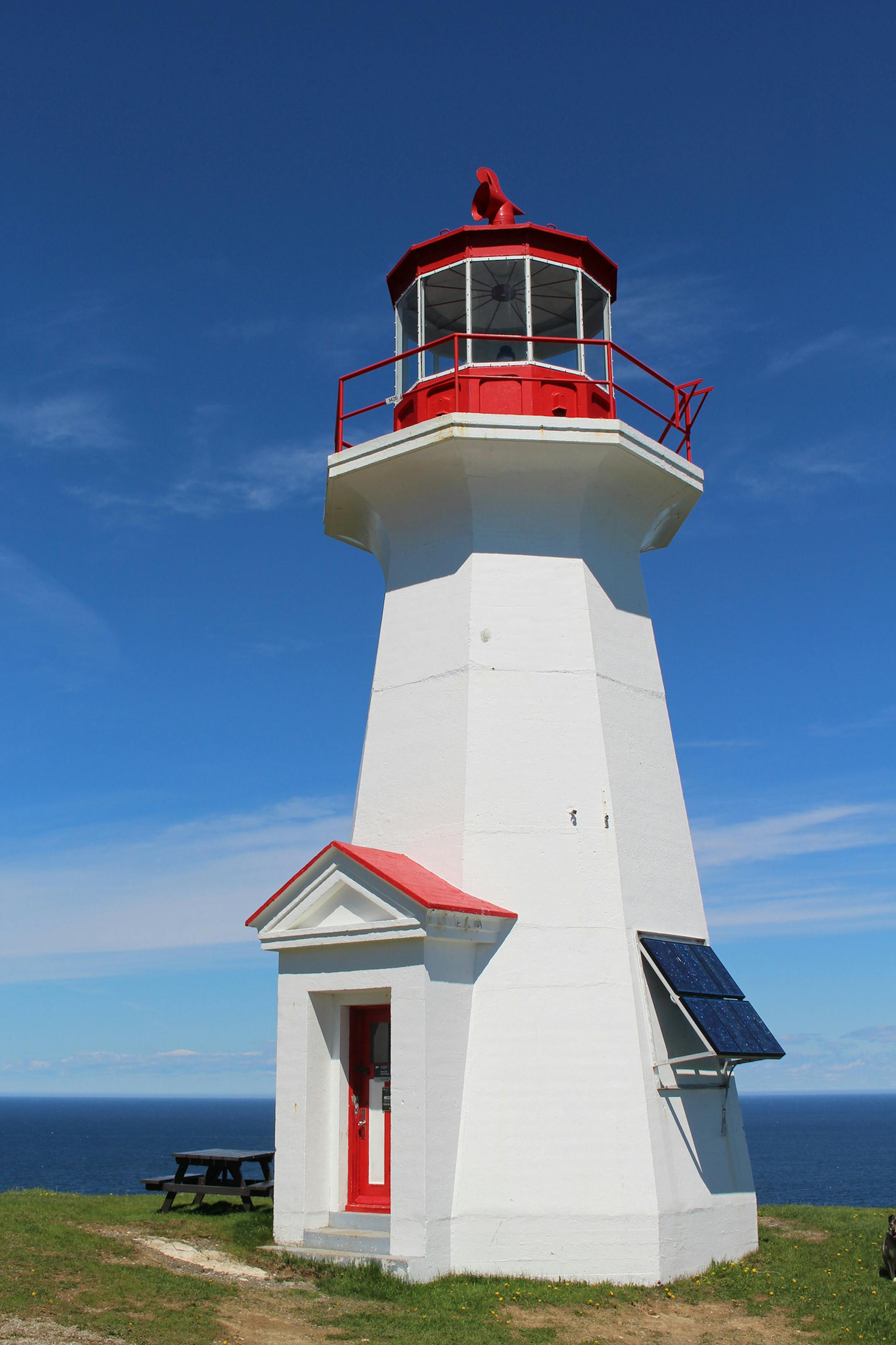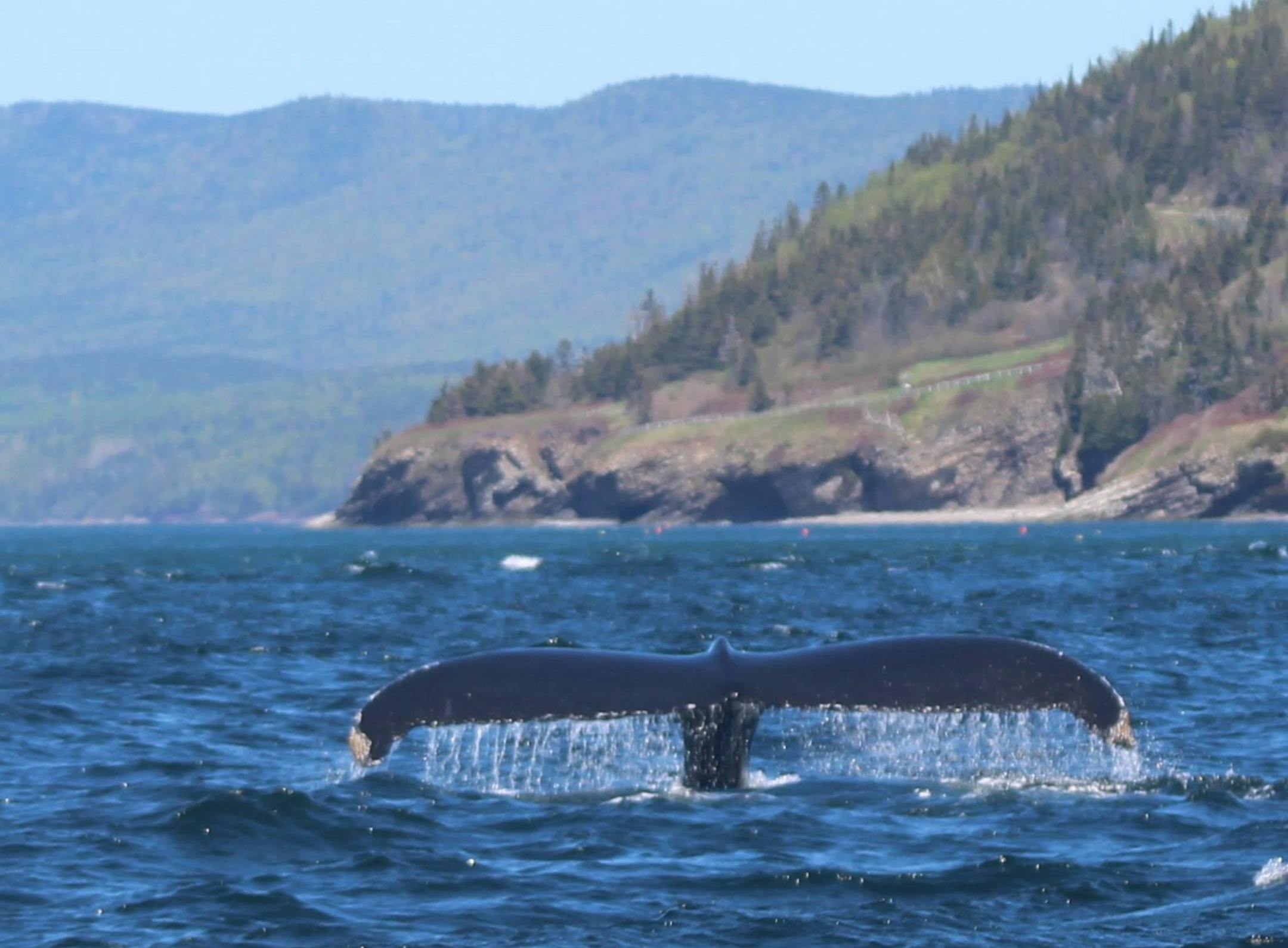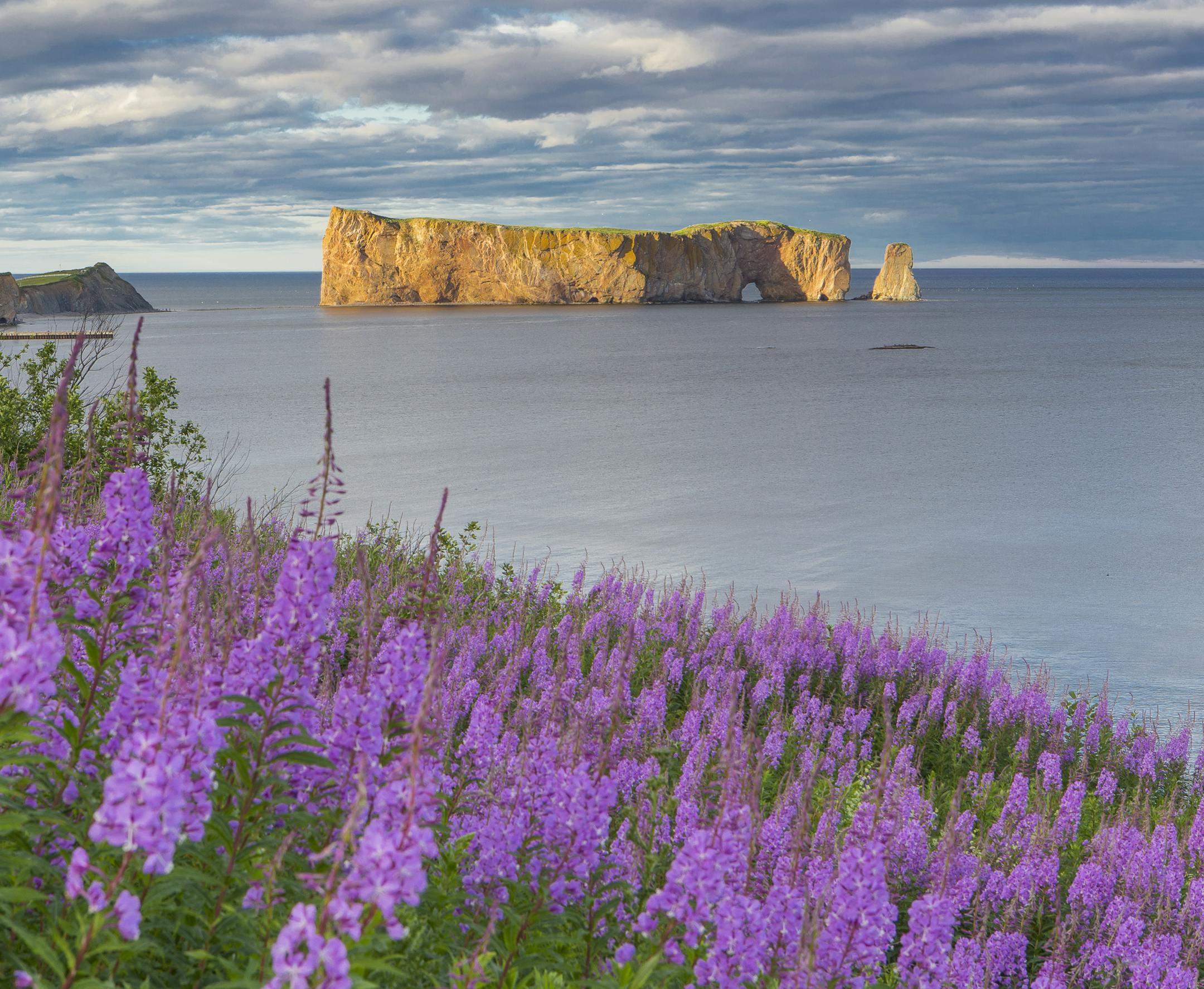
This was going to be a story about lighthouses, until I met a peony named Elsie. And the world's ugliest fish. And winkles in garlic-butter sauce. And a dented World War II German torpedo. And galleries. And whales. And waterfalls. And a moose. And 50,000 northern gannets on an island. And cod tongues in sea-urchin butter. And a very big box of live lobsters in yet another picture-book village.
We'll talk a little about lighthouses, too.
Some obligatory orientation: The Gaspé (gas-PAY) Peninsula is an extension of Quebec province roughly the size of Belgium that's bordered on the north by the St. Lawrence River and extends into the Gulf of St. Lawrence. It's got coastline, mountains, renowned salmon fishing and trees that turn brilliant colors in October. It being maritime, it gets its share of rain and fog, which (along with shipping via the St. Lawrence) explains its 14 lighthouses.
Its population is about 130,000, compared with Belgium's population of 11 million. French is widely spoken, but Anglophonic tourists are welcome and won't starve.
The largest town is Gaspé (population 15,000). It gave the region its marketable name: Gaspésie. Explorer Jacques Cartier planted a wooden cross somewhere near Gaspé in 1534 and claimed the territory for France, which didn't quite work out.
The western gateway, for most visitors, is the river town of Sainte-Flavie, and therein begins the problem: You have to really want to get here to get here. The town is a 10½-hour drive from Toronto and nine hours from Boston. Air Canada flies in and out, but a flight from, say, Chicago could get you to Paris cheaper or faster or both, depending on the number of stops.
That's the end of the problems. The rest is all discovery and joy.
Cross-pollination
Driving clockwise along the river from Sainte-Flavie on Hwy. 132 (the road that hugs the water and most everything else worthwhile here), and past Marcel Gagnon's 80 bizarre statues (the first hint that artists live and thrive here), signs invite us into the sprawling Jardins de Metis, aka Reford Gardens. Elsie Reford, a lady of means (the means derived from her uncle being a founder of the Canadian Pacific Railway), began planting stuff on the family retreat 90 years ago. Her great-grandson, director Alexander Reford, 53, has been in charge of every blooming thing (including its treasured blue poppies) for the past 23 years. The garden is a National Historic Site.