

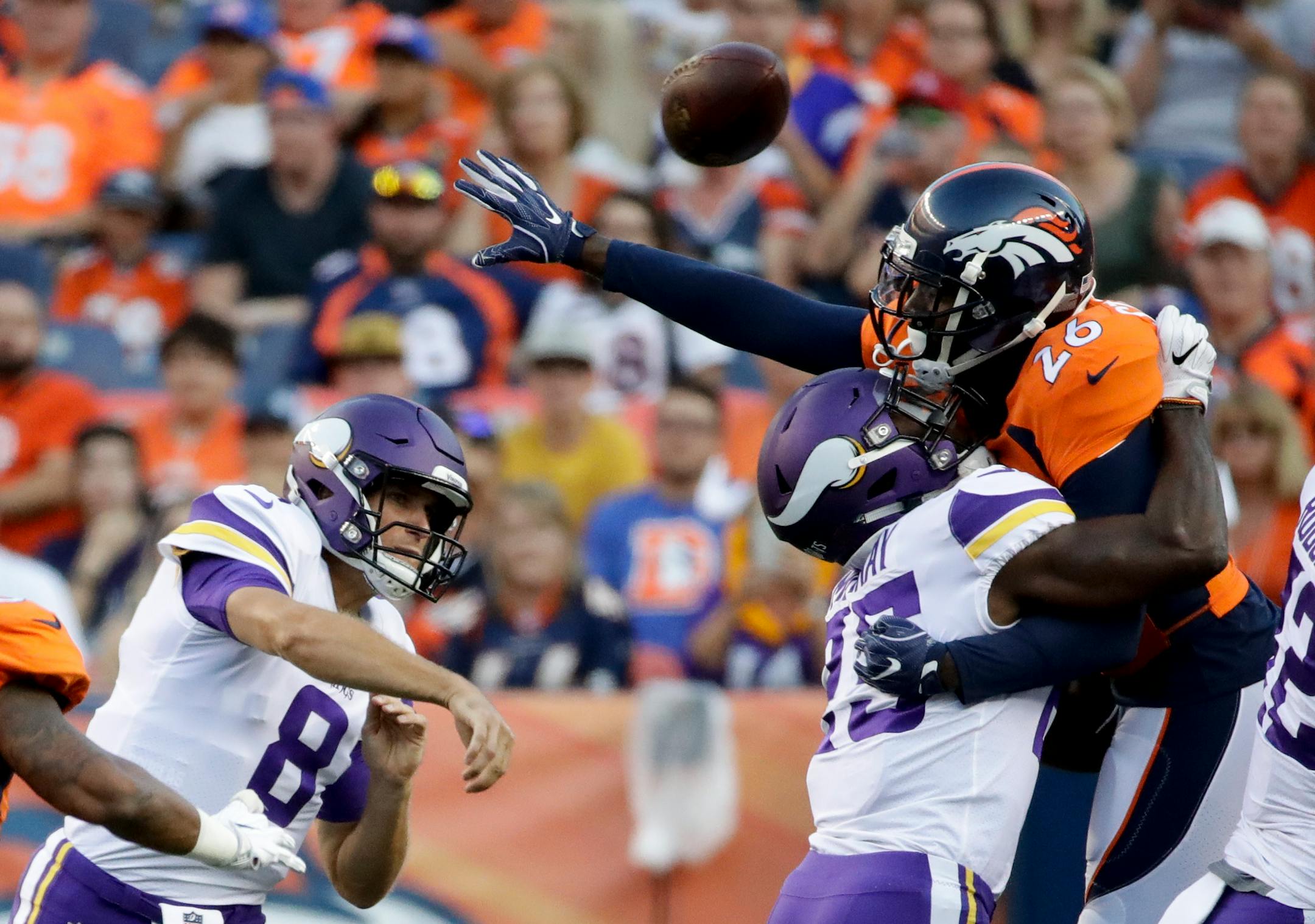
The red zone is the area of the field where communication and chemistry between a quarterback and his receivers might be the most important. Defenses are able to play tighter since they have less ground to cover.
"Your timing when the ball is being released, where it's being thrown has to be that much more precise," Vikings quarterback Kirk Cousins said.
Except quarterbacks, including Cousins, are typically less precise in the red zone.
In 2017, only one quarterback had a higher completion rate in the red zone than his overall completion percentage — Eagles quarterback Carson Wentz, whose 64.9 red-zone percentage outpaced his overall 60.2 mark.
Cousins had a dip of 11.9 percent (64.3 to 52.4), the 20th-biggest drop among quarterbacks who had at least 14 passing attempts per game. His 52.4 red-zone completion percentage was 15th among those passers.
In his three seasons as a starter, Cousins had one good year in terms of that statistic — 2015. That season, Cousins had a 64.1 red-zone completion percentage (fifth in the league) and didn't throw any interceptions in that part of the field.
He threw three last season and two in 2016 while hitting just 47.5 percent of his passes.
"Red zone football is unique," Cousins said. "The windows are smaller. There's less grass for the defense to defend so the players are going to be less spread out."


