
Advertisement

Quake is 'nightmare on top of nightmare'

This week's natural disaster comes after the man-made calamity of war in Syria.

February 9, 2023 at 11:45PM
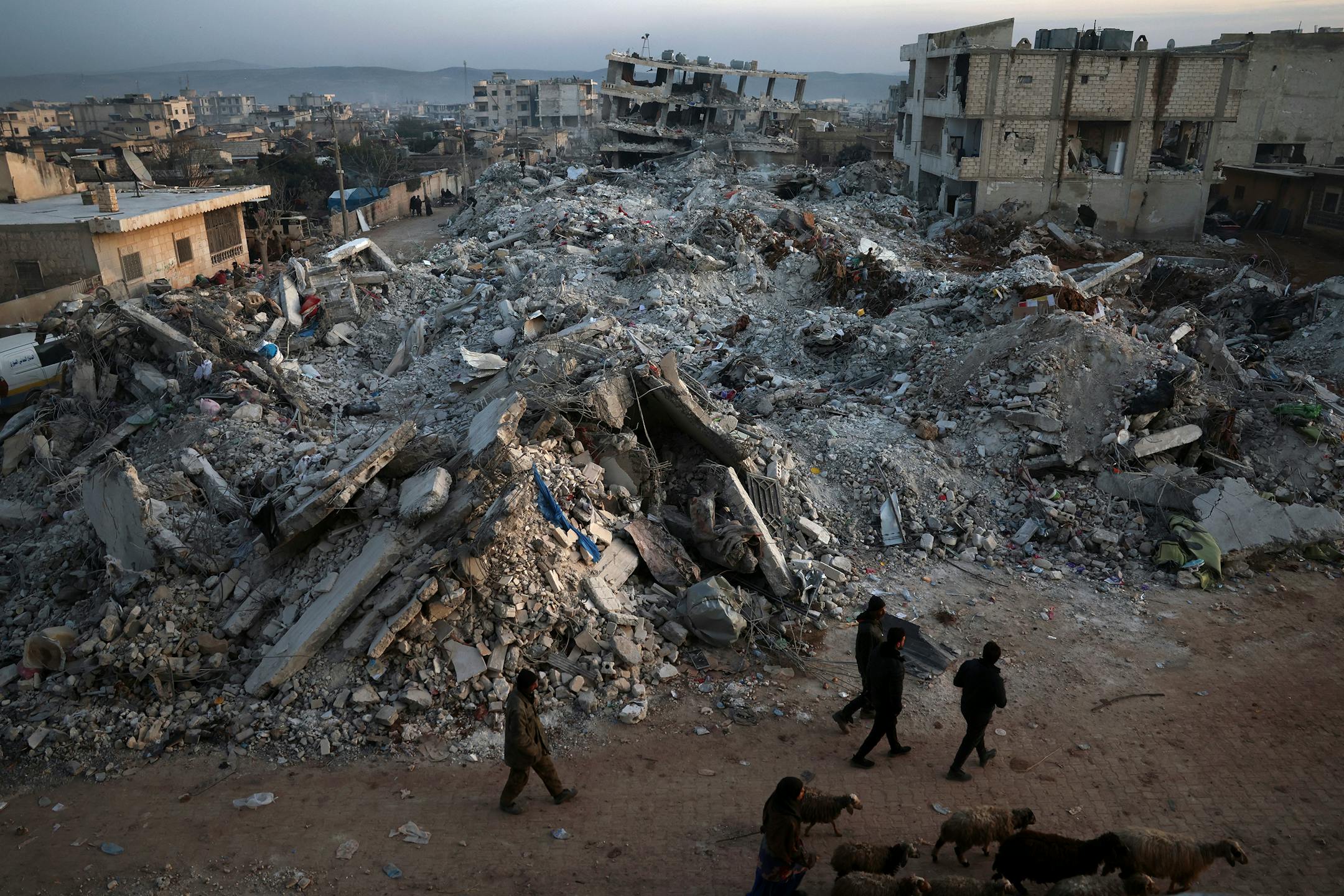
People walk past collapsed buildings following a devastating earthquake in the town of Jinderis, Syria. The quake that razed thousands of buildings was one of the deadliest worldwide in more than a decade. (Ghaith Alsayed, Associated Press/The Minnesota Star Tribune)
Advertisement

Opinion editor's note: Editorials represent the opinions of the Star Tribune Editorial Board, which operates independently from the newsroom.

•••

Monday's magnitude 7.8 earthquake in southeast Turkey and northwest Syria lasted about two minutes. In the hours and days since, the tragedy's toll continues to unfold, with at least 20,000 deaths reported on Thursday. The coming weeks and months will reveal an even higher toll from both the immediate impact of the quake as well as exposure to the harsh winter elements and lack of medical care.

As typically occurs, the seismic event triggered an inspired, if heartbreaking, human response, with residents digging (some with their bare hands) to try to find lost loved ones. Official rescue crews and ad hoc heroes like Syria's famed "White Helmets," who are used to combing through the rubble of buildings downed by bombs in Syria's vicious civil war, also set in motion. They were joined by search-and-rescue crews from around the world acting with alacrity and courage amid the dangerous debris.

Financial aid has started flowing from other nations, international institutions and individuals through credible global organizations, including Minnesota-based Alight.

The natural disaster, tragically, was made worse by man-made dynamics in both countries. While the Turkish government is better equipped to deal with the emergency, residents complained loudly and legitimately of shoddy construction standards and a substandard government response. The disappointment will likely be bound up in the already bitter politics leading up to springtime national elections.

But the situation is even worse in Syria, where 12 years of civil war never ended, even if they were overshadowed by the more recent outrage of Russia's invasion of Ukraine.

There's a link between the two wars: The brutality and unrepentant war crimes on display in Ukraine were previewed in Syria, including the alleged deliberate targeting of hospitals as Russian President Vladimir Putin backed the homicidal regime of Bashar Assad against an uprising over his cruel rule.

Advertisement

The region was devastated before the earthquake, with more than 4.1 million of the area's 4.5 million people dependent on humanitarian aid, according to a Brookings Institution analysis. Moreover, more than 2.8 million people are already displaced from other parts of war-torn Syria. Many are only safe from collapsing buildings because they were already without shelter, often in refugee camps. Many, if not most, of these people have nowhere to go, with roads to the one designated humanitarian corridor damaged by the quake.

Previous efforts to increase safe passageways for lifesaving aid have been stymied at the United Nations by Russia, and Moscow has now joined Damascus in insisting that any aid go through the Assad government, despite its previous weaponization of such relief and the clear violations of international law of which both governments are guilty.

International institutions like the United Nations — not corrupt, complicit governments such as Assad's — are needed to save and help rebuild lives of those affected. Encouragingly, on Thursday, the first U.N. convoy was able to cross directly into northwest Syria with relief supplies. But "much more is needed," U.N. Secretary-General Antonio Guterres said in a statement.

"People are facing nightmare on top of nightmare," Guterres said. "The earthquake struck as the humanitarian crisis in northwest Syria was already worsening, with needs at their highest level since the conflict began."

The U.N. leader rightly pointed out that Turkey has been extraordinarily generous regarding refugee resettlement. That's especially true when it comes to fleeing Syrians, 3.6 million of whom live in Turkey, home to the most refugees of any country in the world.

Soon, an international "flash appeal" will be made to respond to the earthquake, Guterres said. America should lead the global effort by responding generously.

Advertisement
about the writer

about the writer

Editorial Board

See Moreicon
Advertisement