

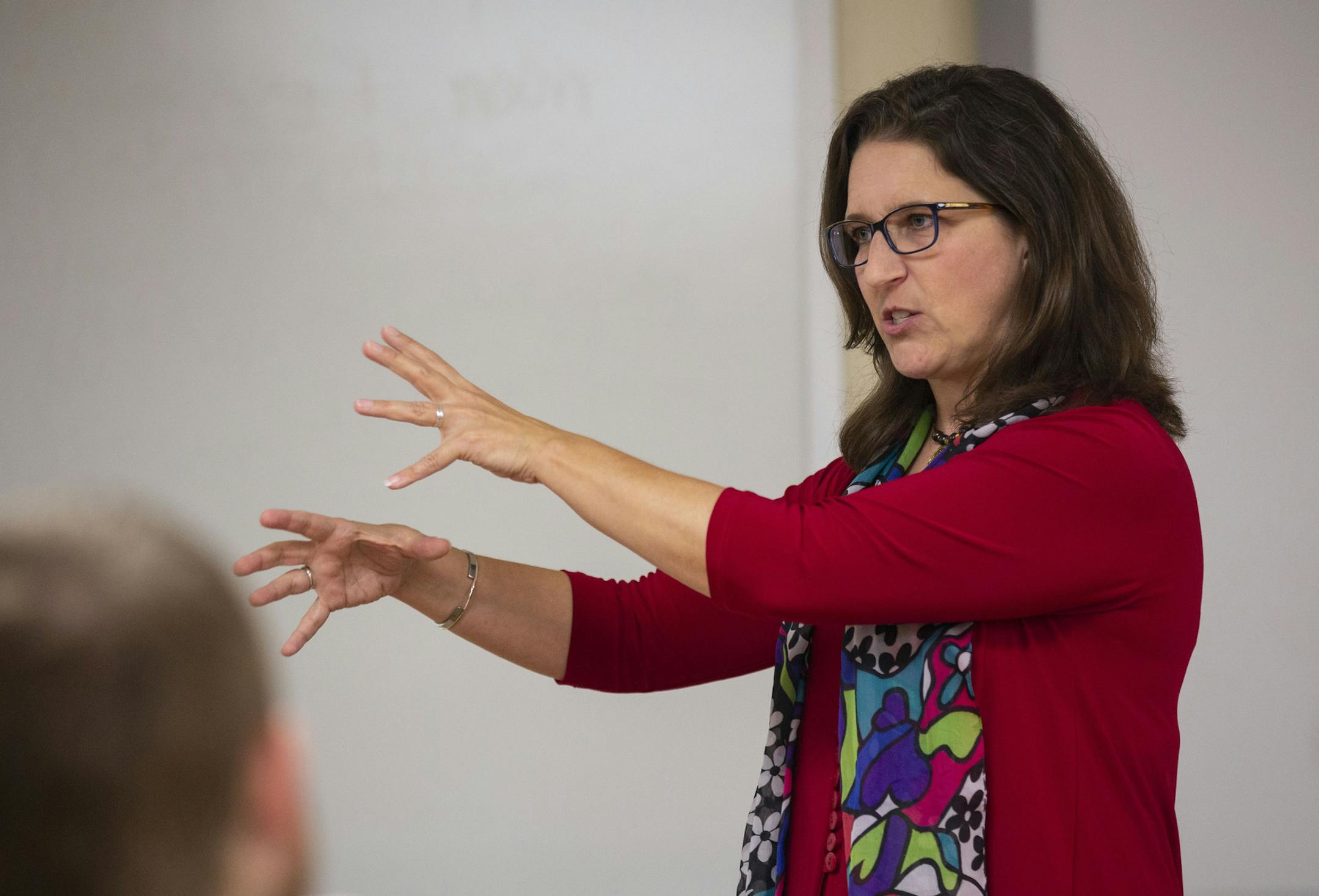
Minnesota Education Commissioner Mary Cathryn Ricker visited Duluth this week on her four-day, four-city back-to-school tour, which she said is allowing her to highlight areas in the state where schools are meeting the academic, social and emotional needs of students in creative ways.
A Hibbing native, Ricker said she recognizes the problems schools in northeastern Minnesota and the rest of the state are facing — disparities in graduation rates, standardized test scores and attendance rates stratified by race or income level. According to state Department of Education test score data, Duluth's achievement gap for black students was among the worst in Minnesota last year.
On Wednesday, after speaking with a group of future teachers in a "Teaching Indigenous Students" course at the University of Minnesota Duluth, Ricker spoke with Duluth public school leaders about full-service community schools — a model she thinks has potential to address those persistent achievement gaps in a holistic way. She discussed these issues with the Star Tribune Thursday in a phone interview. This interview has been edited for length and clarity.
You've been saying that part of your job is to find places in Minnesota where schools or districts are finding success addressing problems that may be plaguing other schools in the state. Have you ever looked to Duluth in this respect?
One of the things I want to list off about what Duluth is doing is their commitment to full-service community schools. They started a full-service community school partnership about 20 years ago at Myers-Wilkins Elementary.
For those who might not know, can you explain what a full service community school is?
The school will look for deep and sustainable partnerships in the community to help pair up the expertise of the professionals inside the building with the expertise of people outside of the building to better meet the needs of students and their families. Every full service community school has a full-time coordinator who works on managing those partnerships.
One of the other important pieces is that the school itself does sort of a survey evaluation of what that school community needs. One school may decide that's additional dental support, for example, where another school will decide it's a robust after school program. Another school may decide it is different family engagement strategies.


