

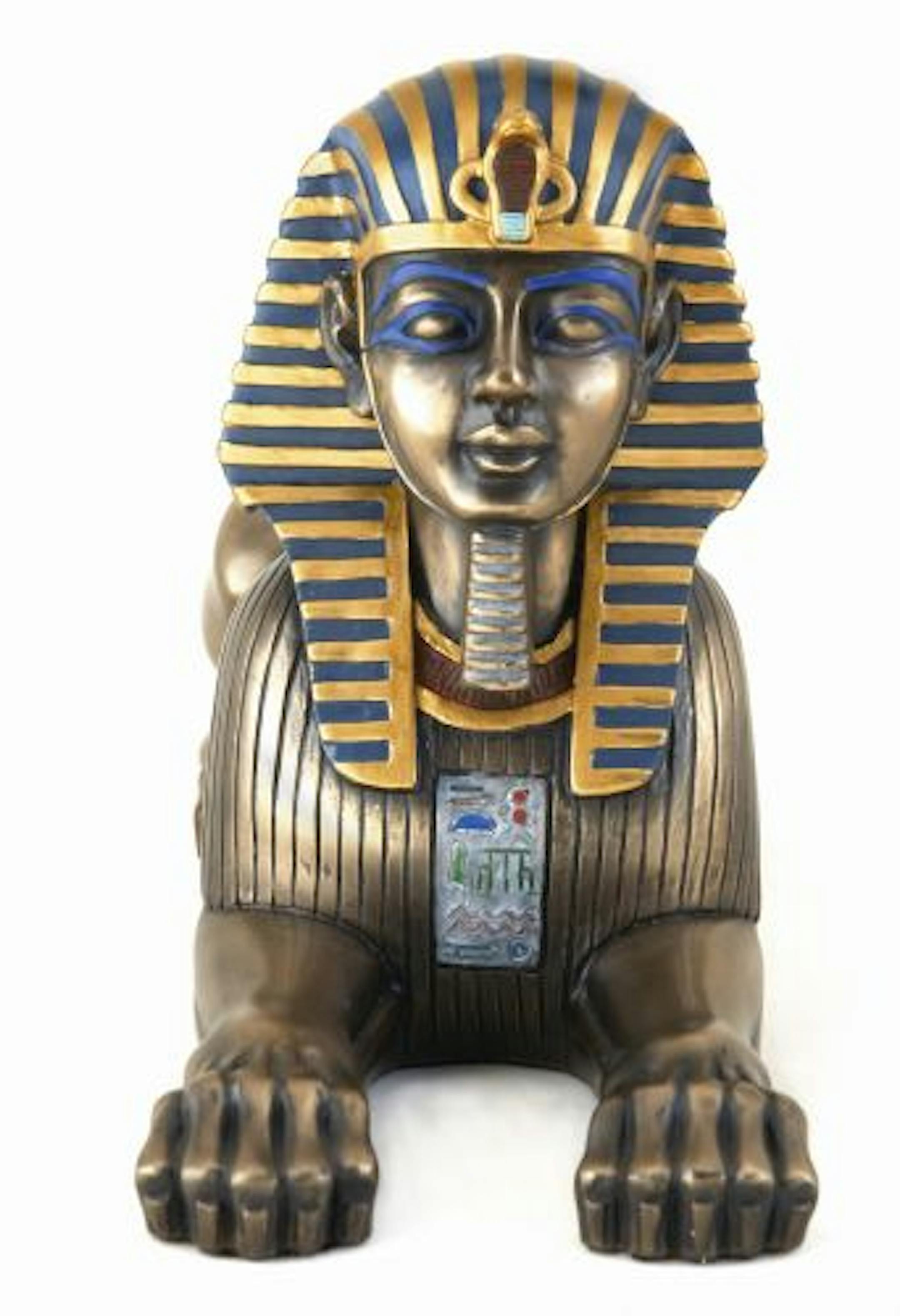
Recent events have kept us riveted on Egypt. But it's our fascination with the Land of the Pharaohs' ancient past that runs as wide and deep as the Nile.
Everything from our architecture to our eyeliner, but most of all our pop culture, is wrapped up in ancient Egypt.
Think about it. Plato is passé. Julius Caesar is so eons ago. But King Tut, subject of a major exhibit opening Friday at the Science Museum of Minnesota, is an everlasting icon in our cultural landscape. The boy king has already sparked 35,000 advance ticket sales, according to the museum.
Mummy movies and sendups of Tutankhamun -- whether in the guise of Steve Martin, a Discovery Channel cartoon character or a Batman villain -- are more prevalent than any depiction of Italian figures from the Roman or Renaissance eras. We see a lot more of the pyramids than of the Parthenon.
In a sense, our love affair with ancient Egypt is a matter of Cleopatra and her predecessors being so close and yet so far away.
"So much of Egypt is very familiar but a little exotic," said William K. Miller, assistant professor in the University of Minnesota Duluth's History Department and one of the state's foremost Egyptologists.
"The pyramids are so iconic that even kindergartners know them," he said. "Mummies and hieroglyphics are familiar to schoolkids. But they're also exotic in that they stand just outside Western civilization."
The still mysterious nature of the pharaohs, in their living or long-dead states, gives modern storytellers a lot of creative license, said David Silverman, curator of the Tut exhibit.


