

Puzzling out the achievement gap

A new coalition called MinnCAN has a wide-ranging roster ready to tackle the vexing problem of underperforming students.

January 25, 2011 at 3:46AM
Gao Shang Yang, a third-grader at Concordia Creative Learning Academy in St. Paul, worked on math with her classmates Monday. The school is among those cited by the Minnesota Campaign for Achievement Now (MinnCAN) as models for providing improved chances for student success.
Gao Shang Yang, a third-grader at Concordia Creative Learning Academy in St. Paul, worked on math with her classmates Monday. The school is among those cited by the Minnesota Campaign for Achievement Now (MinnCAN) as models for providing improved chances for student success. (Star Tribune/The Minnesota Star Tribune)

For children, there are two separate and unequal Minnesotas, says the leader of a new education advocacy group.

There is the Minnesota where white students are among the nation's highest achievers.

And there is the Minnesota where nonwhite, less affluent peers are often left behind, part of an achievement gap that leaves them ill-prepared for work and college -- if they graduate from high school at all.

The Minnesota Campaign for Achievement Now (MinnCAN) has pulled together a broad coalition to seek solutions for an issue debated and dissected for decades, and which could pose an imminent threat to the state's well-being.

In the next decade, more than 70 percent of Minnesota jobs could require postsecondary education, according to a Georgetown University study, and employers will have to rely more on the state's expanding minority population to help fuel the economy.

"Public education is the great equalizer," said Vallay Varro, executive director of MinnCAN and a former St. Paul school board member.

"At a time when the demographics of our state are rapidly changing, the kids who need a great public education the most are not getting one."

Former Gov. Al Quie, attorney Michael Ciresi, former U.S. Rep. Tim Penny and Hubbard Radio president Virginia Hubbard Morris are among MinnCAN's board members. With such wide-reaching influence, the organization may have the political will and power to chip away at the achievement gap in an unprecedented effort, observers said.
"This is a good day for Minnesota; they'll come after this in a much more coordinated fashion than ever before," said Al Fan, executive director of Charter School Partners.

Policy pursuit

The organization presented its 2011 legislative agenda Monday during a news conference at the State Capitol in St. Paul.

The "Minnesota School Emergency in Effect" campaign calls on policymakers to open doors to alternative teacher certification, develop an evaluation system that measures a teacher's impact on student learning and establish a statewide rating system for early childhood education institutions.

"Good policy is the beginning," said Alex Cirillo, a MinnCAN board member and former 3M executive. "The investments of time and money are worthless without it."

The state organization models itself after ConnCAN, a Connecticut-based group that hopes to replicate the effort in other states through its 50CAN campaign. ConnCAN has focused on improving teacher quality and securing funds for high-performing charter schools.

It is unknown if ConnCAN's focus on nontraditional schools will take on the same importance in Minnesota, but Varro cited the work of three Twin Cities area charters to boost minority student achievement.

Troubling trends

For years, Minnesota was at the forefront of education reform, said Varro, a former education adviser to St. Paul Mayor Chris Coleman, but that reputation has taken a hit lately with criticism from U.S. Education Secretary Arne Duncan and mediocre ratings in an Education Week magazine survey. The state has lagged, especially when it comes to seeking solutions for its yawning achievement gap, Duncan said during a visit to Minneapolis last week.

Education Minnesota, the state's teachers union, voiced qualified support for MinnCAN's goals. The union has similar, but not identical, items on its legislative agenda, President Tom Dooher said.

"We're willing to work with anybody who wants to improve education," Dooher said.

That is welcome news in Minnesota, home to some of the nation's widest achievement gaps.

"We have some very troubling trends in education," said MinnCAN board member Sandy Vargas, CEO of the Minneapolis Foundation. "We must change direction. This issue calls to us with urgency."

Corey Mitchell • 612-673-4491

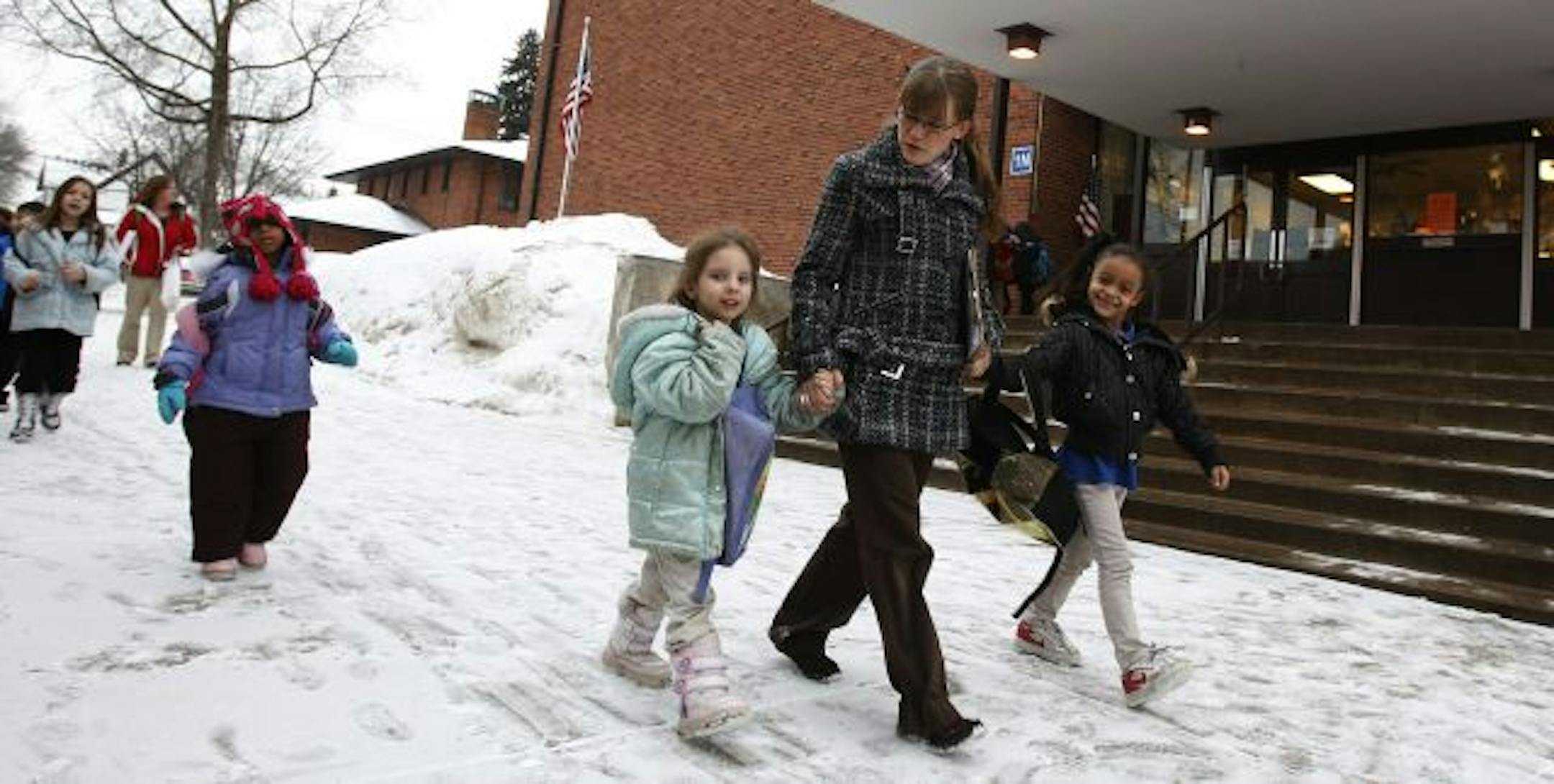
Alexis Gerrish, a kindergarten teacher at Concordia Creative Learning Academy in St. Paul, walked students Karah Smieja, left, and Amarianna Russell to their bus after school on Monday.
Alexis Gerrish, a kindergarten teacher at Concordia Creative Learning Academy in St. Paul, walked students Karah Smieja, left, and Amarianna Russell to their bus after school on Monday. (Star Tribune/The Minnesota Star Tribune)
about the writer

about the writer

COREY MITCHELL, Star Tribune

More from No Section

See More
FILE -- A rent deposit slot at an apartment complex in Tucker, Ga., on July 21, 2020. As an eviction crisis has seemed increasingly likely this summer, everyone in the housing market has made the same plea to Washington: Send money — lots of it — that would keep renters in their homes and landlords afloat. (Melissa Golden/The New York Times) ORG XMIT: XNYT58
Melissa Golden/The New York Times

It’s too soon to tell how much the immigration crackdown is to blame.