
Putting a new face on Protestantism

Traditionally white churches are working to diversify the makeup of their congregations.

April 25, 2011 at 11:01AM
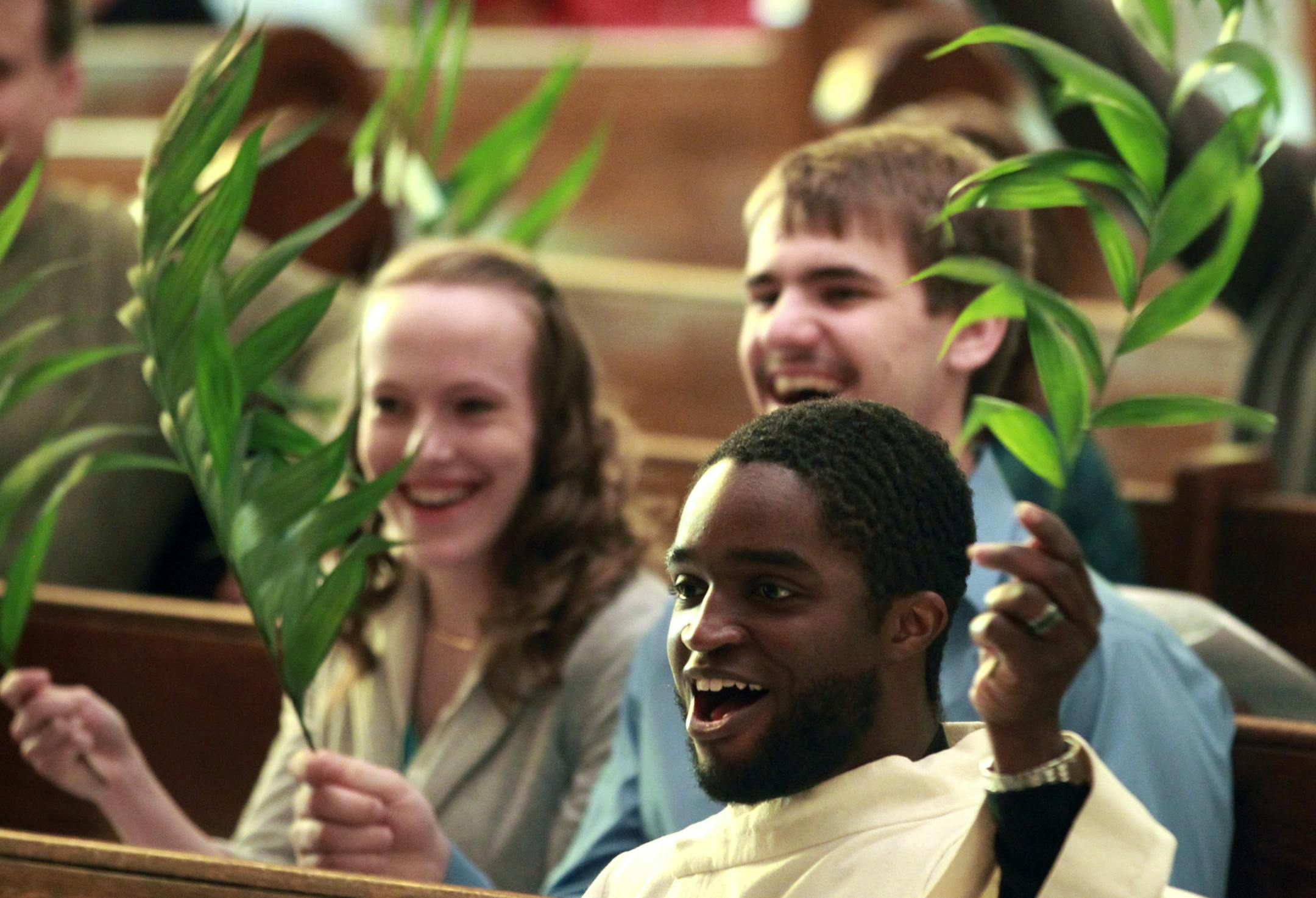
Elwyn Fraser, foreground, is a worship leader at Christ Lutheran Church on Capitol Hill. More than 20 percent of the St. Paul congregation is non-white.
Elwyn Fraser, foreground, is a worship leader at Christ Lutheran Church on Capitol Hill. More than 20 percent of the St. Paul congregation is non-white. (Star Tribune/The Minnesota Star Tribune)

At Christ Lutheran Church on Capitol Hill in St. Paul, the congregation is a far cry from its Scandinavian origins in 1868.

These days, the pews are filled with Cambodians, Chinese, Africans, American Indians and Hispanics. The gospel is read in three languages. A choir sings hymns in Khmer during communion services, and equipment is available for those who need the worship service translated into the Cambodian language.

"You just look out on Sunday morning and you see all these different people. It looks like the world," said the Rev. Gary Dreier, the church's pastor.

For the Evangelical Lutheran Church in America -- and other Protestant churches -- more churches like Christ Lutheran are needed. But getting people of different backgrounds and races into the same church is often not that easy.

The St. Paul and Minneapolis ELCA area synods are making diversity a key focus this year. Already they're seeking out more non-white pastoral leaders. During their annual meetings in May, they plan to examine other ways to encourage ethnic and racial minorities to participate in the faith.

"In recent decades, a steady stream of immigrants has flowed into Minnesota, making neighborhoods increasingly diverse in both urban and suburban communities," said Rev. Peter Rogness, bishop of the St. Paul Area Synod of the ELCA, in a letter to members. "Lutheran congregations, however, remain predominately white, and very few have been able to extend the radical hospitality necessary to welcome those of a different ethnic heritage or racial identity."

Minnesota has the largest number of ELCA members of any state, with close to 800,000 baptized members. Nationwide, the ELCA has nearly 4.5 million members. Only about 3 percent are people of color.

Strategies need to catch on

The ELCA has developed "ethnic-specific strategies" aimed at encouraging greater diversity, Rogness notes, "but until they're latched onto and implemented in local communities, it doesn't happen."

The St. Paul and Minneapolis synods plan to lead discussions at their May assemblies about crossing racial and ethnic barriers, and want to encourage churches to appoint people of non-European ancestries to leadership positions like pastor.

"It's important because I think it will signal to people ... that we're open to new neighbors," said the Rev. Craig Johnson, bishop of the Minneapolis Area Synod of the ELCA.

Other overwhelmingly white, Protestant groups here also are trying to address diversity, said Carl Nelson, president of the Greater Minnesota Association of Evangelicals. He said about 25 churches participate in a network called "Reconciliation Cohort," aimed at helping pastors gain skills to lead and build diverse congregations.

"Biblically, our churches are called to be places that unite people together in a belief in Jesus Christ, despite our racial, socioeconomic, cultural and political differences," Nelson said.

"Sociologically, we tend to affiliate ourselves with people most like us. Usually, churches follow that same pattern."

In suburbs with diverse social and ethnic groups, "When you bring them together in a congregation, it's not very easy," Nelson said.

'Some people leave'

Richard Ensrud, senior pastor at Brooklyn Park Evangelical Free Church, said the predominantly white congregation began to change in the mid-1990s when African, Hispanic and other immigrants began to move into the community. The church now offers two services on Sunday: One is traditional while the other features songs in Spanish or Liberian dialects, Ensrud said.

The changes have not sat well with some members, he said.

"It's been painful in some ways because we have seen some people leave," Ensrud said. "They're not comfortable either with the preaching or worship style."

Robert Wuthnow, director for the Study of Religion at Princeton University, acknowledged the painful transitions that come with differences in language, income levels and expectations in how worship should be conducted. However, some Protestant groups like the ELCA face declining or stagnant membership numbers, and attracting immigrants could make a difference.

"What I see is a certain amount of competition among congregations and denominations to grow or at least not to decline," Wuthnow said. "So if there's a large ethnic minority community in the local area, the church that succeeds in attracting some of those people as members is more likely to grow."

Dreier at Christ Lutheran said when the church began to see an increasing number of Asian immigrants attend almost three decades ago, some congregants didn't like it and left. The congregation still is over half white, but members who stayed chose to "take on an identity that values diversity," he said.

Among those Asian immigrants is Huy Himmtann, who came to the United States from Cambodia in 1980. She's been a member of Christ Lutheran for close to three decades, and at many worship services she reads the gospel in Khmer.

"The church is so diverse and so welcoming," she said. "It's like a second home to us. It's like family."

Rose French • 612-673-4352

about the writer

about the writer

ROSE FRENCH, Star Tribune