
Push for experimental drugs divides ALS community

Some press for data, others urge FDA to act now.

The Washington Post
April 10, 2015 at 5:01AM
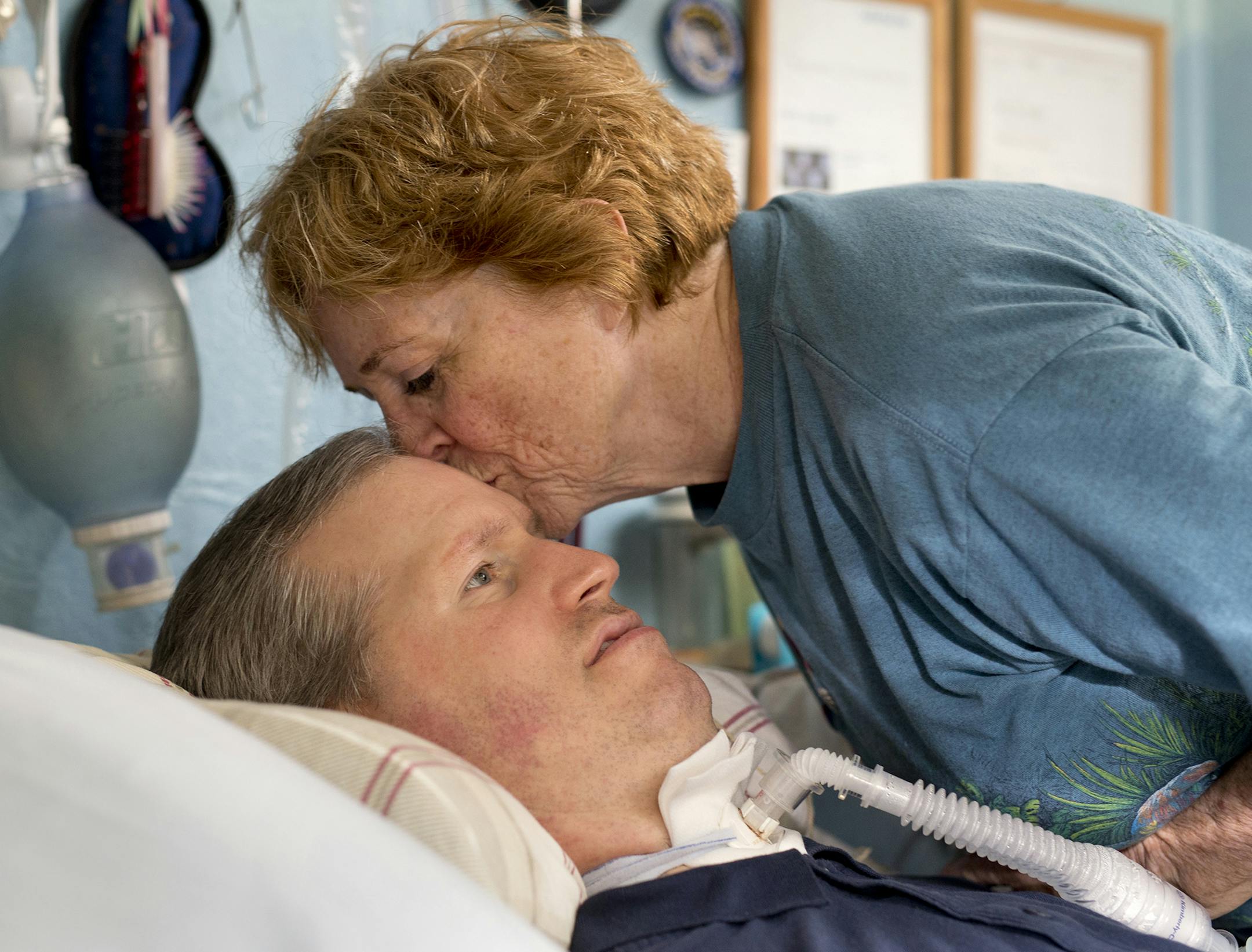
Joan Valor kisses her son, Eric Valor, 46, at their home in Aptos, Calif., on March 26. Eric was diagnosed with amyotrophic lateral sclerosis at age 36 and is now paralyzed from the neck down. Illustrates ALS (category a), by Amy Ellis Nutt and Brady Dennis (c) 2015, The Washington Post. Moved Friday, April 3, 2015. (MUST CREDIT: Photo for The Washington Post by Kevin Johnson)
Eric Valor, 46, an ALS patient, with his mom, Joan, in Aptos, Calif. He said, “It’s a balance between hope and hard science.” (The Minnesota Star Tribune)

Last fall, a small California biotech company began extolling the benefits of its new ALS drug. An early trial with a dozen patients had produced results that were "statistically significant," "very robust" and "dramatic," it said.

In February, Genervon applied to the Food and Drug Administration for "accelerated approval," which would allow it to take the drug directly to market, bypassing costly, large-scale efficacy trials.

ALS patients responded by pleading with the FDA, in emotional videos and e-mails, to grant broad access to the experimental drug. Online forums lit up. A Change.org petition attracted more than a half-million signatures.

"Why would anyone oppose it?" ALS patient David Huntley, a former triathlete who can no longer speak or travel, asked in a letter his wife, Linda Clark, read at a rally on Capitol Hill last week. "[ALS] doesn't just kill you; it takes away everything that you care about, one at a time, then it kills you. Tell me how some as-yet-to-be-detected side effect is going to degrade my quality of life?"

But others argue that the drug hasn't been adequately tested and it is too soon to release for wide usage.

The FDA must now weigh its mandate to ensure new drugs are safe and effective against the demands of patients such as Huntley, who say they should be allowed to try experimental treatments and are willing to accept the risks.

The campaign for FDA approval of the drug, called GM604, echoes a push around the nation for broader access to experimental drugs for seriously ill patients. More than a dozen states have enacted "right to try" laws aimed at allowing such patients to get drugs that have passed only initial safety tests.

The campaign has left the ALS community starkly divided, with some advocates and researchers questioning the company's tactics.

They say few pharmaceutical companies would push for accelerated approval based on a 12-week trial involving 12 people. Shortcutting the traditional clinical-trial process, they warn, could make it more difficult to tell whether the drug really works.

Steve Perrin, chief scientific officer of the ALS Therapy Development Institute, a nonprofit dedicated to developing treatments, said, "The bottom line with the Genervon drug is there is absolutely no data. There is no mathematical way or statistical way that they could measure a drug effect."

Even the ALS Association, which last year raised more than $115 million through its "Ice Bucket Challenge," said making the drug broadly available at this point could expose patients to possible side effects and "pulls money, personnel and effort away from finding the cure that all of us are working together to find."

Dorothy and Winston Ko, the owners of Pasadena-based Genervon, insist their results are strong enough to warrant speedy approval. "The data is highly, highly robust," Winston Ko said.

Thousands of ALS patients and their loved ones remain hopeful about the drug.

Eric Valor, 46, a California ALS patient, said the apparent safety of the drug, coupled with its potential, makes it an ideal candidate for pressing the FDA to change the way it approves drugs for the terminally ill. "I understand the need for data and deplore false hope," he wrote in an e-mail. "However, the current FDA review paradigm has to change. … It's a balance between hope and hard science."

At any one time, roughly 30,000 people in the United States have ALS, and about 5,600 cases are diagnosed each year. Most people live an average of two to five years after being diagnosed. Only one drug has ever been approved for the disease, and it typically extends life just a few months.

about the writers

about the writers

Amy Ellis Nutt

Brady Dennis

More from No Section

See More
FILE -- A rent deposit slot at an apartment complex in Tucker, Ga., on July 21, 2020. As an eviction crisis has seemed increasingly likely this summer, everyone in the housing market has made the same plea to Washington: Send money — lots of it — that would keep renters in their homes and landlords afloat. (Melissa Golden/The New York Times) ORG XMIT: XNYT58
Melissa Golden/The New York Times

It’s too soon to tell how much the immigration crackdown is to blame.