

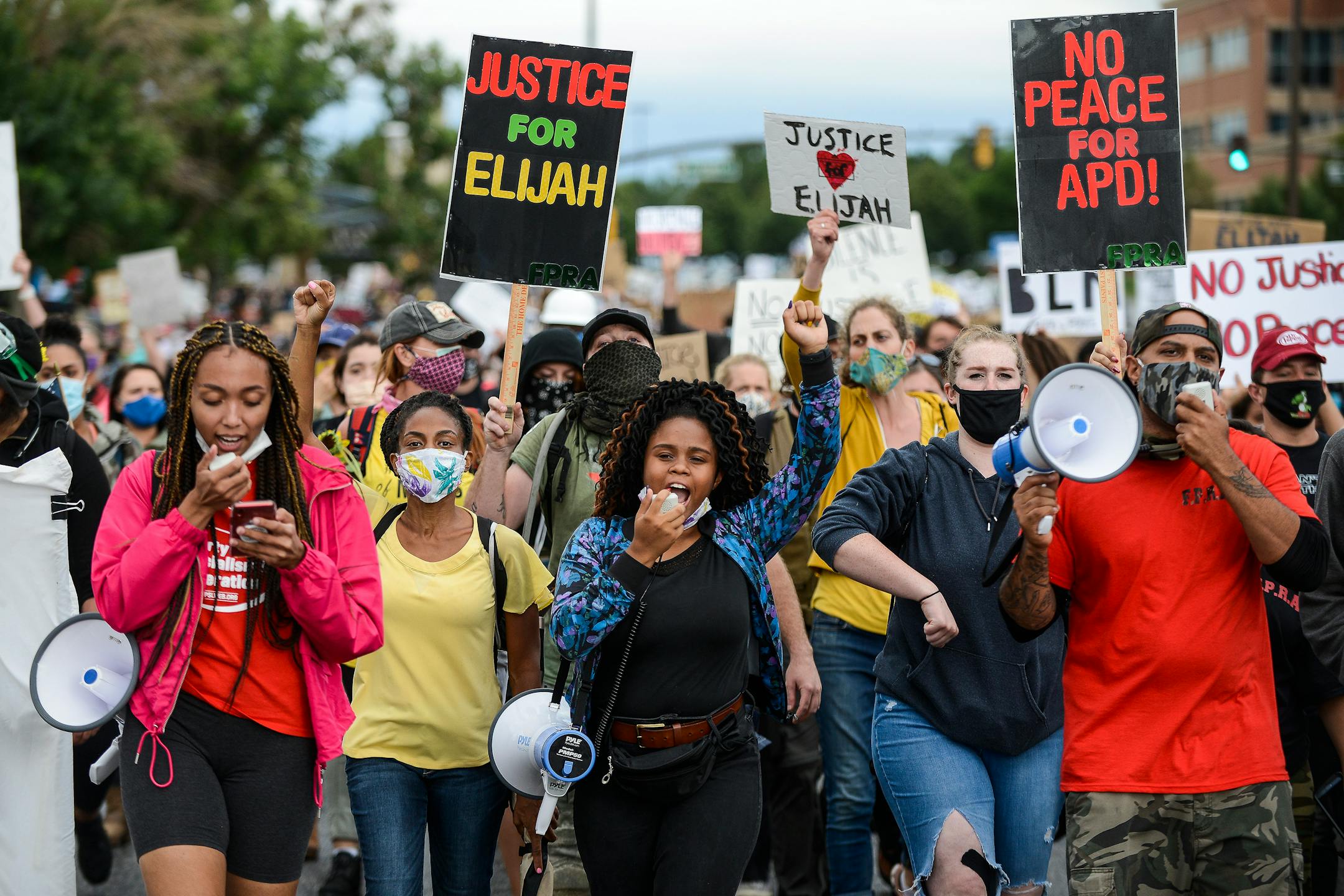
During weeks like last week, the pursuit of justice feels more like chasing clouds blindfolded.
Friday's "not guilty" verdict in the Kyle Rittenhouse trial wasn't altogether surprising — especially after Judge Bruce Schroeder said he wouldn't allow the people Rittenhouse shot and killed to be called victims. But it still felt like a gut punch knowing the prosecution wasn't allowed to show a video in which Rittenhouse reportedly said he wished he had a gun so he could shoot people two weeks before he went out and shot people.
I can't help but juxtapose the outcome in the Rittenhouse case to that of the high-profile case of Julius Jones in Oklahoma.
On Thursday, Oklahoma Gov. Kevin Stitt commuted Jones' death sentence to life imprisonment without possibility of parole — but with the condition that he would never be eligible to apply for or be considered for a commutation, pardon or parole for the rest of his life. This despite the state's Pardon and Parole Board recommending clemency with the possibility of the parole — before Stitt's decision — because of serious doubts about the evidence against Jones.
I'm grateful Jones is alive, but it's hard to see the governor's order as just.
Also last week, Khalil Islam and Muhammad A. Aziz, two of the three men convicted for the 1965 assassination of Malcolm X, were exonerated. As the New York Times noted, "A 22-month investigation conducted jointly by the Manhattan District Attorney's Office and lawyers for the two men found that prosecutors and two of the nation's premier law enforcement agencies — the Federal Bureau of Investigation and the New York Police Department — had withheld key evidence that, had it been turned over, would likely have led to the men's acquittal."
Yes, their convictions have now been thrown out, but who will be held accountable for their wrongful incarceration?
Where is justice for Malcolm X?


