

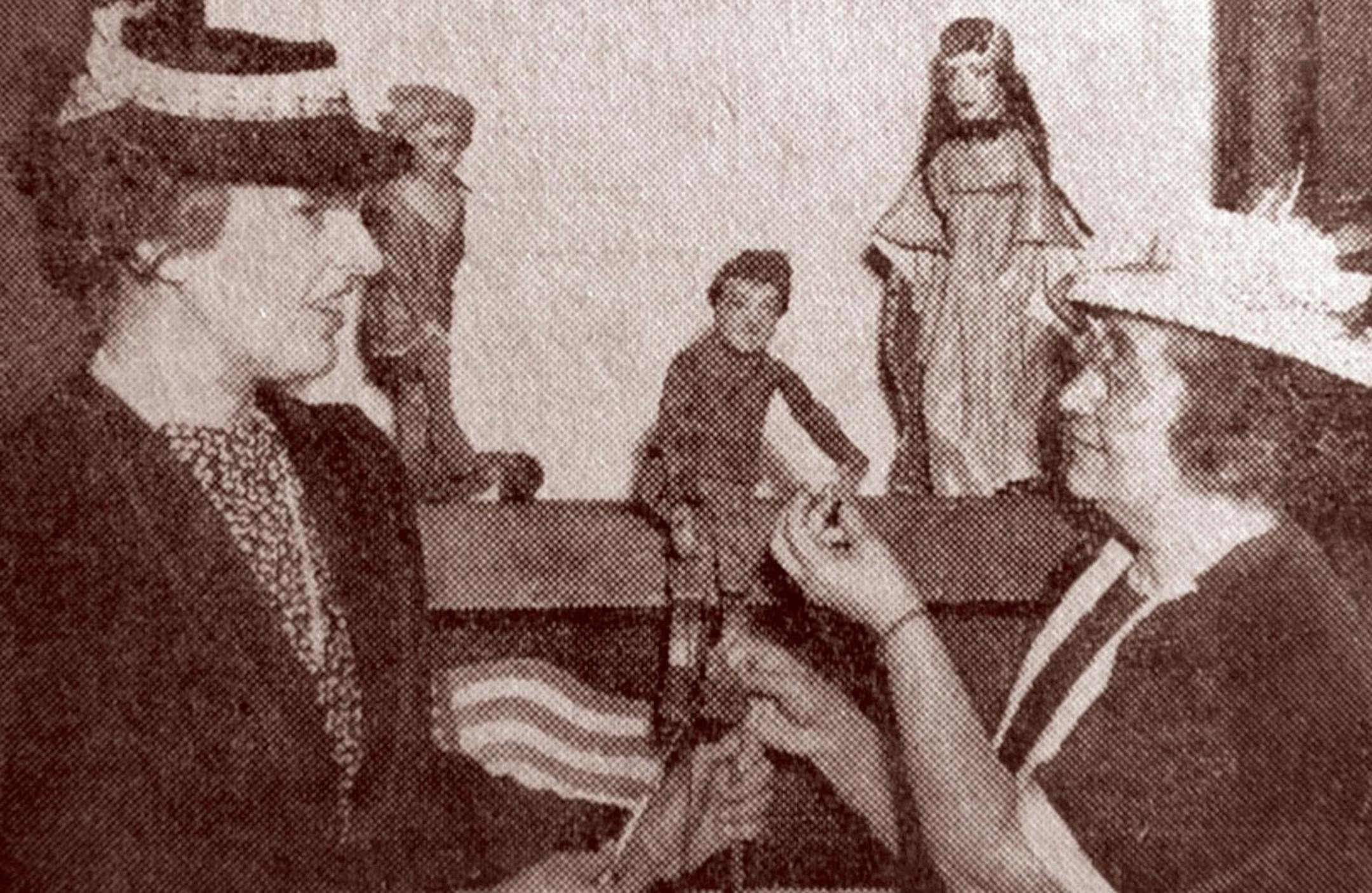
More than 400 members of the Puppeteers of America will visit St. Paul this week for their biannual conference. The Minneapolis-based group will celebrate its 80th year with workshops and performances at Concordia University, culminating in a community festival, free puppet shows and a parade on Saturday.
So it's an opportune time to tell the little-known story of Deborah Simmons Meader — a St. Paul woman who used puppets to get through the Great Depression. Traveling from state hospitals to prisons, parks, libraries, schools, churches and private homes, Meader championed the educational benefits of puppet shows.
She was one of more than 350 people working with puppets as part of the Works Progress Administration's Federal Theater Project in the 1930s — a relief program that put nearly 13,000 people to work when unemployment soared after the stock market crashed.
She designed and sold puppets, received a patent for her breakthrough puppet theaters, taught teachers the craft and wrote dozens of puppet plays.
Her words from 80 years ago — long before Kukla, Fran and Ollie, Howdy Doody or the Muppets — ring true in today's world of electronic gadgetry:
"Puppetry is … creative, not mechanical," she said in 1937. "There is a need for stimulating creative effort in mechanized America. The appeal of puppetry to the imagination as well as its unique linking of the arts and handicraft with the drama is of great value."
Deborah Simmons was born in Illinois in 1895, grew up in Iowa and earned a degree from Smith College in Massachusetts. She returned home in 1917 and married Great War veteran Amos Meader in 1919 before moving to St. Paul in 1927 with their 5-year-old daughter, Betsy.
The nation's economy was about to crumble — and so was her family's health. Amos had a leg amputated in 1927 and couldn't work. Betsy was bedridden with scarlet fever and blinded in one eye in a 1931 accident.


