

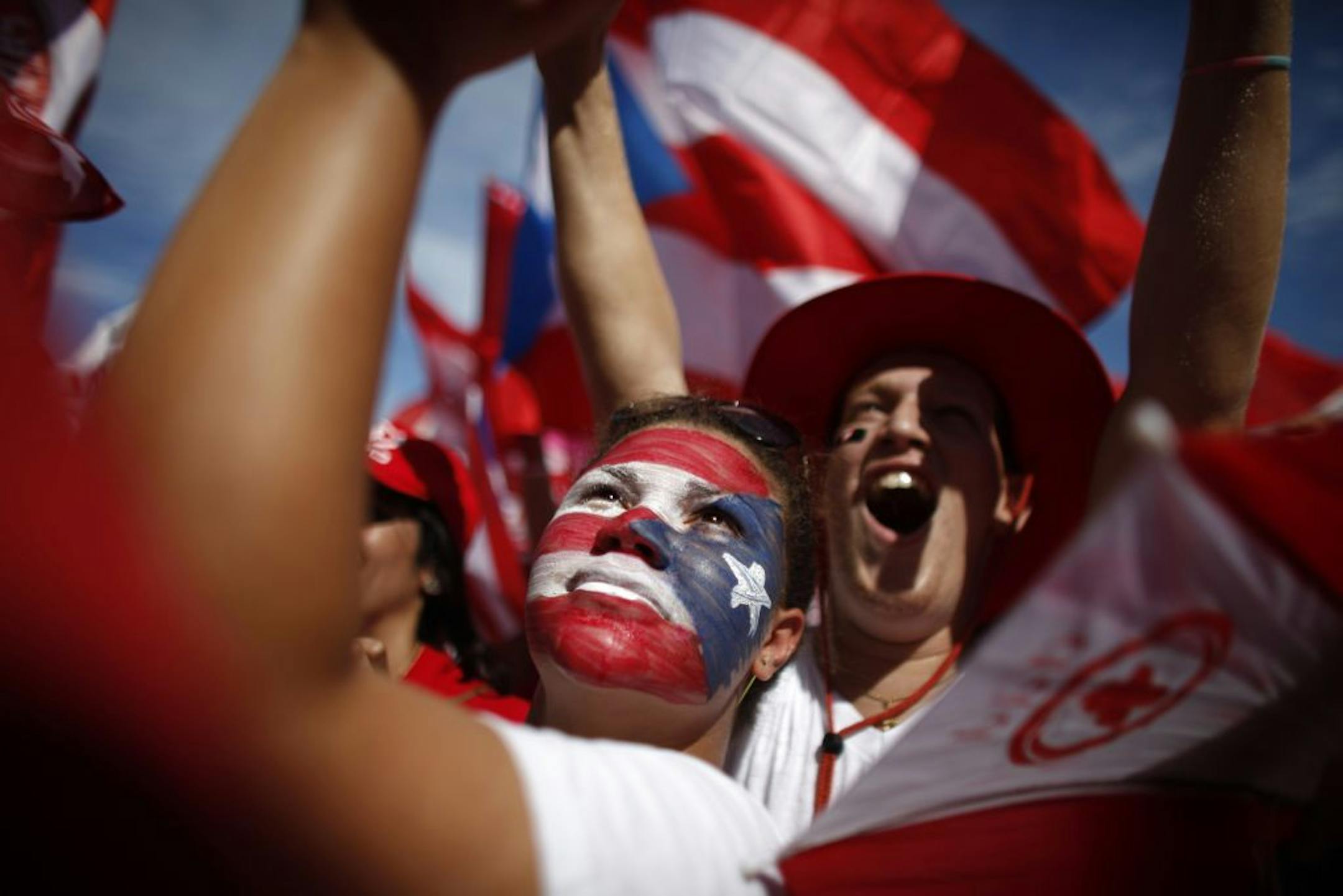
On Election Day, the citizens of Puerto Rico made history. For the first time, they voted for statehood.
A resounding 61 percent of voters chose statehood. The other choices were independence (5 percent) or free association (33 percent). Seventy-seven percent of the island's registered voters participated in this all-important decision. The question is: What will happen now?
There are 3.9 million people in Puerto Rico. The legal residents are all U.S. citizens. They carry U.S. passports, and many fight and die in wars wearing uniforms of the U.S. armed forces. But they don't have a vote in Congress, and they can't vote for president.
While these citizens were voting on their future, the Republican Party on the mainland took a mortal blow from Hispanic voters. Seventy-one percent of Hispanic voters voted for President Barack Obama. In the critical swing states of Florida, Nevada, Colorado and Virginia, this group provided the crucial margin of victory.
For the first time, Hispanic voters made up 10 percent of the total turnout nationwide.
President Obama, in an interview with the Des Moines Register shortly before the election, said emphatically that if he won a second term, his victory would be due to the huge Hispanic turnout for him.
And in states that Obama did not win, such as Arizona and Texas, the percentage of Hispanic voters will increase greatly and could well turn these Republican states to Democratic states in the near future.
All you have to do is to look at formerly reliably Republican California and see how large numbers of Hispanic voters have turned the tide there.


