
Protesters march now for convention permit later

January 3, 2008 at 5:10AM
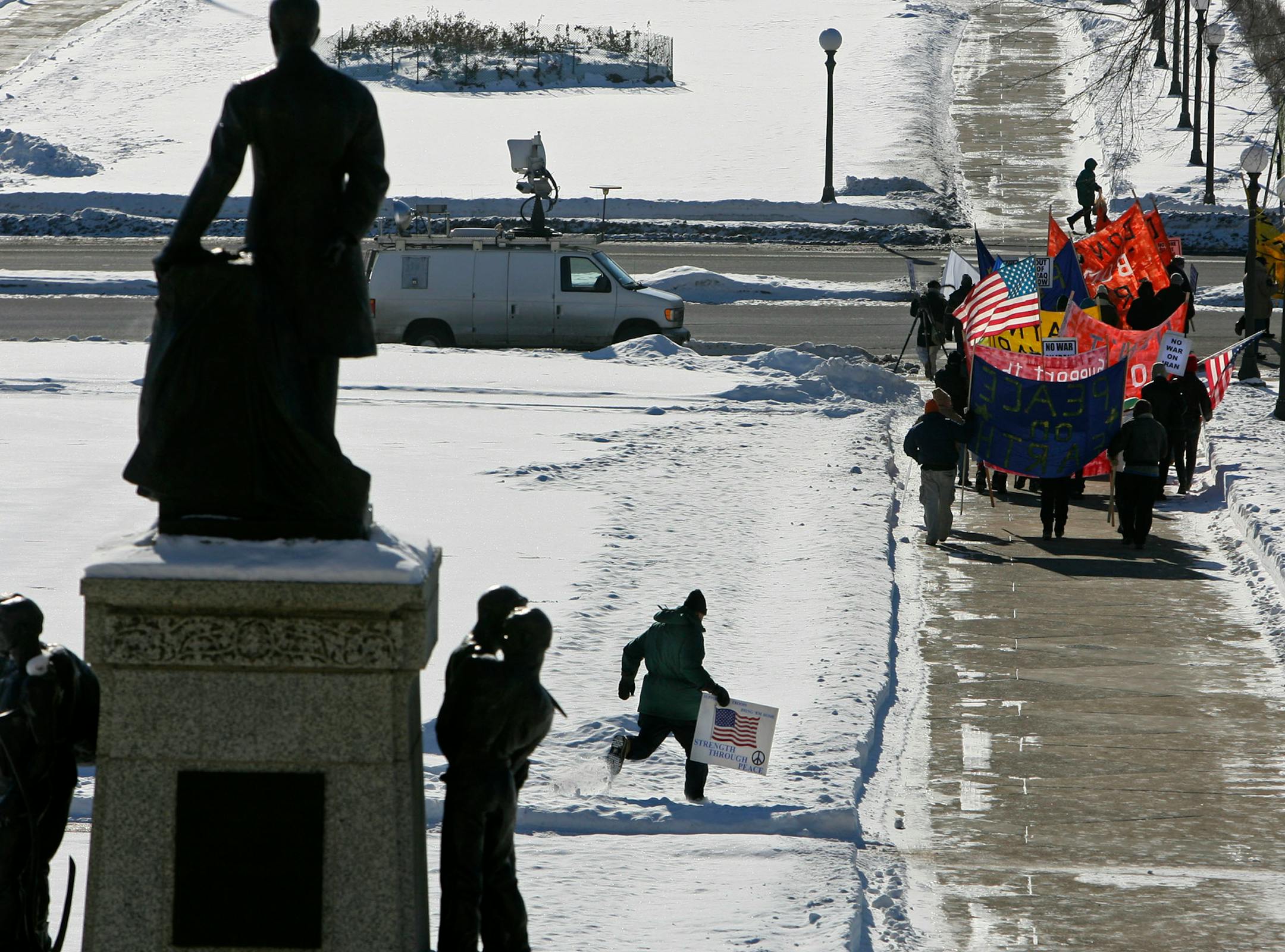
A demonstrator late for the march ran to catch up with fellow protesters from the Coalition to March on the RNC and Stop the War. The demonstrators marched from the State Capitol to the Xcel Energy Center, where the GOP convention will be held, and back.
A demonstrator late for the march ran to catch up with fellow protesters from the Coalition to March on the RNC and Stop the War. The demonstrators marched from the State Capitol to the Xcel Energy Center, where the GOP convention will be held, and back. (Star Tribune/The Minnesota Star Tribune)

Chanting "we want permits," 51 antiwar protesters -- and one Siberian husky -- marched in 9-degree temperatures to the Xcel Energy Center in St. Paul on Wednesday.

They were marching as part of a legal maneuver that they hope will force St. Paul police to issue a permit for a mass antiwar march on the Republican National Convention in September.

And they expect to be back, marching on March 1, May 1, July 1 and Sept. 1. That's all part of the legal strategy, too.

"I'm glad to be with these patriots," said one of the demonstrators, the Rev. John Brandes from St. Boniface Catholic Church in Minneapolis. "They will save our country."

Protesters fear that if they let the city wait until the last minute before the convention to issue a permit, it will be too late to appeal to federal court if they feel the route set by the city is unsatisfactory or too far from Xcel Energy Center, where the convention will be held.

At the 2004 Democratic National Convention in Boston, protesters were given an out-of-the-way free speech area to demonstrate, but the area's designation was made too late to challenge it in federal court.

St. Paul police told protesters last year that under city ordinance permits cannot be granted more than six months in advance, but the American Civil Liberties Union of Minnesota said it found a loophole. The ordinance requires the city to grant a permit now if the protest at the convention would be part of a recurring protest, the ACLU said.

So late Wednesday morning, the demonstrators marched from the State Capitol to the Xcel and back.
Demonstration logistics

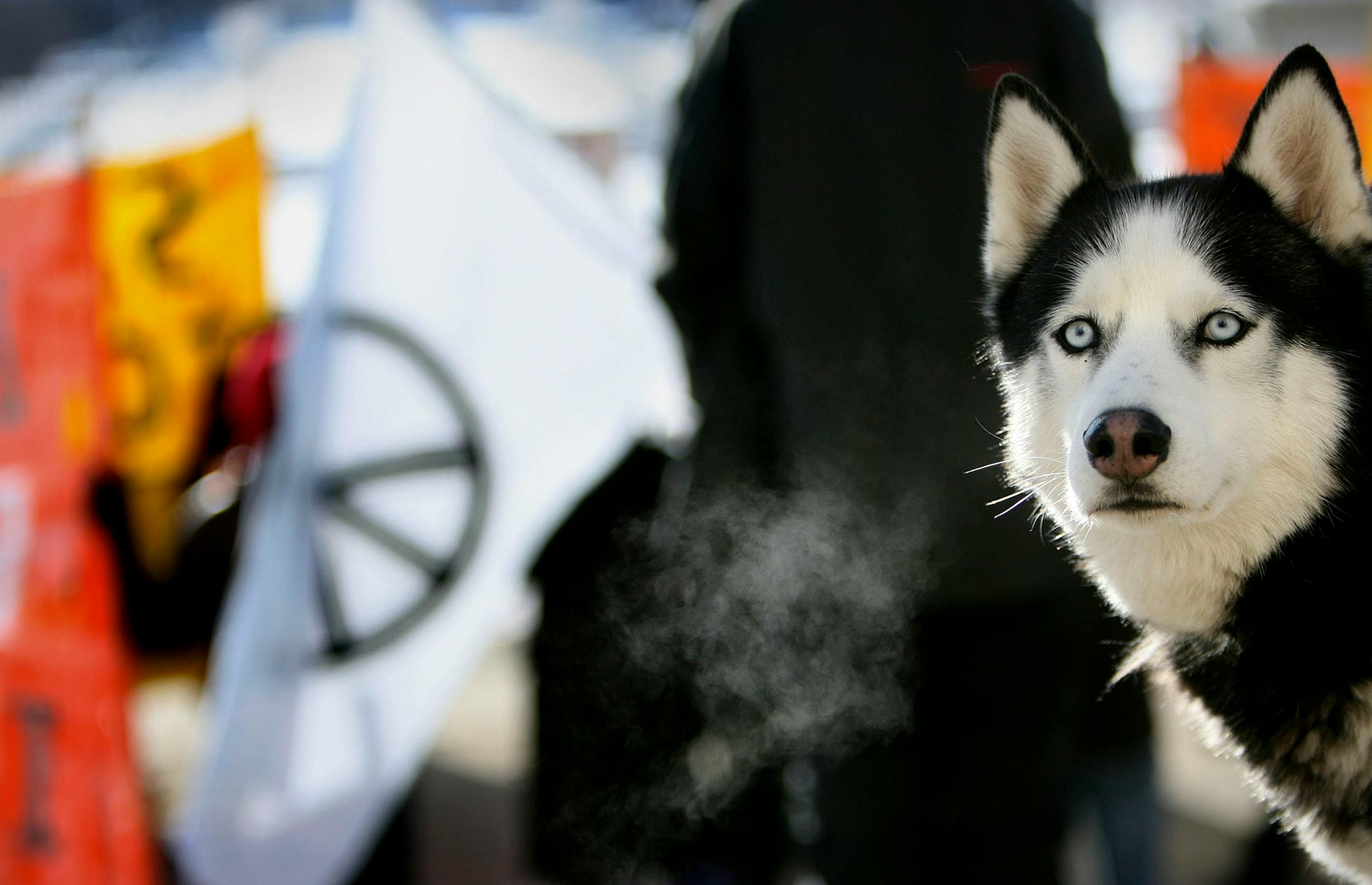
Among the demonstrators was Kevin Smith, 51, of Minnetonka, who walked with his Siberian husky, Kyle.

Jess Sundin, of the Anti-War Committee, said her group met with city officials last month, but they did not say they'd issue a permit to protest even six months in advance. "They wouldn't promise or commit to anything," she said.

Tom Walsh, a St. Paul police spokesman, said police would have no comment on the protesters' contention that they are entitled to a permit because of recurring demonstrations.

Protesters said they did receive a permit, but only for Wednesday's march.

Matt Bostrom, assistant St. Paul police chief, told a member of a local antiwar coalition in a letter in November that he could not grant or deny permits for the recurring marches. He said that when applicants gave an estimate for each march between now and September, they wrote "3-100,000" and that he needed a "good faith" estimate.

As for a Sept. 1 demonstration, Bostrom said federal and city "planning is only in its early stages" for what will require "special precautions and safety measures" so it is too early to act on a permit.

Randy Furst • 612-673-7382

"Kyle the peace dog," as his owner Kevin Smith of Minnetonka calls the Siberian husky, waited patiently during a news conference Wednesday by members of the Coalition to March on the RNC and Stop the War on the steps of the State Capitol.
“Kyle the peace dog,” as his owner Kevin Smith of Minnetonka calls the Siberian husky, waited patiently during a news conference Wednesday by members of the Coalition to March on the RNC and Stop the War on the steps of the State Capitol. (Star Tribune/The Minnesota Star Tribune)
about the writer

about the writer

Randy Furst

Reporter

Randy Furst is a Minnesota Star Tribune general assignment reporter covering a range of issues, including tenants rights, minority rights, American Indian rights and police accountability.

See Moreicon

More from No Section

See More
FILE -- A rent deposit slot at an apartment complex in Tucker, Ga., on July 21, 2020. As an eviction crisis has seemed increasingly likely this summer, everyone in the housing market has made the same plea to Washington: Send money — lots of it — that would keep renters in their homes and landlords afloat. (Melissa Golden/The New York Times) ORG XMIT: XNYT58
Melissa Golden/The New York Times

It’s too soon to tell how much the immigration crackdown is to blame.