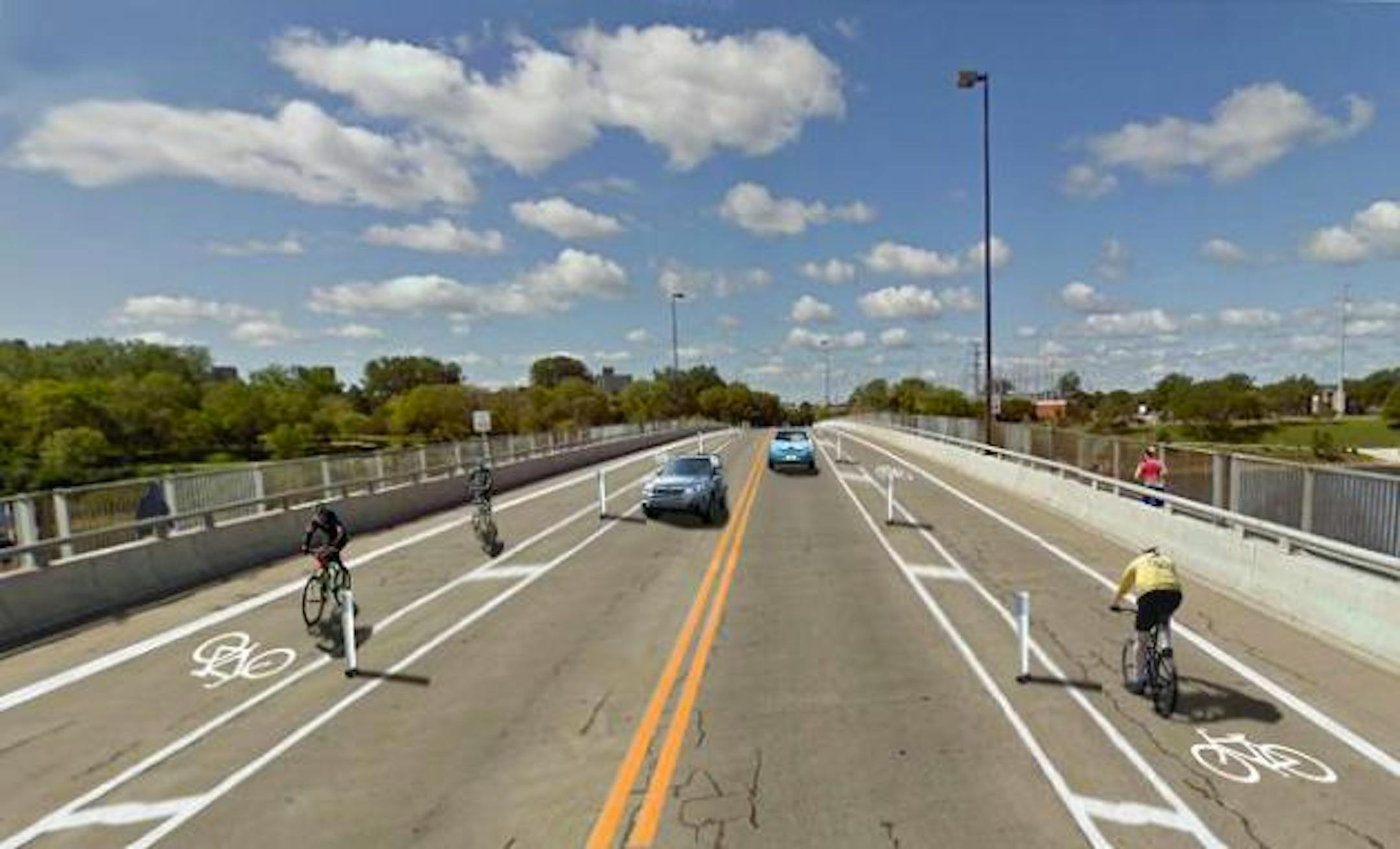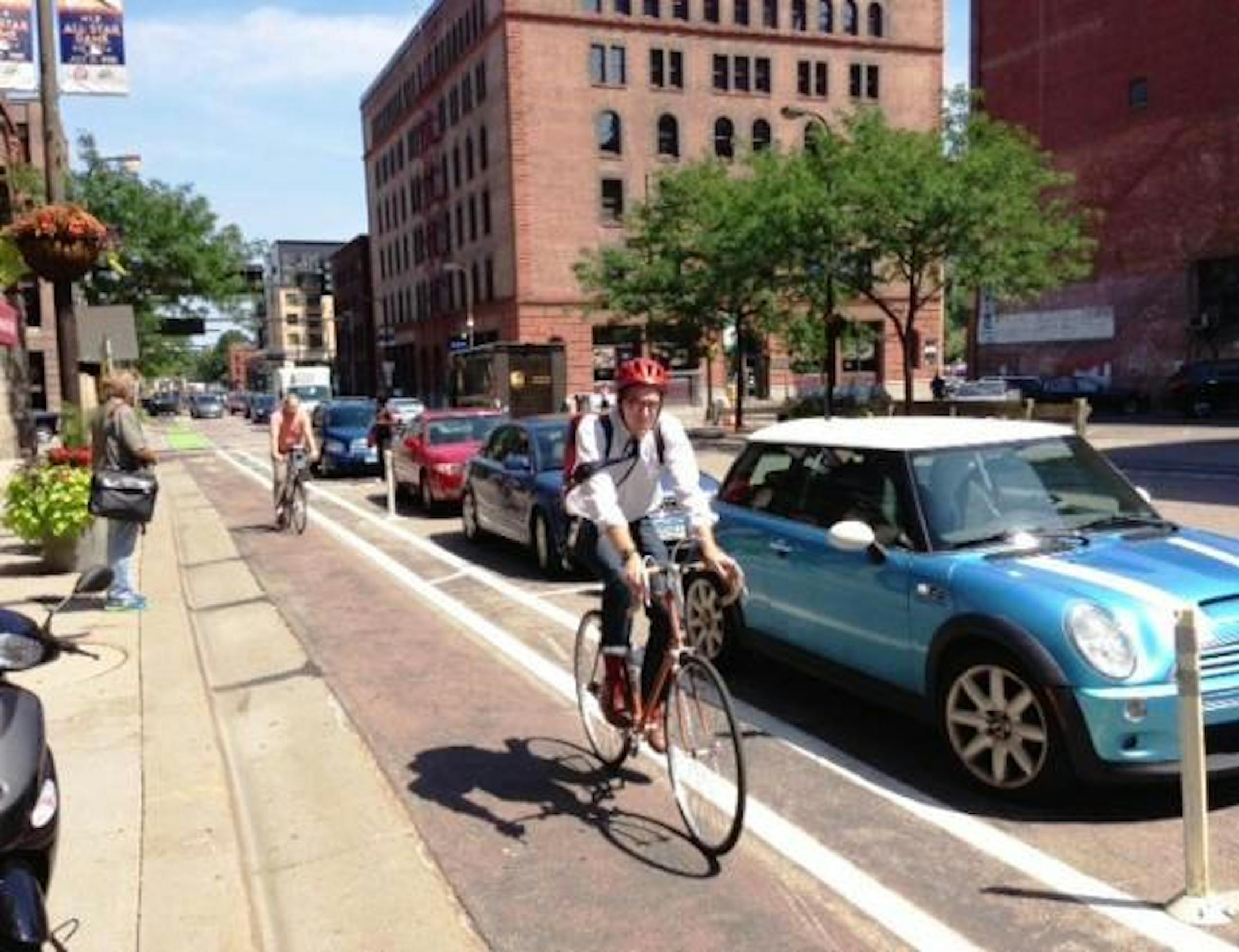
Minneapolis stands a good bet to get its lengthiest protected bike lane by far with both concept designs unveiled for a paired set of one-way crosstown streets proposing physically separated lanes between cars and bikes.
The designs for next year's planned repaving of E. 26th and 28th Streets differ mainly in whether each street gets a one-way protected bike lane or whether a two-way lane is installed on 26th. Both rely on drivers giving up one of their current lanes.
The designs presented to the community Wednesday night are intended to slow speeders and to better protect people on foot and bikes. Bikers now largely eschew the twin streets in favor of the Midtown Greenway and residential streets, according to traffic counts.
"These streets are dangerous and we need safety improvements immediately," said Council Member Alondra Cano, who represents the area slated to see repaving next year. A four-year-old pedestrian was killed by a car along 26th near Stewart Park two years ago at twilight.
The initial work next year would happen between Interstate 35W and Hiawatha Avenue. But it's likely to influence any future repaving of the twin one-way streets as far west as Hennepin Avenue, according to transportation planners.
Protected bike lanes use curbs, metal bollards, parked cars, plastic pipes or planters to separate driving and biking lanes. They're the third generation of on-road bike lanes to be introduced in Minneapolis after the initial narrow painted lanes, and later buffered painted lanes about the width of a car lane.
The city's first protected bike lane is a mere six blocks along 1st Avenue. N. downtown. Construction of a two-way set of protected lanes is expected any week now on an eight-block section of W. 36th St. east of Lake Calhoun. But the work on 26th and 28th would encompass more than 20 blocks.
The potential protected lanes on 26th and 28th are still some distance from a certainty. Jon Wertjes, the city's traffic director, said the next step is to factor in public feedback on the alternatives and put them through analysis of their impact on motorized traffic and cost.