

FROM AN EDITORIAL IN THE MANKATO FREE PRESS
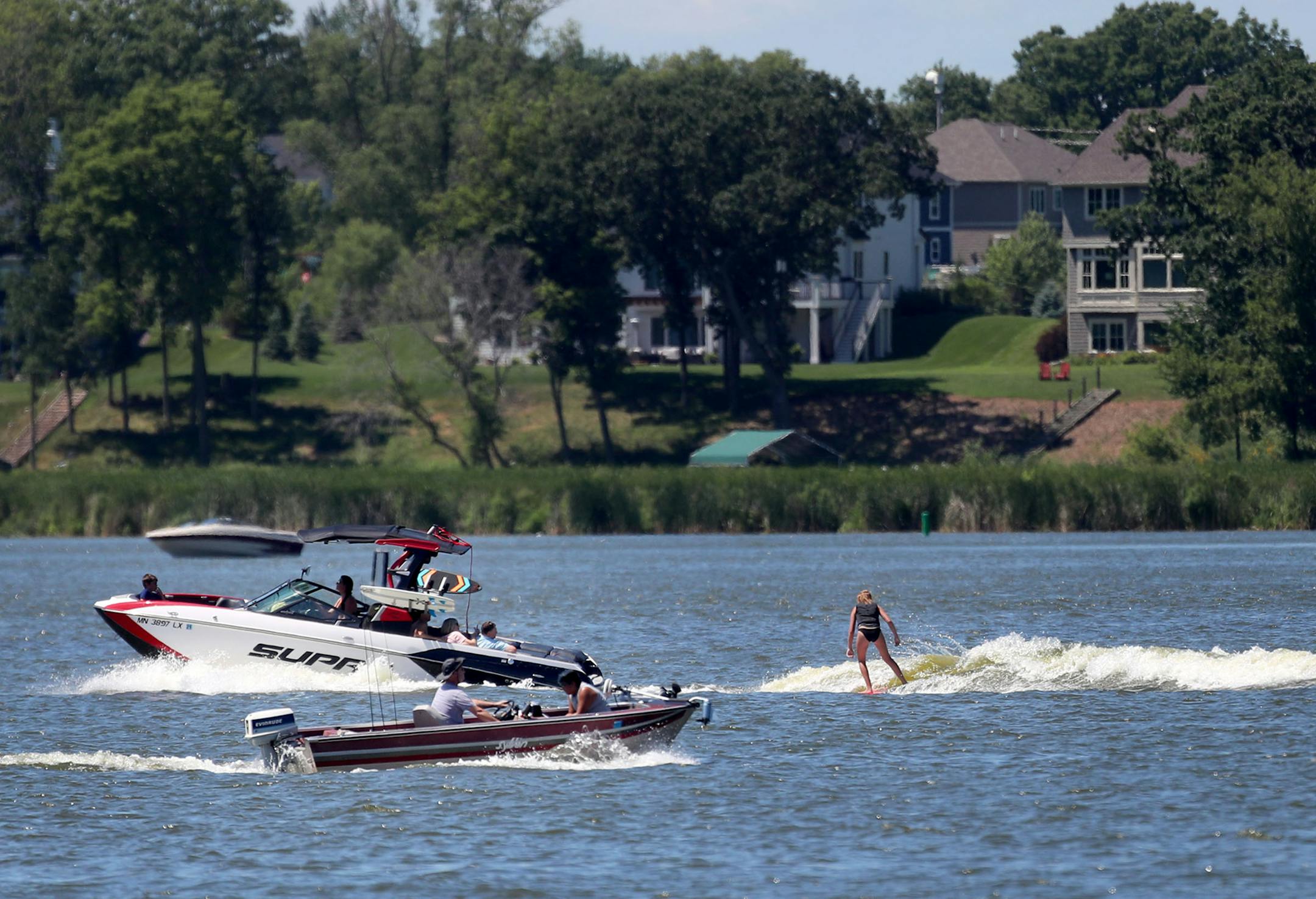
Wakesurfing is growing in popularity on Minnesota lakes and generating growing debate over regulating or banning it. For those who haven't seen them, wake boats produce huge wakes generated by powerful motors and deep large propellers. People are pulled on wakesurf boards behind the boats, going back and forth over the wakes.
It's understandable why the activity is a lot of fun. But the fun comes at a cost to many lakes and to people trying to enjoy them. The Legislature needs to continue looking at how the boats should be regulated. While noise and large waves generated by the boats are the primary concern for others trying to enjoy the lakes, the boats also can be damaging to lakes and aquatic life.
Opponents of regulating wake boats argue that water skiing boats and Jet Skis have managed to coexist on lakes and so should wake boats. But wakesurfing is vastly different from water skiing or Jet Skis.
Ski boats are designed to create little wake, and while Jet Skis produce some wake, their smaller size is less intrusive, although Jet Skis clearly have their critics. Beyond the massive wakes, wake boats produce a constant, higher level of noise, destroying the peace and quiet people seek by going to the lake.
The propeller wash from the boats can uproot vegetation and stir up sediment, with critics saying they can affect the lakebed 16 feet deep. Sediment that is stirred up adds phosphorus to the water, fueling algae growth and clouding the water. The large wakes also can affect loons and fish and erode shorelines.
The Legislature in the last session debated different bills on wakesurfing but took no final action. A bill by Rep. Erin Koegel, DFL-Spring Lake Park, would restrict wake boats within 200 feet of shore, prohibit wake boats on lakes 50 acres or smaller and on waterways that are less than 500 feet wide.
Sen. Bill Weber, R-Luverne, authored a bill that would limit wakesurfing within 200 feet from shore, docks, swimmers and other boats. Critics argued both proposals were insufficiently strict and could still allow for shoreline damage.


