
Projected state budget surplus swells to $1.9 billion

Minnesota's projected budget surplus grew to $1.9 billion, up $832 million from a November projection, it was announced Friday. Legislators now will craft proposals based on the revised figure, setting the table for budget negotiations at the Capitol.

February 27, 2015 at 7:30PM
Gov. Mark Dayton
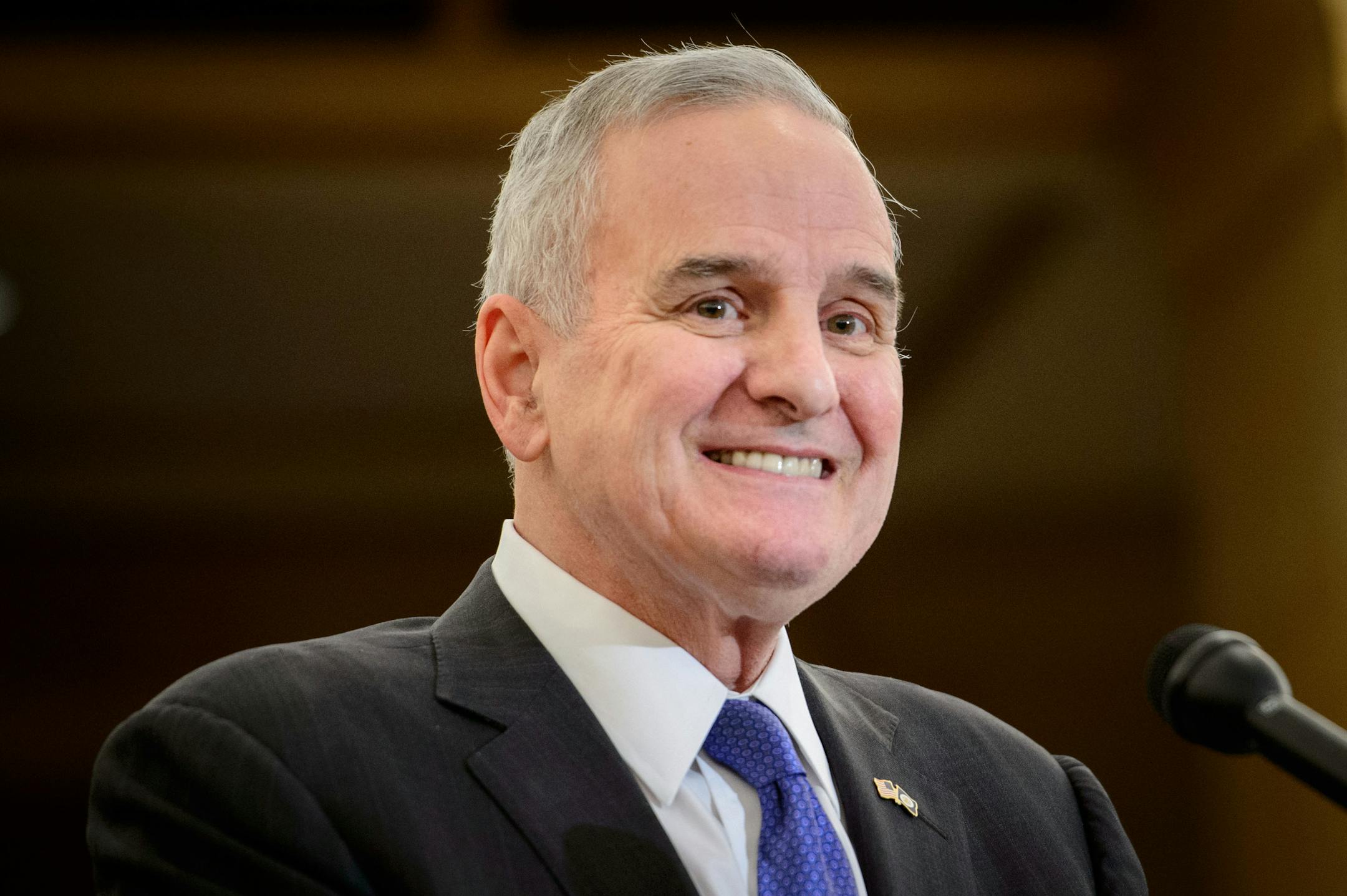
Governor Dayton smiled as he entered the press conference to talk about the budget surplus on Feb. 27, 2015. (Colleen Kelly — Star Tribune/The Minnesota Star Tribune)

The state's budget office on Friday reported that Minnesota's projected budget surplus grew to $1.9 billion, up $832 million from a previous projection, setting the final stage for budget negotiations at the Capitol.

The Minnesota Management and Budget Office, which publishes the twice-yearly budget and economic forecast, attributed the nearly doubling of the budget surplus to an improvement in the state's labor market, lower gas prices and a stronger U.S. dollar.

Officials said that since the November budget forecast, revenues are projected to rise an additional $616 million, or 1.5 percent. Projected spending, based on current law, is down $115 million, or 0.3 percent.

"Today's news is very good news, over the last few years, we have righted the ship," said Myron Frans, the recently appointed budget commissioner. In recent years, "we were facing large deficits as we began the budget process. By focusing on balanced budget proposals, we've paid back our schools, enhanced strong revenues for the state… we've carefully managed our state budget."

He went on: "Minnesota is truly a success story. We have a balanced and diverse economy. And we have a growing economy."

Friday's economic forecast showed improvements in the national and state economies that are expected to drive higher wage growth and an uptick in household formations, said state economist Laura Kalambokidis.

Higher consumer confidence nationally "is buoying consumer spending, which is the largest driver of the U.S. outlook," Kalambokidis said.

Gov. Mark Dayton told reporters that the surplus, which he credited to the state's well-performing economy, should be used to invest in education and transportation, his two main priorities. Though he's not opposed to offering tax cuts as Republicans are putting forth, he said spending on schools and the state's infrastructure would be a way to spur future economic development.

"Inevitably, there will be another national economic slowdown or downturn, and Minnesota's economy will be affected like everyone else's," he said. "Our budget surplus will disappear, so I propose that we invest our collective good fortune in our collective better future."

Friday's revised figure will provide the framework with which legislators will craft their respective budget proposals. Dayton has already proposed a $42-billion budget, with the majority of new spending earmarked for education. He said Friday that his revised budget will call for an additional $444.2 million in spending to fund his legislative priorities.

He will present his revised proposal in early March.

DFL legislators said the surplus will provide additional money to fund their priorities, which include universal pre-kindergarten, a child-care tax credit similar to Dayton's and increasing the state's contribution to schools by boosting the per-pupil funding formula.

Republican legislators meanwhile are calling for much of the surplus to be returned to taxpayers. They also oppose a separate $11-billion transportation proposal by Dayton which calls for new sources of revenue, including a wholesale gas tax and an uptick in the metro-area sales tax .

This is a developing story. Check back later for updates and more details.

about the writer

about the writer

Ricardo Lopez

Reporter

See Moreicon

More from No Section

See More
FILE -- A rent deposit slot at an apartment complex in Tucker, Ga., on July 21, 2020. As an eviction crisis has seemed increasingly likely this summer, everyone in the housing market has made the same plea to Washington: Send money — lots of it — that would keep renters in their homes and landlords afloat. (Melissa Golden/The New York Times) ORG XMIT: XNYT58
Melissa Golden/The New York Times

It’s too soon to tell how much the immigration crackdown is to blame.