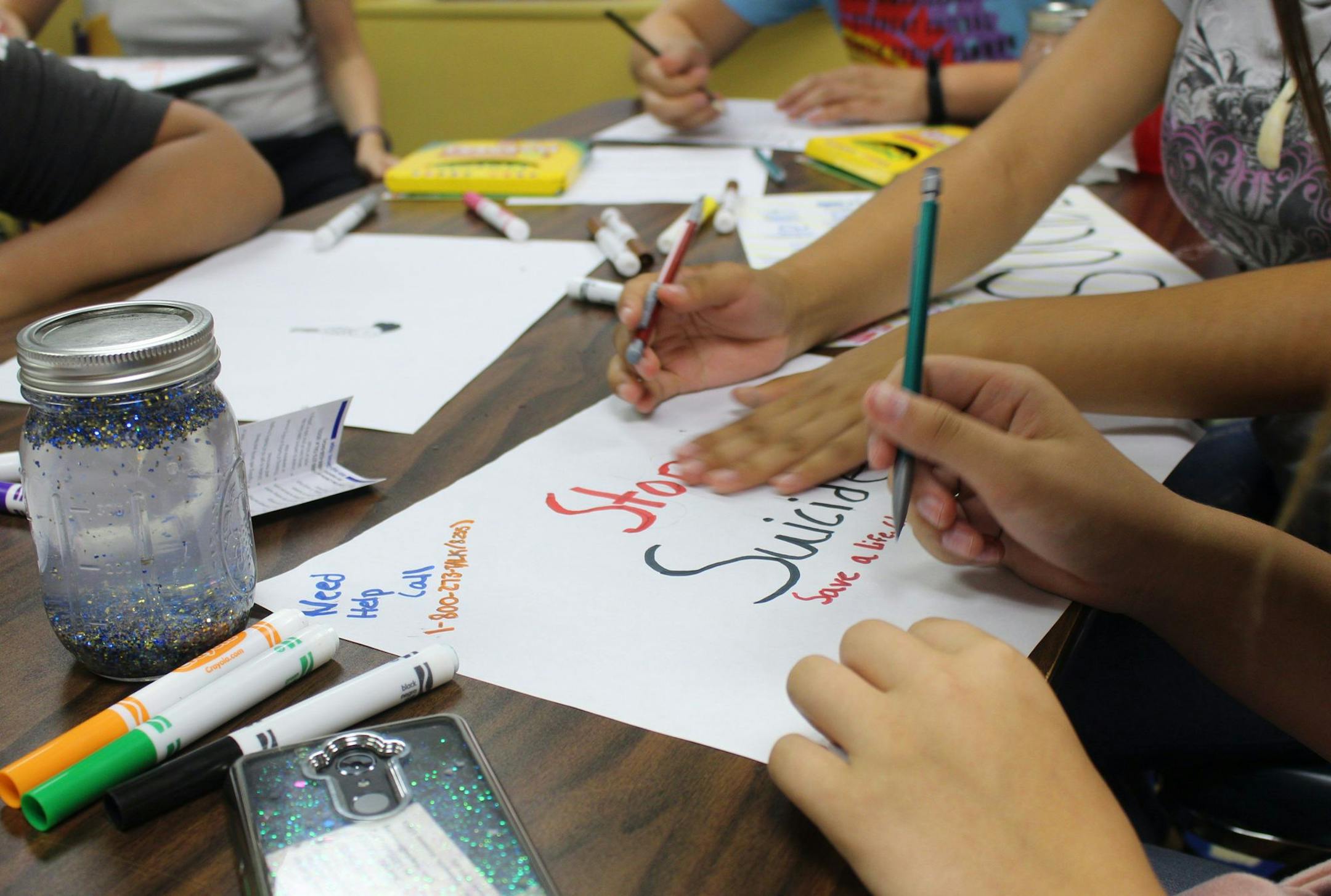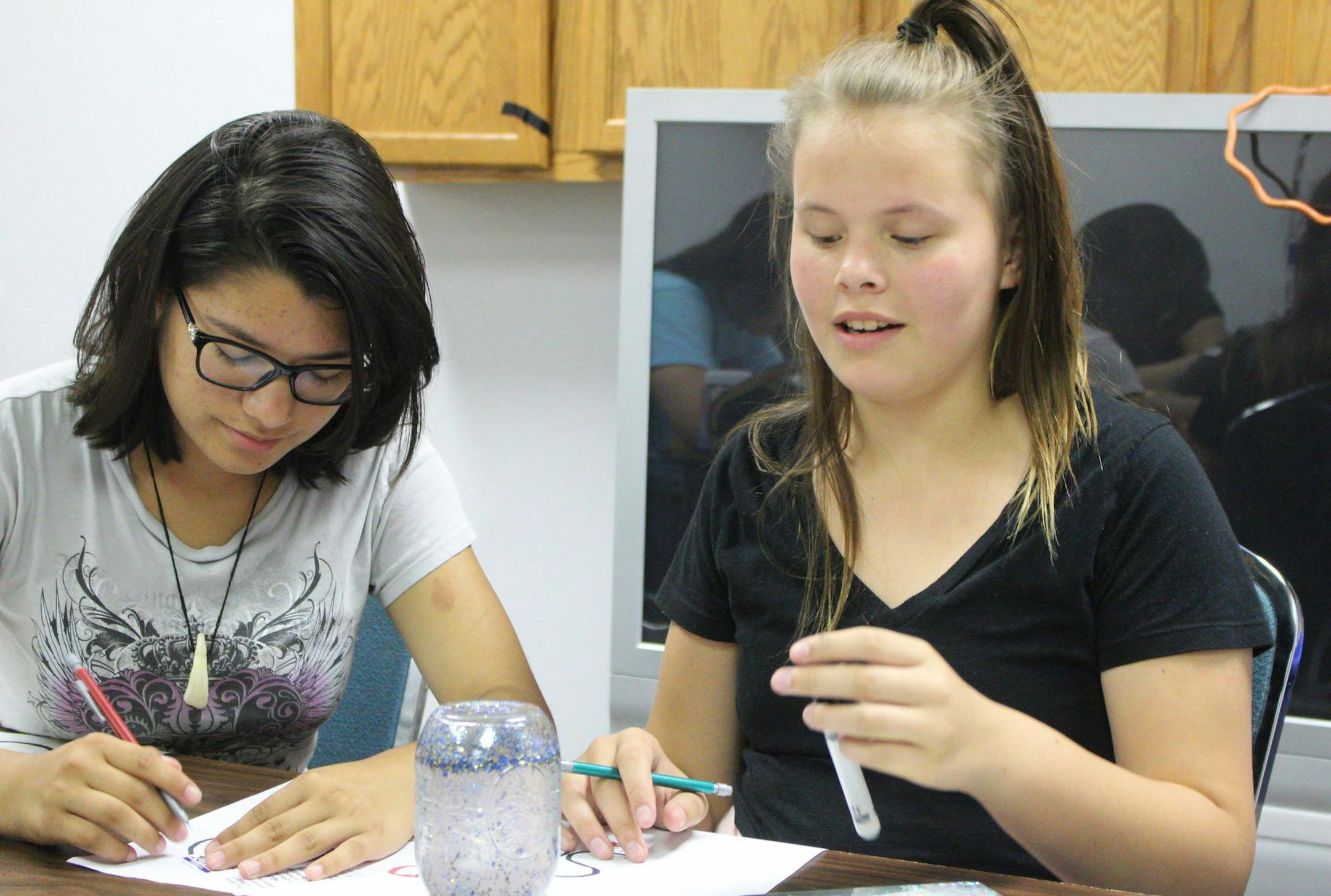
A group of middle-schoolers shared colorful markers as they designed poster boards spread around two wooden tables scattered with glitter and informational packets. It was craft time for the teens, who were participating in an American Indian program called Keep the Fire Alive.
On her white poster board, Nalia Segura, 13, used a pencil to shade in long, dark hair on a mouthless face. Where the mouth should be, she wrote in bold red letters, "Suicide is not an option." To the right of those words, she drew a decorative dreamcatcher with a yin-yang center and three large feathers.
"Even people who have thoughts of suicide have dreams," said Segura.
Art, kids and suicide can seem like a perplexing, and troubling, mix. But members of the indigenous Peoples Task Force, who organize peer-based suicide prevention groups like Keep the Fire Alive, are helping to start an urgent conversation. Through meetings and training, Native youth are being schooled in warning signs of someone considering suicide, and why it's important to reach out to caring adults and other resources.
According to the 2015 Minnesota State Suicide Prevention Plan, Native youth ages 10 to 24 had the highest rate of suicide of any age group in Minnesota, 28 per 100,000 residents from 2010 to 2013. The rate was more than three times that of white youth (8.8 per 100,000).
Keep the Fire Alive held its first meeting in June at the All Nations Indian Church in Minneapolis, inviting all community members.
"It's a heavy topic, but I've seen that people want to help," said Brenna Depies, program director for Keep the Fire Alive, based in Minneapolis.
"The age group is good to work with, because it's a good time to talk about mental health," said Depies, noting that mental health issues can, and often do, begin to appear at this age; early prevention can lead to lasting changes and far less heartache.