

Program aims to get high school students at risk off to a good start

North St. Paul focuses on keeping ninth-graders on track, an indicator of ultimate graduation.

December 14, 2008 at 5:52AM
Kadesha Richardson during a weight lifting sequence of Health/PE
NINTHGRADE1210: Ninth Grade is the new first grade, i.e., it is being viewed as all-important in determining whether a student will graduate high school and what he or she will do thereafter
The kids in "Freshman Academy" are in their single-sex class(es) for the first three hours of the day (for classes in Health/PE, Math and English).
Kadesha Richardson attended a health/physical education class at the Freshman Academy at North High in North St. Paul. The program puts kids in smaller classes for three classes of the day, and helps them with homework and sometimes with counseling to handle other problems. (Star Tribune/The Minnesota Star Tribune)

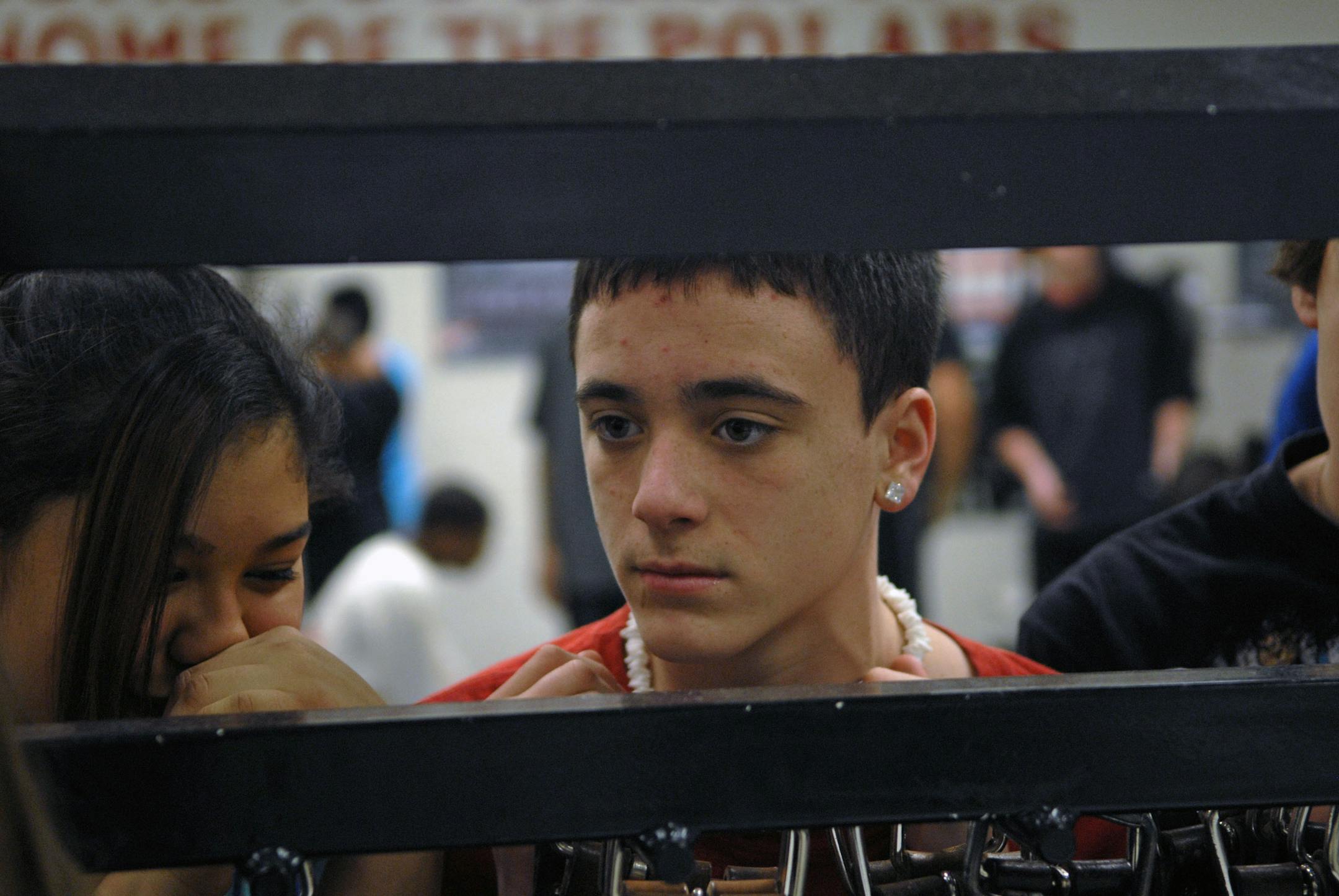
Ryan Gresafe wants to be a professional boxer, but he's staying in school to get an education "in case anything goes wrong, like I break my hand or something," says the 112-pound division fighter who's in ninth grade at North High School in North St. Paul.

The school is fighting for Ryan to get a good education, too, by enrolling him into what it calls "Freshman Academy" -- North High School's new, first and, perhaps, last-ditch effort to keep kids on track to graduate.

"If kids are successful in ninth grade they go on to graduate, and if they aren't then they go on and drop out," says Greg Nelson, principal at North.

Plenty of evidence suggests that ninth grade is as important to graduating as, say, first grade is to learning to read, Nelson says.

Freshman Academy takes kids deemed most at risk of failing and puts them in single-sex classes that are half the size of normal classes. They are led by two of the school's best-liked teachers.

Such efforts are worth the resources, Nelson says, because the individual tragedy of dropping out often creates a wake of broader problems in society, including higher costs for incarceration, health care and welfare.

North High selected its Freshman Academy students based on their performance in middle school as well as consultations with their school counselors. Since then, some have earned their way out, while others who were struggling with their classes have been moved in. Soon, Nelson and others at North High will begin scanning the records of kids in their feeder middle schools for next year's Freshman Academy.

As much as the complexities of students' lives -- family, community and individual makeup -- spool into their academic performance, their failure in high school involves only simple math, says Assistant Principal Mike Redmond, who is in charge of the freshman group.
By failing four or more classes for just one trimester, "they can dig a hole they can never climb out of," Redmond says.

No more hand-holding

Freshman Academy metaphorically takes the shovel out of the students' hands. The 30 students, about half boys and half girls, start the day in separate classrooms for a class called "180" -- a combined gym, health and guided study hall course, with a touch of character development thrown in.

Students get individual help on homework or counseling on how to handle other problems. It looks like the other classes with any of the school's other 500 freshmen.

Next they take an English class and a math class with the same students. After that they finish their day by completing three other classes among the larger student body.

"It helps a lot because there are fewer people in class," Ryan said. But teachers also mete out a strong dose of personal responsibility with their lesson plans, too.

"They're not holding your hand anymore," Ryan said.

It seems to be working.

Potentially all 30 or so members of the class might be among those most likely to fail. At the end of the first trimester, however, only nine of the kids had failed one class or more. Redmond called the outcome "a far superior result as compared to what would likely have happened had there been no Freshman Academy."

Others school districts are giving special attention to freshmen.

In Chaska, the entire ninth grade attends a separate school just down the street from the high school. That phenomenon owes it origins to the timing of school construction and the passage of tax levies that fund them, but school officials say it has been a successful experiment having the ninth-graders sequestered on their own campus the past seven years.

"Everybody loves it," says Mark Shoquist, assistant principal. "The people who love it most are the parents of 14-year-old girls."

Making choices

Fourteen- and 15-year-olds typically begin spending more time with their friends and less with their family, and invariably end up making decisions about drinking, smoking and sex, Shoquist says. It's better that the students make those decisions with friends their own age, rather than be influenced by kids who are two or three years older.

What's more, all students who have a D or an F at the midterm of their first semester are assigned a mentor -- a teacher who stays in close touch with the student to help their progress.

Chaska's ninth-grade campus also eases students into high school by using both the middle school alignment of seven class periods per day, three days per week, and the high school four-class per day schedule the remaining two.

In a broader experiment, the University of Minnesota is developing a program at 11 area junior high and high schools in districts across the metro area to enhance college preparedness.

While North High's Freshman Academy more modestly aims to get its students through the first high school year, the theme for the students is the same.

"A lot of students have been going from grade to grade and don't realize that now it's about credits," says Redmond. "This counts now."

Gregory A. Patterson • 651-298-1546

Ryan Gresafe during a weight lifting sequence of Health/PE
NINTHGRADE1210: Ninth Grade is the new first grade, i.e., it is being viewed as all-important in determining whether a student will graduate high school and what he or she will do thereafter
The kids in "Freshman Academy" are in their single-sex class(es) for the first three hours of the day (for classes in Health/PE, Math and English).
Ryan Gresafe is part of North High’s Freshman Academy in North St. Paul. Kids who fail many classes in ninth grade tend to drop out. (Star Tribune/The Minnesota Star Tribune)
about the writer

about the writer

GREGORY A. PATTERSON, Star Tribune

More from No Section

See More
FILE -- A rent deposit slot at an apartment complex in Tucker, Ga., on July 21, 2020. As an eviction crisis has seemed increasingly likely this summer, everyone in the housing market has made the same plea to Washington: Send money — lots of it — that would keep renters in their homes and landlords afloat. (Melissa Golden/The New York Times) ORG XMIT: XNYT58
Melissa Golden/The New York Times

It’s too soon to tell how much the immigration crackdown is to blame.