

When Fatima Asamarai graduates from Metropolitan State University on Thursday, she will be one step closer to a dream that would bring her full circle, a dream to help urban public schools close the achievement gap between rich and poor, black and white, and give back to the communities that helped her succeed.
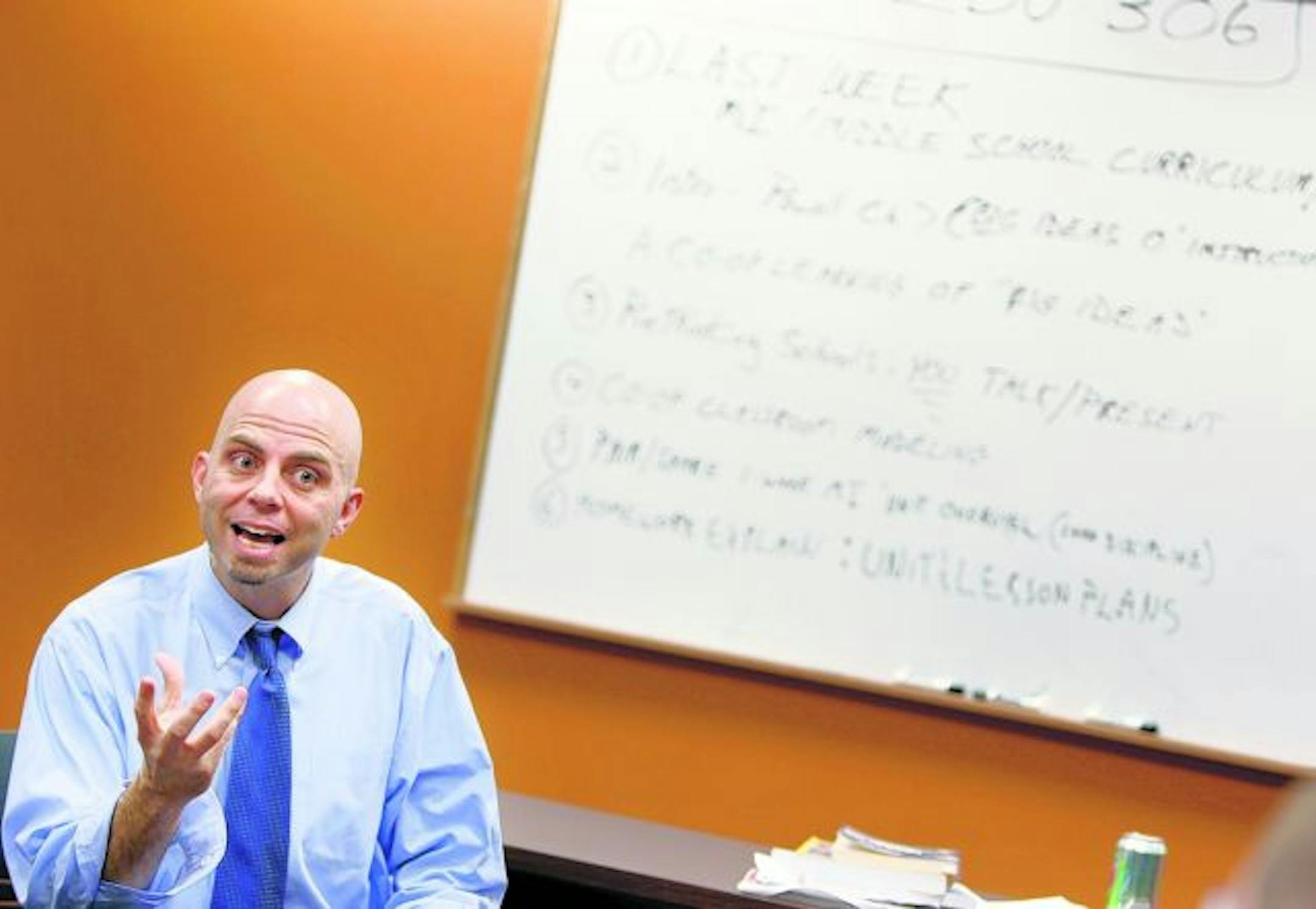
Daryl Parks will be there, too, an unlikely inspiration and mentor with an improbable life arc that has taken him from being a Gary, Ind., asbestos remover and punk rocker to a stellar academic and Asamarai's "beacon of light."
Parks, Metropolitan State's associate professor of literature and language, grew up the youngest of five children. His parents came from the hills around Paducah, Ky., poor and unschooled, but sturdy and determined. His childhood was marked by times of peanut butter and Karo syrup sandwiches, hard labor and tough love. His mother kept up with current events by reading the newspapers that lined the walls as insulation. College was for someone else, so Parks left high school with his dreams limited to the factory floor.
He shoveled corn, fit pipes, worked sheet metal, cleaned animal cages, removed asbestos and worked as a nightclub disc jockey. He shaved his hair into a Mohawk and played funk and punk rock.
Then came a confluence of events that changed everything, what he humbly calls "issues of faith," as he began to seek direction. There was the boss at the sheet metal shop who asked, "What are you doing here?" And then he met Wendy, the woman who would become his wife, a blue-collar girl from North St. Paul.
Parks threw everything in an orange Gremlin and followed his instincts, and heart, to Minnesota. Here, he met people who had been to good schools, who asked why this obviously bright guy didn't go to college. "I didn't know anything about formal education, but I could lose myself in a book," he said.
Parks had landed here with $1,000 in his pocket. He spent $600 on an engagement ring, and $400 on a semester at a community college.
He was 26.


