

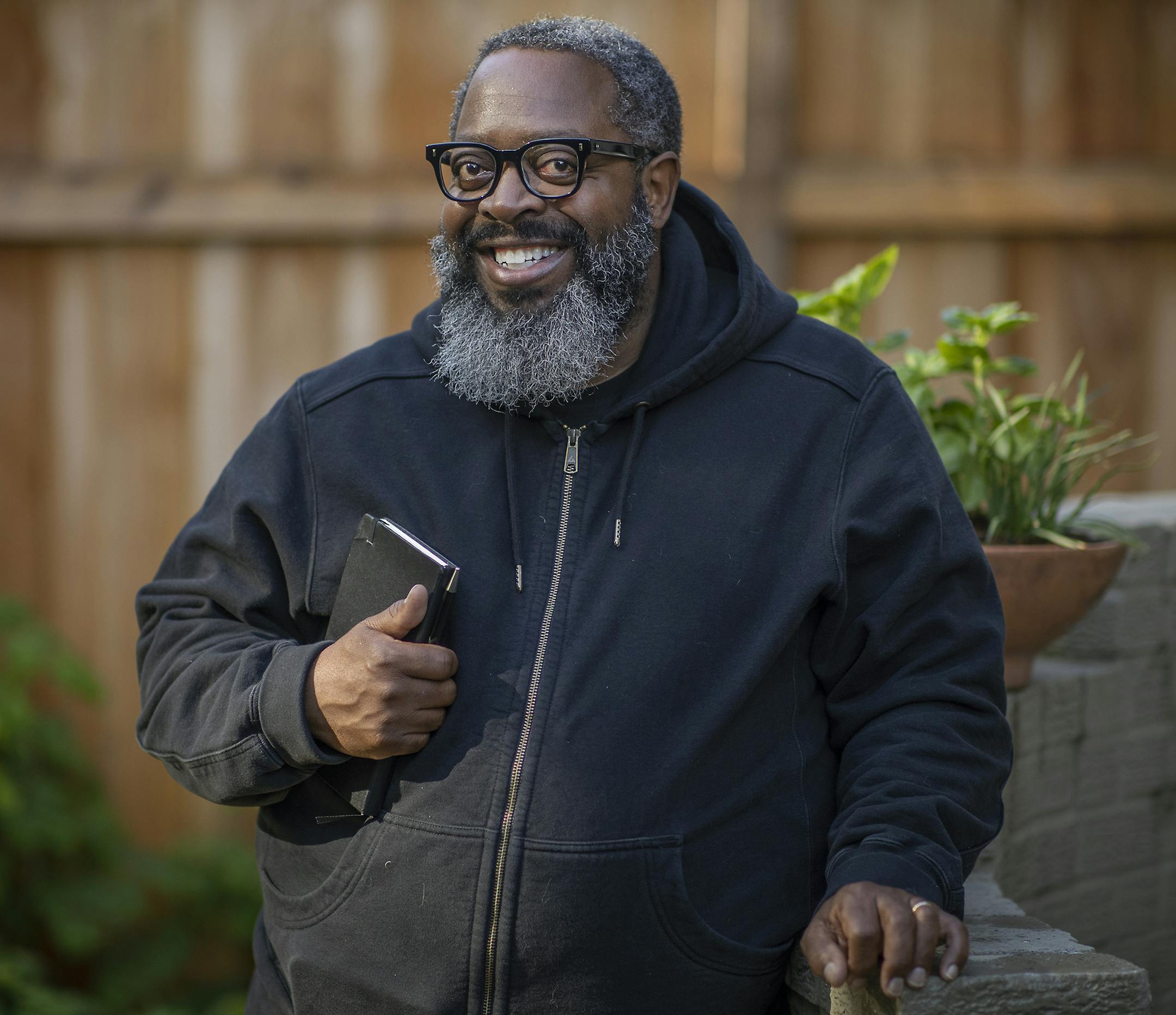
St. Paul poet Michael Kleber-Diggs often writes about moments that start out mundane — such as picking up his daughter from school — but soon reflect something far more complex. For example, outside her junior high, he saw a Black boy, handcuffed, in the back of a cop car, which led to a poignant contemplation of the boy's future — and his own "targeted skin."
In his debut poetry collection, "Worldly Things," released this week by Milkweed Editions, Kleber-Diggs takes his lived experience as a Black man in America, and with his pen, unpacks it.
Fueled by social media "Instapoets," and Amanda Gorman's star turn at the presidential inauguration, poetry's popularity is on the rise. After two decades of steady decline, the percentage of Americans reading poetry has doubled since its historical low, in 2012, of 7%, according to the National Endowment for the Arts.
Kleber-Diggs is among the poets making the form more accessible and inclusive, dispelling the common notion that poetry is some sort of riddle you may not be smart enough to figure out. Writing about everything from fishing with his grandfather to police killings, Kleber-Diggs says he hopes his poems spur conversations about "the truth of our lives" and increase the sense of empathy and community that infuse his work.
For years, the attorney-by-day would get anxious when friends introduced him as "a poet."
"It would take everything in my power not to say, 'Whoa, whoa, let's not get carried away.' It took a long time to embrace that identity," said Kleber-Diggs, 53.
But literary luminaries are saying his book has been well worth the wait.
Former U.S. Poet Laureate Tracy K. Smith called the collection "oracular," "full of an age-old knowing," "new and eternal at once." Poet Henri Cole, who selected "Worldly Things" for the 2021 Max Ritvo Poetry Prize, said its poems "quietly put pressure on us to live up to our nation's ideals."


