
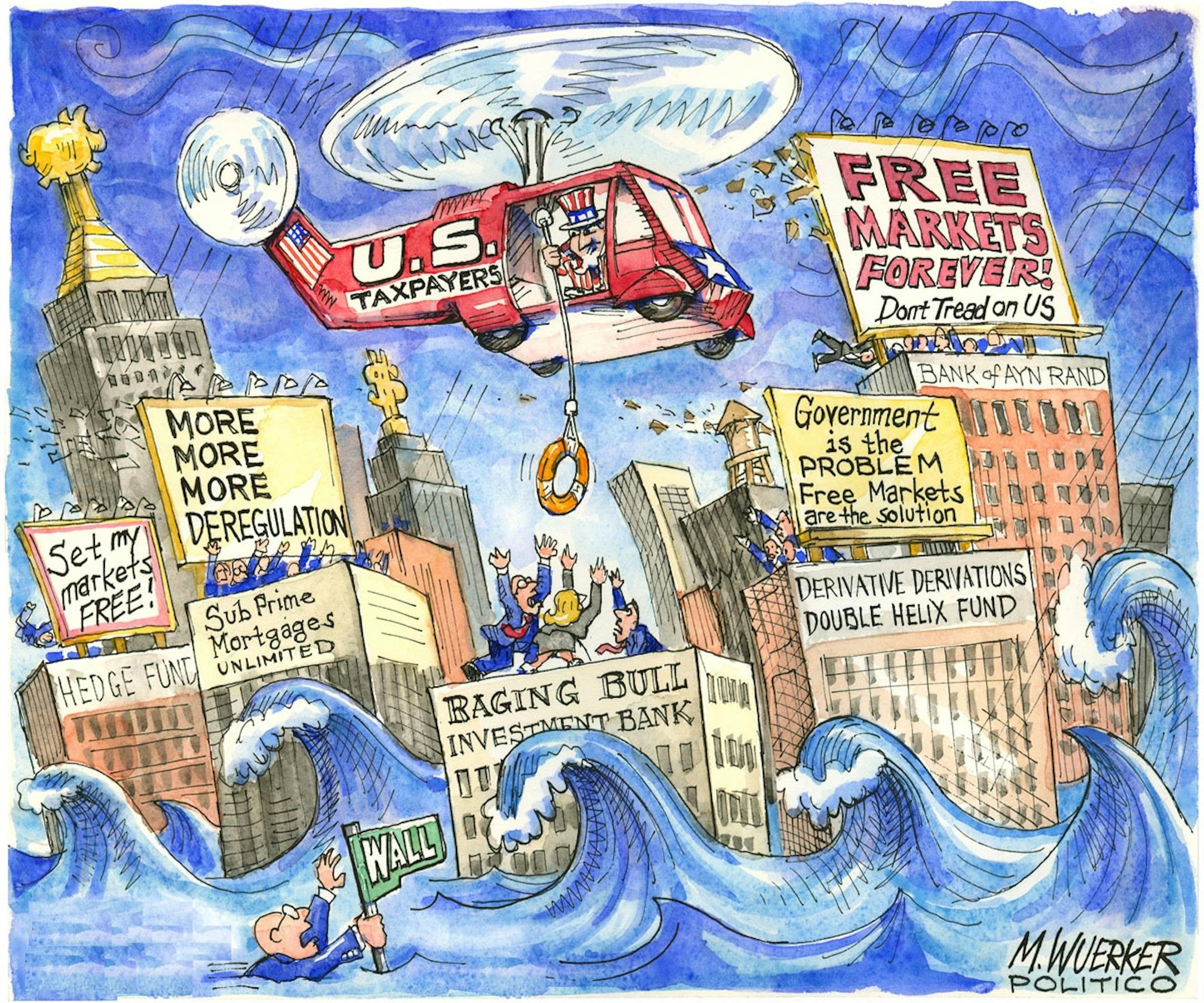
Private equity: The devil is in the details

Confused by the GOP presidential candidates' bantering about venture capital and leveraged buyouts? Here's what it means.

January 19, 2012 at 2:11AM
(Susan Hogan — Tribune Media Service/The Minnesota Star Tribune)

Amid all the political focus on "venture capital" and "leveraged buyouts," the discussion among Republican candidates, in the media and in Congress has been remarkably fact-free. Perhaps this will help.

First, these type of investments are not the same thing.

Venture investing virtually never results in the loss of jobs, the failure of businesses or really anything other than the potential for the founders of the company to lose control -- in exchange for other people's money funding the company's growth. If the venture succeeds, everyone wins.

If it fails, as the great majority of them do, the venture-capital fund loses its money.

Leveraged-buyout firms, like Mitt Romney's Bain Capital, suffer from two troublesome realities: 1) Their use of financial leverage (borrowing a lot of the purchase price from banks, insurance companies, etc.), and 2) their need to sell or refinance the business and take money out within a three- to eight-year period to provide investors their expected return.

The first reality -- leverage -- robs the company of options and of the ability to weather a difficult economy or an industry downturn.

The second reality -- a short time horizon -- requires that the business grow or be marked down and gotten off the books before it hurts the fund's rate of return for its investors even more.

When businesses fail -- including failures caused by carrying too much debt on the balance sheet to have flexibility -- then everyone loses, but perhaps most achingly, the employees who will lose their jobs.

When the business grows, everyone wins -- owners, managers, employees, suppliers and the government (more taxes.)

What's described above is not "vulture" investing. That is where investors buy damaged companies and attempt to sell off the assets at a gain or to restructure (read: fix) the business.

In these circumstances, many employees and suppliers suffer. But these businesses were likely headed for failure in any event (and soon).

The moral of this tale is that not all buyout firms and their owners and investors do the same thing.

Many -- even, I might say, most -- offer liquidity for family owners, growth capital when justified, near-independence for managers, business for banking institutions, and jobs, jobs, jobs.

Let's stop scapegoating and stick to the facts.

And, to be clear, the largest investors in both venture-capital and leveraged-buyout funds, and even in many vulture funds, are our pension funds, which benefit wonderfully if the funds invest intelligently.

So, as Pogo famously said, "I have seen the enemy, and they is us."

* * *

Michael Goldner is retired founder of Goldner Hawn Johnson and Morrison, a private-equity firm based in Minneapolis.

about the writer

about the writer

MICHAEL GOLDNER

More from Commentaries

See More

U regents: Minnesota health care deserves a better deal

card image
Fairview Health Services

We acted to protect statewide medical education, research and patient care.

card image
card image