
Pricey EV pickups target premium customers

Some loaded models reach six figures.

February 18, 2022 at 2:15PM
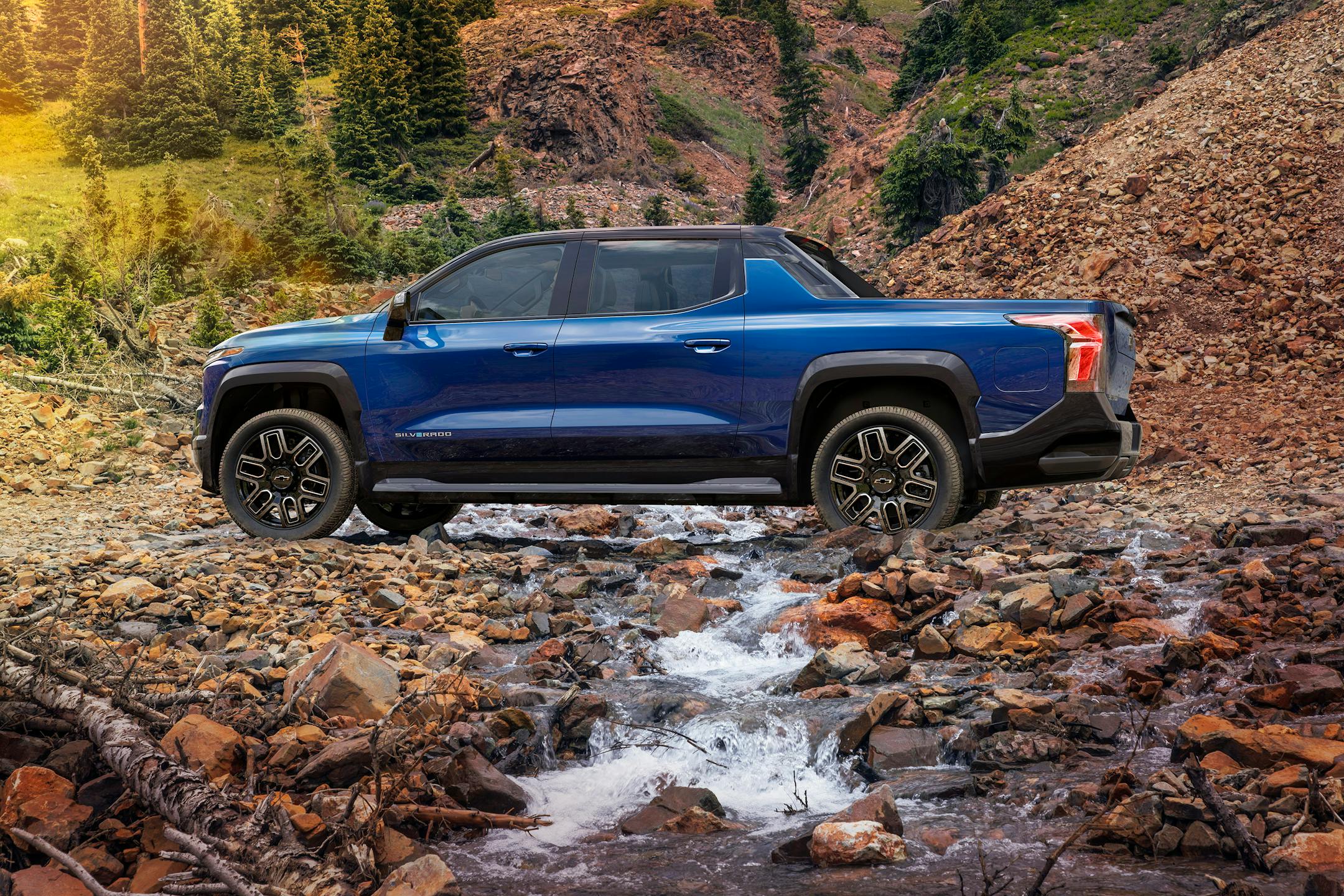
The 2024 Chevrolet Silverado EV RST is the range-topping trim of the brand’s first EV pickup and will start at $105,000 when it arrives in late 2023. (Chevrolet\/The Minnesota Star Tribune)

While manufacturers advertise EVs as the future of trucks, their initial offerings have a decidedly premium feel.

Consider the number $50,000. That's how much more the first Chevy Silverado EV RSTs will cost than a comparable, diesel-powered Silverado RST. Ford also has released its price configurator for the F-150 Lightning, with EV models running from $18,000 to $25,000 more than their gas-powered counterparts.

In addition to competing with one another, these models also will be shopped against startup EV trucks like the $74,000 Rivian R1T and the $125,000 Bollinger B2.

Like Teslas or Mustang Mach-E electric SUVs, American EV pickups appear targeted at a niche market of luxury customers or wealthy corporations with environmental sustainability goals to meet.

"For now, automakers know that EVs are a premium market, particularly wealthy first adopters in places like Silicon Valley," said California-based auto analyst Karl Brauer of iSeeCars.

Chevy's all-wheel-drive Silverado EV RST first-edition model will debut in late 2023 at an eye-watering $105,000 — about the same price as Porsche's AWD electric car, the Taycan. The RST's sticker is just shy of the GMC Hummer EV Edition 1 price of $112,595.

The Ford Lightning's top-trim, loaded Platinum model stickers at $92,569, more than $8,000 north of the standard, rear-wheel-drive Porsche Taycan EV.

The Lightning will be offered in a variety of lower trims when it hits the market this spring. All the models carry a hefty premium over their gas-engine siblings. Ford's base Lightning Pro starts at $41,669, about $10,000 (32%) above the starting price of the $31,685 gas-powered F-150 XL.

The Lightning initially will be offered only in a SuperCrew cab (four-door) configuration. In XLT trim, that would align it with the F-150's meat-and-potatoes XLT gas model, one of the Blue Oval's bestselling vehicles.

Load up a Lighting XLT and gas XLT, however, and the prices diverge. An AWD Lightning XLT, for example, costs $75,000 compared with its $57,000 hybrid-gas XLT counterpart before a $7,500 federal tax credit.

A mass market?

Automakers like Ford and GM have targeted EV sales to be half of their volumes by the end of this decade — with GM aggressively forecasting all-EV sales by 2035. Initial market offerings point to less bullish expectations.

"This is not volume pricing," said analyst Brauer. "EVs don't make sense at volume right now because automakers wouldn't be able to make the profit they make on gas cars."

Consistent with selling luxury compared with a mainstream brand, Ford emphasizes the capabilities of the Lightning versus the gas F-150, such as a whopping 563 horsepower (compared with 430 for the hybrid V-6 engine) and 775 pound-feet of torque (versus 570 for the hybrid). Similarly, a Silverado EV specs 775 pound-feet of torque vs. a $56,600 diesel Silverado's 460 pound-feet.

But in addition to its price advantage, the hybrid-gas F-150 boasts its own advantages, such as 700 miles of range (vs. 300 for the Lightning) and a significantly higher towing capacity (12,700 pounds vs. 8,000 for the EV).

So distinct in pricing and features are the Detroit EV trucks that car buff sites like Car and Driver list them as separate models.

The premium EV message plays out in work truck models, as well. Detroit automakers sell huge volumes to fleets. But Chevy and Ford are targeting EV work trucks at billion-dollar corporations that need to meet Environmental Social Governance quotas demanded by activist investors.

"The work truck is about supporting our fleet customers and their sustainability goals with wanting to have a sustainable future [and the] ESG demands of their green investors. So we're starting with our fleet model first," said Silverado chief engineer Nichole Kraatz.

Startup automakers like Rivian and Bollinger also see the opportunity to take corporate fleet share from legacy automakers. Rivian has benefited from Amazon capital as the tech company builds a fleet of delivery vehicles on the bones of the pickup-maker's battery platform.

"Big corporations have a symbiotic relationship with Big Auto. They both need to claim how green they are," said Brauer. "The mantra among the tech and government crowd is sustainability. Big corporations also have money they can put into charging infrastructure, which is ideal for commercial trucks with set routes in an urban area."

Expensive EV trucks also dovetail with the premium pickup phenomenon of recent years. While Detroit luxury brands like Cadillac and Lincoln have concentrated on SUVs, top-trim trucks like the Chevy High Country, Ford Platinum and Ram TRX compete with top-drawer German luxury brands with big screens, high tech and gilded interiors. A special Ignition Edition of the 702-horsepower Ram 1500 TRX, for example, retails for $93,280.

Can pickup makers translate premium EV cachet into mainstream sales volume?

"Who knows what will happen in 10 years?" smiled Brauer.

about the writer

about the writer

Henry Payne