

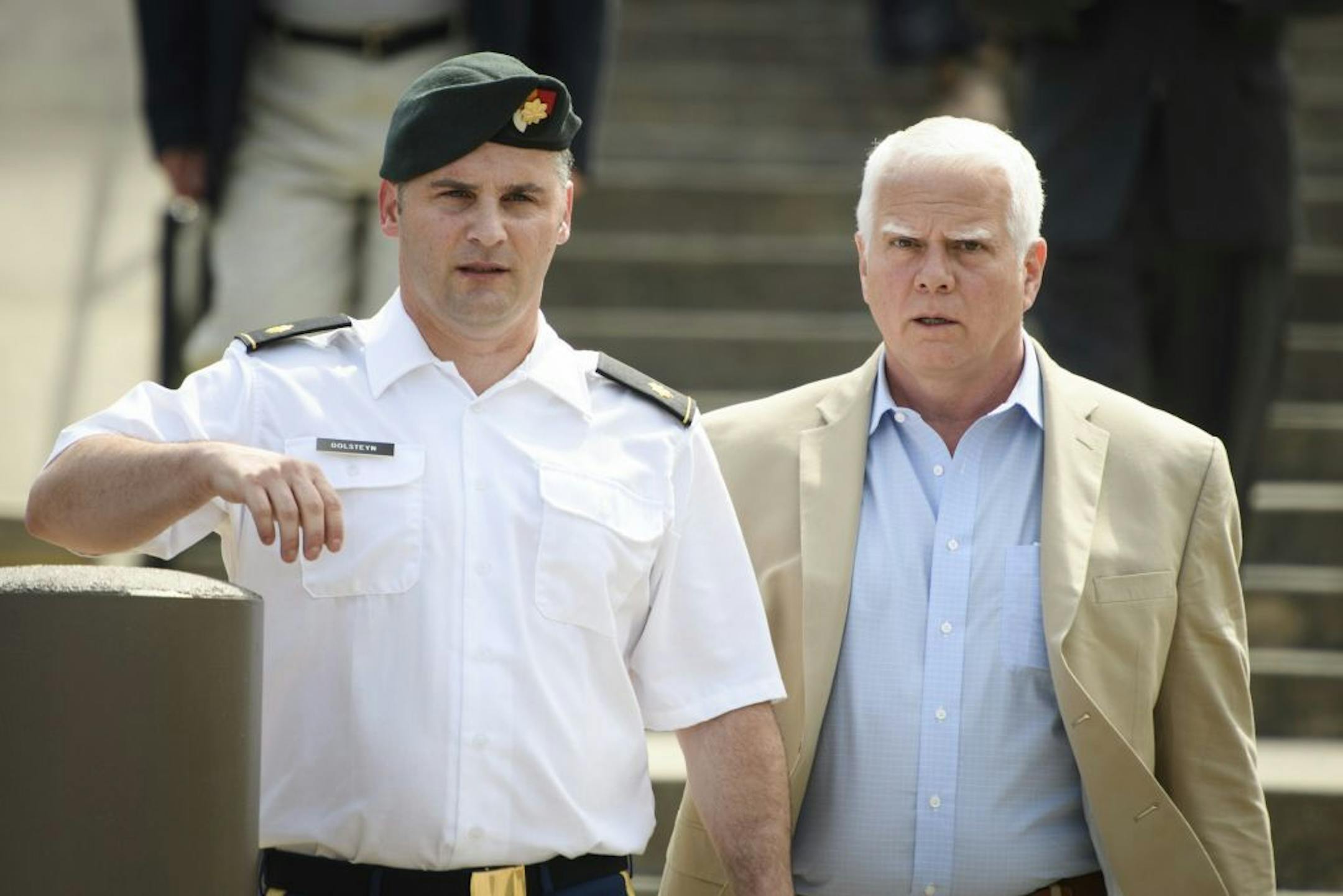
Army 1st Lt. Clint Lorance changed out of the drab inmate's uniform he had worn for six years Friday and left the military prison at Fort Leavenworth in Kansas a free man. He arrived minutes later at a nearby hotel, where his family swallowed him in a group embrace, crying tears of joy.
"I want to say thank you to President Trump," he said amid a throng of well-wishers. "And I want the rest of the country to do that, too."
The president Friday cleared Lorance and two other servicemen accused or convicted of war crimes, drawing cheers from supporters who said the men had been unfairly punished for decisions made in the confusion of war.
But many in the military, especially in military legal circles, are not celebrating. Trump's reprieves, issued against the advice of top defense officials, were seen as a sign of disregard not only for the decisions of military juries but also for the judicial process itself.
Military officials publicly accepted the president's orders — pardons for Maj. Matthew Golsteyn of the Army Special Forces and Lorance, and a sentence reduction for Chief Petty Officer Edward Gallagher of the Navy SEALs.
"We acknowledge his order and are implementing it," the Navy chief of information said on Twitter.
Privately, though, many worried that Trump's actions could erode discipline by sending a message to troops and commanders that in some cases the laws of war don't apply.
"It's just institutionally harmful," said Rachel Vanlandingham, a retired Air Force lieutenant colonel and former judge advocate who teaches law at Southwestern Law School. "This isn't about these three individuals, it's about the whole military justice system and whether that system itself is something of value to the operations of the military."


