

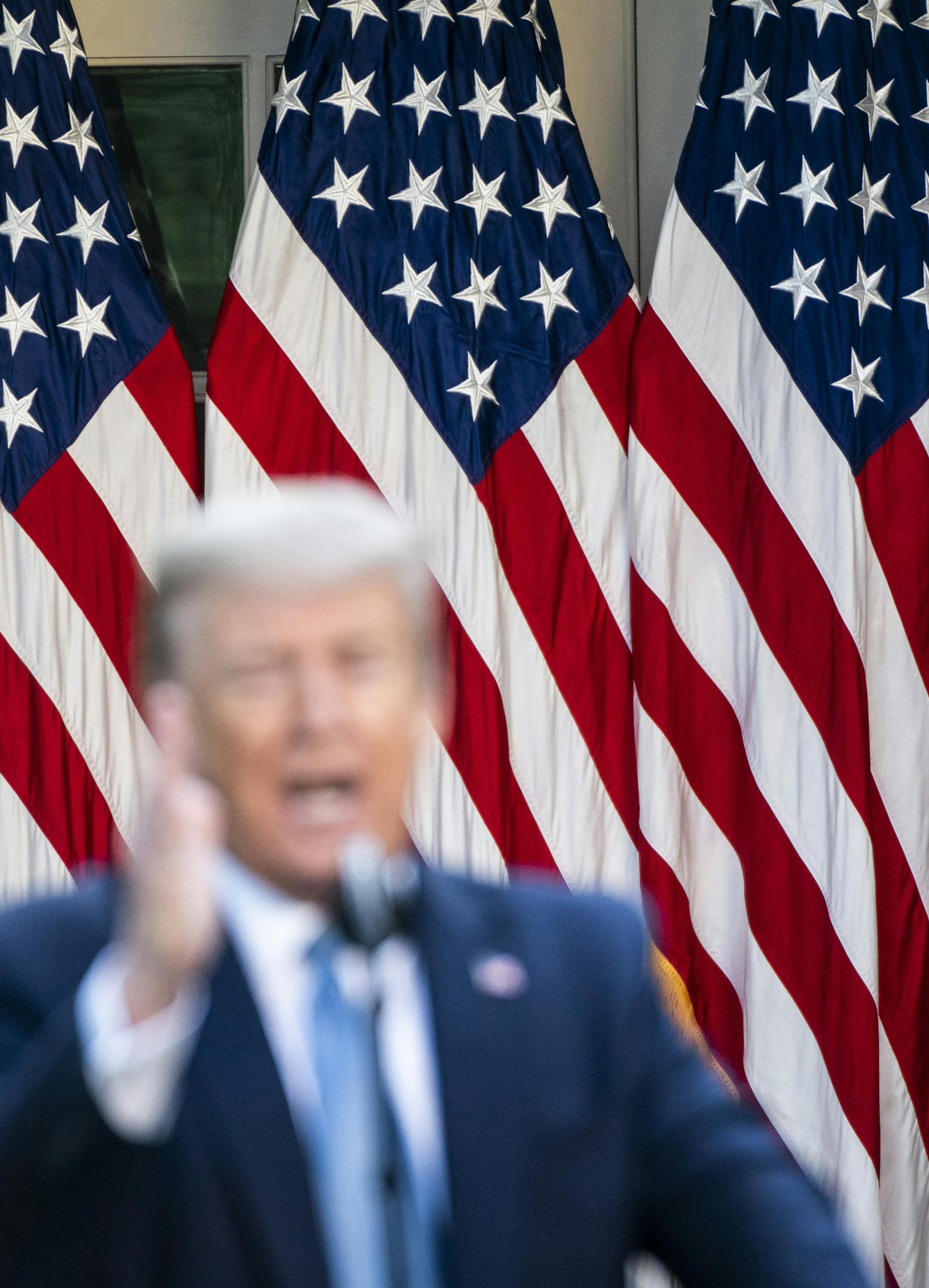
It was at a midday briefing last month that President Donald Trump first promoted two anti-malaria drugs in the fight against the coronavirus.
"I think it could be something really incredible," Trump said March 19, noting that while more study was needed, the two drugs had shown "very, very encouraging results" in treating the virus.
By that evening, first-time prescriptions of the drugs — chloroquine and hydroxychloroquine — poured into retail pharmacies at more than 45 times the rate of the average weekday, according to an analysis of prescription data by the New York Times. And the nearly 32,000 prescriptions came from across the spectrum — rheumatologists, cardiologists, dermatologists, psychiatrists and even podiatrists, the data show.
While medical experts have since stepped up warnings about the drugs' possible dangerous side effects, they were still being prescribed at more than six times the normal rate during the second week of April, the analysis shows. All the while, Trump continued to extol their use. "It's having some very good results, I'll tell you," he said in a White House briefing April 13.
The extraordinary change in prescribing patterns reflects, at least in part, the outsized reach of the Trump megaphone, even when his pronouncements distort scientific evidence or run counter to the recommendations of his own experts. It also offers the clearest evidence yet of the perils of a president willing to push unproven and potentially dangerous remedies to a desperate public.
On Friday, the FDA warned against using the drugs outside a hospital setting or clinical trial because they could lead to serious heart rhythm problems in some coronavirus patients. Days earlier, the federal agency led by Dr. Anthony Fauci — one of Trump's top advisers on the pandemic — issued cautionary advice on the drugs and stated that there was no proven medication to treat the virus.
As the prescriptions surged in the second half of March, the largest volumes per capita included states hit hardest by the coronavirus, like New York and New Jersey. Georgia, Arkansas and Kentucky were other states with relatively high per-capita figures.
More than 40,000 health care professionals were first-time prescribers of the drugs in March, according to the data, which is anonymized and based on insurance claims filed for about 300 million patients in the United States, representing approximately 90% of the country's population. The data is current through April 14.

