

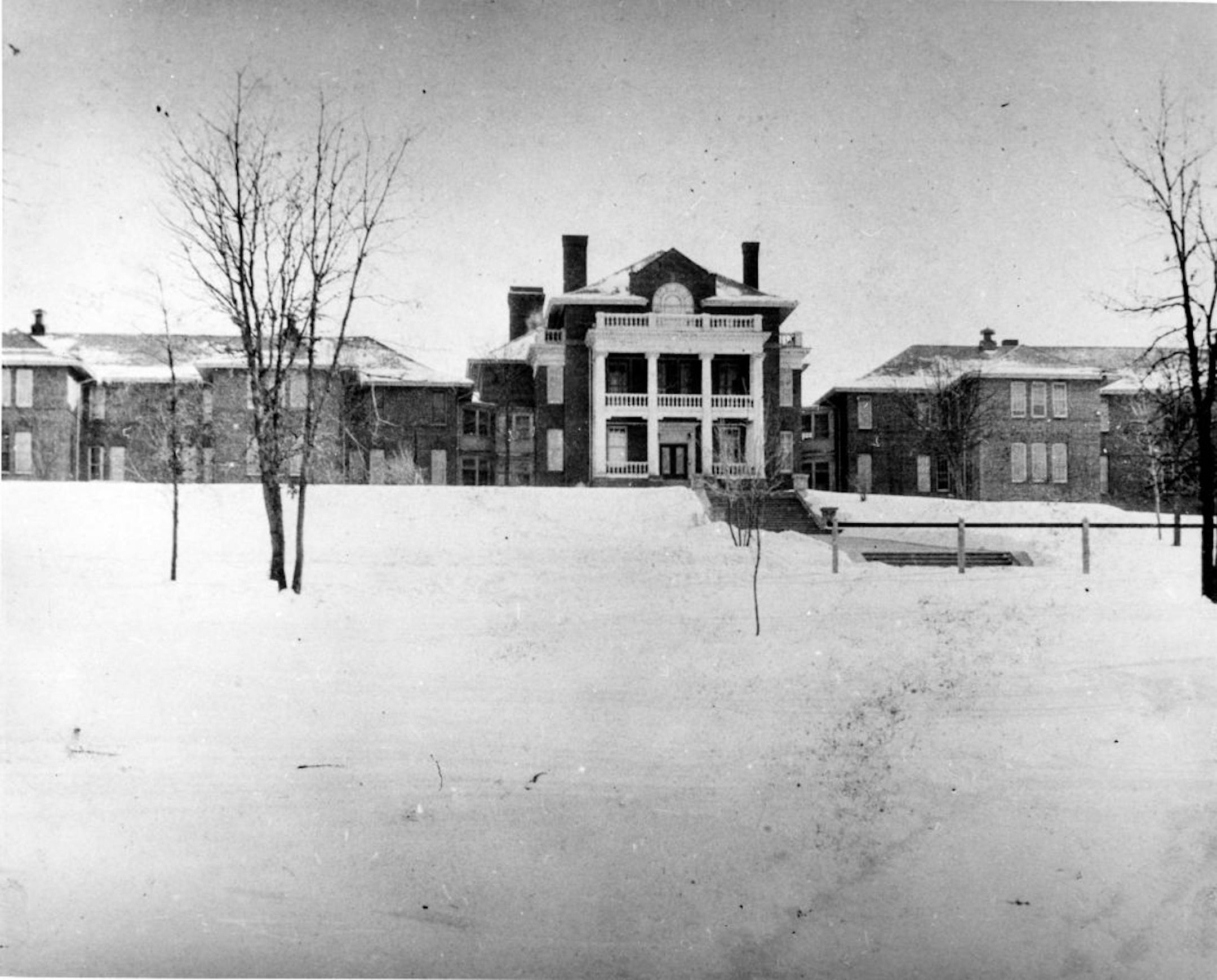
Usually the mention of an old, closed-down insane asylum brings to mind images of inhumanely treated patients, ghosts and bad TV.
When it comes to the Hastings State Hospital, however, the Dakota County Historical Society would like a more complete story to be preserved, featuring both the good and bad parts of history.
The society is embarking on a mission to make sure the county remembers the positive role the hospital played in Hastings history -- and learns from its mistakes.
The plan is to collect the stories of former staff members, patients and family members through a series of interviews, said Chad Roberts, the society's executive director. So far, 25 people formerly involved with the hospital have volunteered to share their experiences.
As with any major employer, a lot of people in Hastings were connected to the hospital, as staff members, patients or family members of patients, Roberts said.
When the hospital opened in 1900, 112 patients were transferred from Rochester. At the time, these patients were considered untreatable, project director Heidi Langenfeld said. Patients were simply "housed."
Harsh treatments such as electroshock therapy and lobotomies were common in the early years. And people could be locked up there for reasons that sound strange to modern ears: According to local records from the hospital's early years, patients were admitted for "maladies" such as disappointment, fear, "political excitement" and drafting of family members into military service, just to name a few.
But advances were made and treatment began to change. Hastings became one of the first institutions to stop the use of restraints. Occupational therapy with activities such as breadmaking and gardening was introduced. In 1968, an alcohol and drug abuse program was established.


