

For decades, Betsy Ross' Bible sat open to the same page inside the narrow Arch Street row house where she is said to have sewn the nation's first flag. On the exposed paper was the Ross family tree, written in script but rendered illegible in places, a faded and discolored victim of humidity, heat and sunlight.
By the time Lisa Acker Moulder joined the historic house museum as collections manager in 2000, the Bible, published in 1791, was in such fraught condition that Moulder stashed it away in storage, displaying it only for the few days in 2015 that Pope Francis was in town.
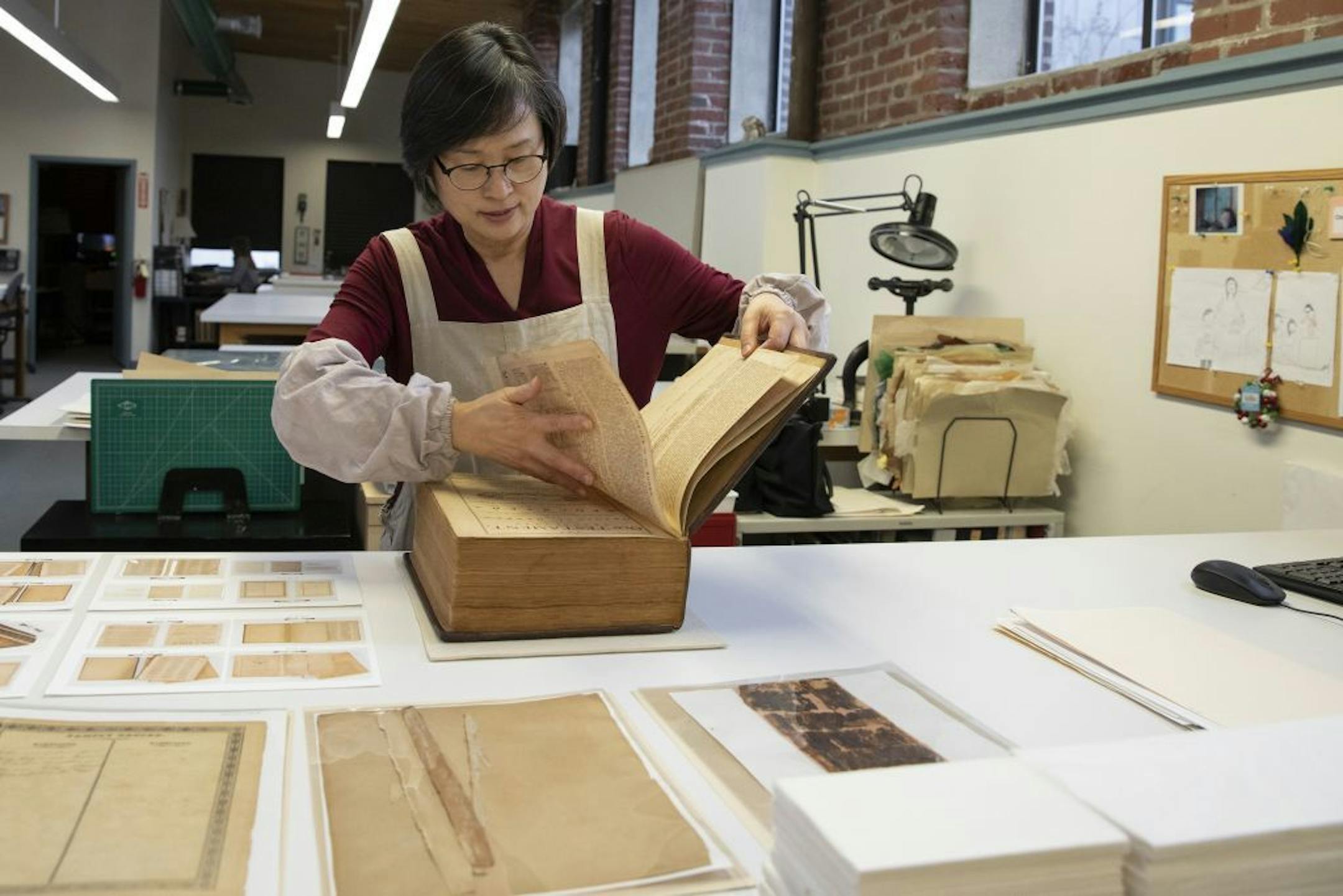
Soon, though, the Bible will re-emerge refreshed after a six-week stay at the Conservation Center for Art and Historic Artifacts in Philadelphia and return to its home, where it will be put on limited exhibition.
The $11,000 preservation project came of a partnership between Historic Philadelphia, the private nonprofit that operates the Betsy Ross House, and the American Bible Society (ABS), an organization that has been promoting the Good Book for the past two centuries. In 2015, ABS moved its headquarters from New York to Fifth Street near Independence Hall in Old City, where it is building a new museum on the role of faith in American history.
ABS has an extensive collection of rare Bibles, including Helen Keller's. Funding the restoration of the Ross family Bible fit right into the group's "sweet spot," said Patrick Murdock, managing director of ABS' Faith and Liberty Discovery Center, which is expected to open in 2020.
The Bible is one of the few Ross artifacts extant and a key piece of history, so its preservation is crucial, said Amy Needle, president and CEO of Historic Philadelphia.
With ABS support, the ailing Bible was checked into the Conservation Center, which has preserved Frank Lloyd Wright's architectural drawings, John James Audubon's Birds of America prints and Bruce Springsteen's lyric notebooks.
When the Bible arrived in October, its leather covers were detached and the binding crumbled. The book was split apart into seven sections. Pages were discolored, stained and brittle, and some had been torn out.


