

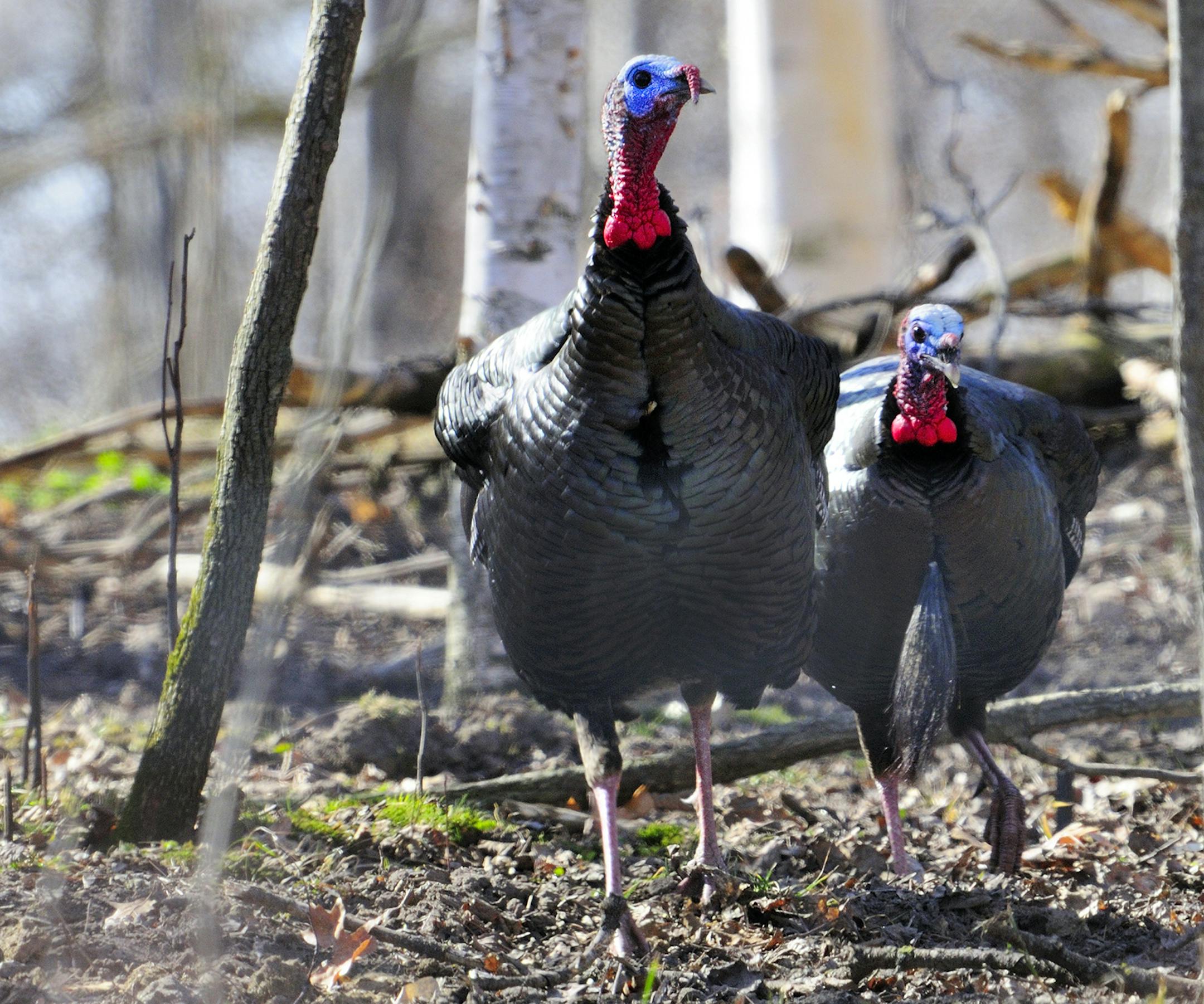
On a clear, sunny morning last week I spent some time in the turkey woods, visions of strutting gobblers in my mind.
My mission was twofold. One, I was scouting for hunting locations, hoping to find the mother lode before the turkey hunting opener April 13. Two, as usual, I carried a camera and telephoto lens, and a backpack full of turkey hunting paraphernalia including calls and decoys. A frame-filling image of a strutting tom was my goal.
It was early in the turkey version of the rut, and I only half-expected to call in a lovesick tom. I wore camouflage clothing from head to toe just in case.
Earlier that morning I had called three hen turkeys into camera range. When the hens first responded, I thought for a moment I was hearing another hunter who was, like me, scouting and practicing his or her calling. "Boy, that person is a good caller," I said to myself.
Quickly, though, the three hens stepped into view from behind a fallen oak. I ceased calling for a few moments and listened as they vocalized. It was like I was hearing an instructional CD on turkey calling, an audio delight for sure. Approaching my calling location, the trio yelped, clucked, purred, cackled and whined.
Now I was stepping carefully through a wooded cattle pasture. I stopped occasionally to call. A tom answered on my second effort. He was close, just out of sight over a slight ridge. I tucked up, back to an oak tree, raised my knees, and rested the camera across them.
Then, using a mouth diaphragm call, I emitted my most seductive hen yelps. The tom immediately gobbled back. Moments later I saw the fan of a strutting turkey appear above the ridge. Then another fan. Two toms came into view, strutting in my direction. Seven gobblers eventually appeared, the two adult toms and five jakes.
It was quite a sight. The entire parade was coming right at me. The two adult toms were in the lead, alternately strutting and walking. The jakes, although they occasionally puffed their feathers, did not spread their fans.


