

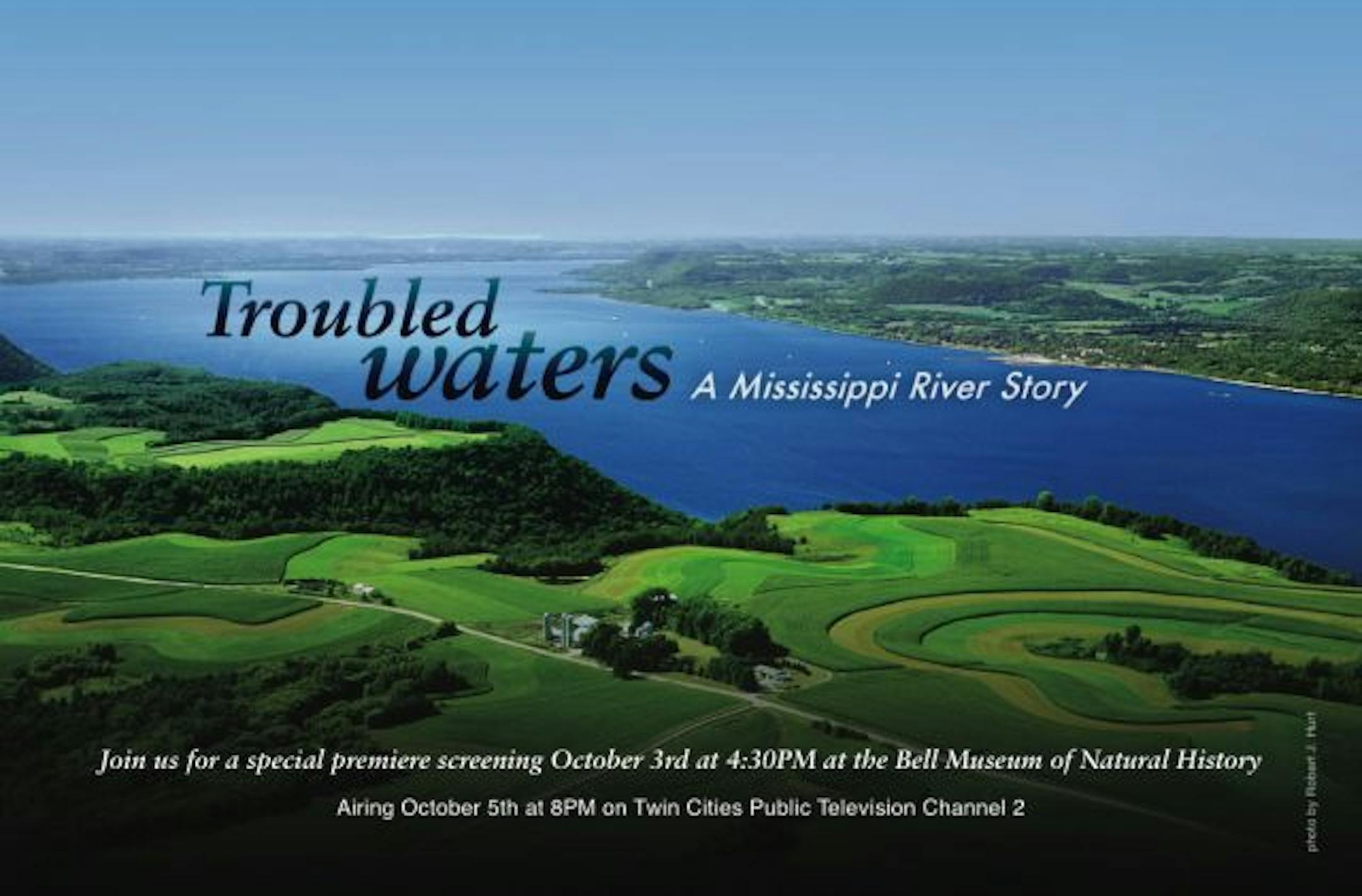
"Troubled Waters" is the name of a new documentary about the Mississippi River, but it also describes the turmoil at the University of Minnesota about the cancellation of the film's scheduled premiere and broadcast on Twin Cities Public Television.
Karen Himle, vice president of university relations, informed the U's Bell Museum of Natural History last week that she canceled the film's Oct. 5 broadcast on TPT. The decision so close to the airing and Oct. 3 premiere screening at the museum has disappointed and dumbfounded those who produced and funded the program.
Martin Moen, associate director for communications and operations at the Bell Museum, said he could not elaborate on why the program was pulled. "Karen said a lot more but I can't get into that," he said.
Filmmakers under contract to the museum produced the documentary, "Troubled Waters: A Mississippi River Story," during the past two years with about $500,000 in state lottery proceeds and foundation grants. Among other topics, it details pollution problems in the Mississippi from farm chemicals and other sources, and profiles both conventional and organic farmers who are making changes to reduce runoff and improve water quality.
Daniel Wolter, director of the University of Minnesota News Service, said that several university officials and faculty previewed the documentary, and raised questions about whether it is "factually accurate, objective and balanced in its presentation" and meets the goals of public funding. "Accordingly, the premiere was delayed to allow for proper scientific and institutional review," Wolter said.
Fact-checking galore
The decision drew quick reaction from Brian DeVore, communications coordinator for the Land Stewardship Project, a nonprofit group that works closely with farmers on sustainable agriculture. DeVore said he had seen a recent version of the documentary, and that it "bent over backwards to be fair to farmers," while presenting real problems and promoting on-the-ground solutions. "This is outrageous," DeVore said. "I'm not sure why public relations at the U is making decisions about what scientific information is released. It's pretty troubling."
Wolter said that Himle was not available for interviews, but that it's perfectly appropriate for her office to make such decisions. Himle did so after consulting with Al Levine, dean of the College of Food, Agricultural and Natural Resource Sciences, he said, which oversees the Bell Museum.


