

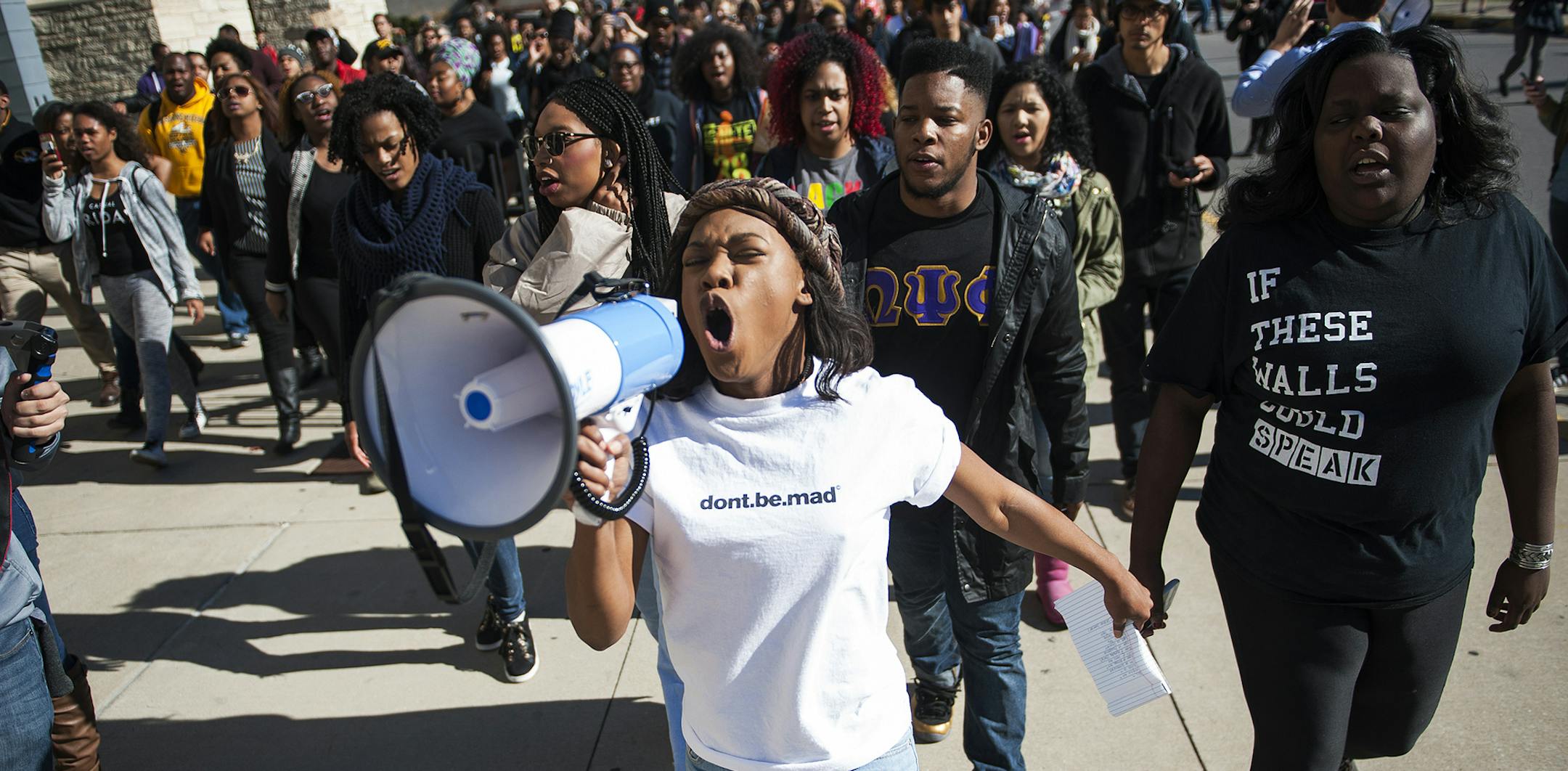
In recent weeks, college campuses across the country have been home to some troubling scenes — and demands. The common denominator in virtually all of them has been race.
At Dartmouth, students stormed the college library, vilifying other students who were apparently guilty of nothing more than SWW (as in studying while white).
At Yale, video captured a student screaming at a professor and demanding his resignation over his wife's (a fellow professor) admonition that everyone should calm down and think twice before making a big deal over Halloween costumes.
The University of Missouri campus was convulsed over racist graffiti and racial expletives that may or may not have had anything to do with university students. During an ensuing demonstration, a faculty member was caught on camera calling for "some muscle" to get rid of a student journalist who was simply covering the event. In the end, the university's president and chancellor resigned.
To date, Minnesota schools have not been home to anything approaching any of this. In the name of keeping it that way, leaders of the Minnesota State Colleges and Universities system have taken a curious step — a step that could have the unintended consequence of provoking what they hope to prevent.
In an open letter last month to "students, faculty and staff," the chancellor and 30 MnSCU presidents caution that we are "not immune to racism" right here in Minnesota — before reminding us of the "ugliness of racism and intolerance," as well as its "painful impact" on the lives of all concerned.
Fair enough. The statement then asserts that "we cannot deny the existence of racism and intolerance or pretend that we do not hear racist and hateful language."
Here's where things start to become more problematic. In this day and age of invented and proliferating "microaggressions," just what is "racist and hateful language?" Can people of all racial hues utter such language? Here the statement is silent.


