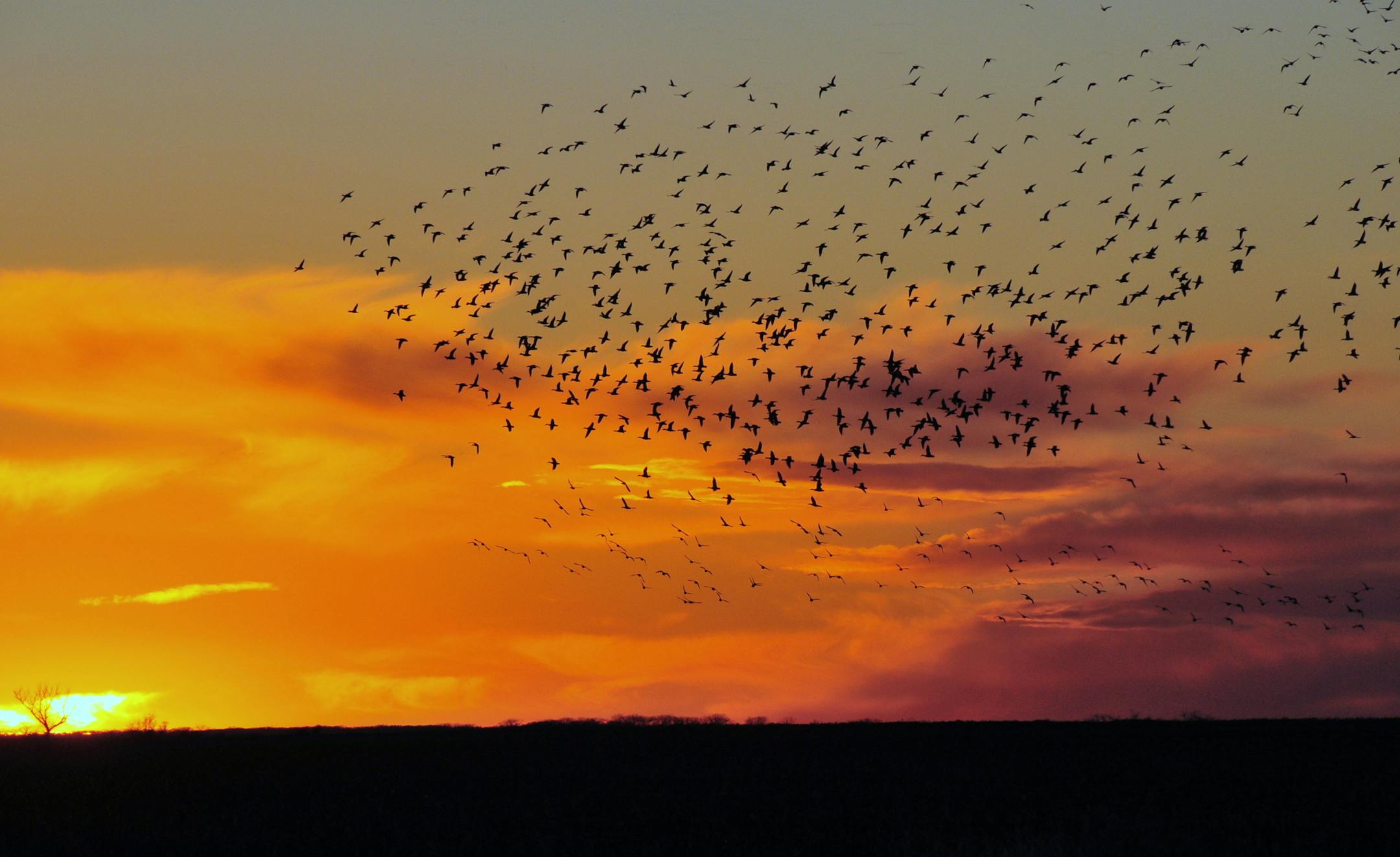
The brooding, leaden sky that cool autumn morning in the late 1990s was raining not buckets of rain but bounties of blue-winged teal, gadwalls and the occasional spoonbill, the trinity of early-season dabbling ducks.
My young black Lab Buddy — a waterfowling virgin — was 60-plus pounds of undisciplined kinetic energy, and, short of sedation, I did everything humanely possible to keep him steady in the blind. Truth is, my heart was pounding like a jackhammer, too. It was duck hunting as sensory shock and awe. In more than two decades of waterfowling, I had never experienced anything like it.
A month earlier, and in hasty fashion, I pulled up stakes from my native Minnesota to take my first newspaper job as outdoors editor of the Aberdeen American News, a medium-size daily in northeast South Dakota. The things I knew about prairie country and its culture couldn't fill a shot glass. Like many Minnesotans, my entire existence — or nearly so — revolved around the hardwood- and pine-studded beauty of north-central Minnesota — lake country. In fall, hunting opportunities there with close friends — from ducks to ruffed grouse to deer — abounded. It's what I knew well and what I loved even more.
But now I was off on a new journey six hours due west, my internal compass spinning wildly out of control. I was alone in unfamiliar territory and harboring (I'd come to learn later) a woefully inaccurate misconception: that prairie country was a barren, unforgiving and soulless moonscape devoid of life and as boring as reading the want ads.
"You have to love the prairie a little before it loves you back."
Those words were spoken by my late friend Rudy, during an interview on one of my first assignments. They didn't resonate much, if at all, at the time. Rudy, I was told, was an outlier, a grain farmer with a generous green streak. Indeed, his homestead was stunning, a matrix of wetlands, grasslands, shelterbelts and food plots, all of which had a singular objective: producing (or attracting) wildlife. Rudy had long buried what he was taught by his farming forebears: that industrial, plant-or-bust agriculture was the only way to make a living. Instead, he opted to heal his land and strike a balance with it.
"Farm the best, leave the rest," he'd say. In doing so, he created a sort of Serengeti on the prairie. Pheasants and sharp-tailed grouse. Turkeys and deer. Ducks and geese. Shorebirds and other migratory birds. His farmstead was amazing.
Despite our vast age difference, Rudy and I became good friends. More than a friend, he was also my prairie mentor. I think he sensed that I knew less than nothing about his home turf. I became his pupil, his "project." My first class: Prairie Appreciation 101.