

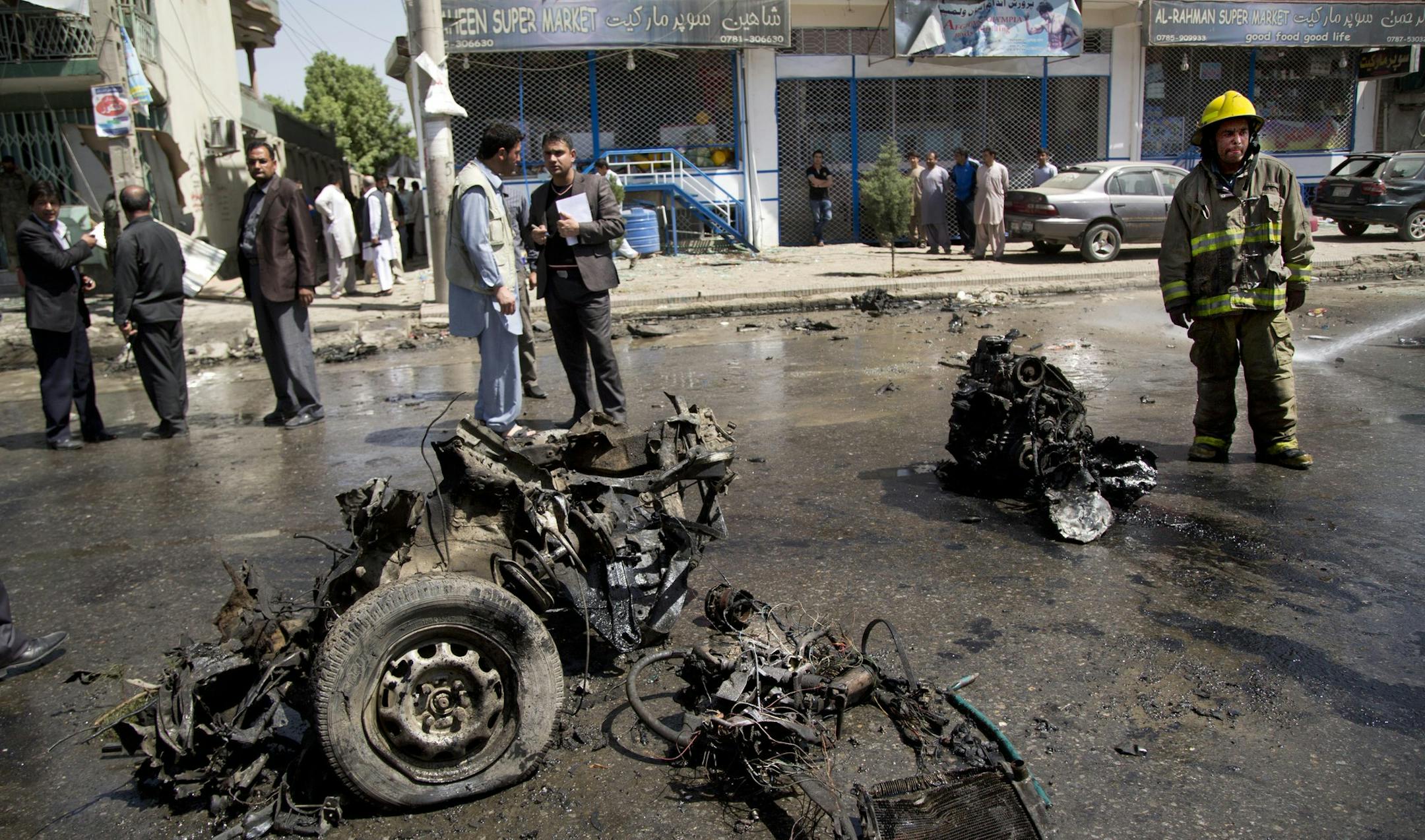
KABUL, Afghanistan – A suicide car bombing tore through a U.S. convoy in Kabul on Thursday, killing at least 15 people, including six Americans, in a blast so powerful it rattled the other side of the Afghan capital. U.S. soldiers rushed to help, some wearing only T-shirts or shorts under their body armor.
A Muslim militant group claimed responsibility for the morning rush hour attack, saying it was carried out by a new suicide unit formed in response to reports that the United States plans to keep bases and troops in Afghanistan even after the 2014 deadline for the end of the foreign combat mission.
The group, Hizb-e-Islami, said its fighters had stalked the Americans for a week to learn their routine before striking — a claim which raises questions about U.S. security procedures. The militant group said the attack marked a stepped-up campaign against the foreign presence in Afghanistan, and promised more such assaults.
"Our party will increase its attacks against foreign troops in Afghanistan in the future," said Zubair Sediqqi, a spokesman for the militant group. He spoke by phone from Pakistan.
Two children were among nine Afghan civilians killed in the attack. "I can't find my children. They're gone. They're gone," their father screamed before collapsing to the ground as neighbors swarmed around to comfort him.
Two American soldiers were killed, as were four American civilian contractors with DynCorp International. DynCorp, a U.S. defense contractor based in Falls Church, Va., said its employees were working with U.S. forces training the Afghan military when the blast occurred.
It was the deadliest attack to rock Kabul in more than two months and followed a series of other assaults on Americans, even as U.S.-led forces are focusing more on training while leaving the fighting militants to their Afghan counterparts.
Thursday's bombing pushed the monthly toll for the U.S.-led coalition to 18, making May the deadliest month so far this year. By comparison, 44 international troops were killed in the same period last year. The overall number of coalition deaths has dropped as Afghan forces increasingly take the lead.


