

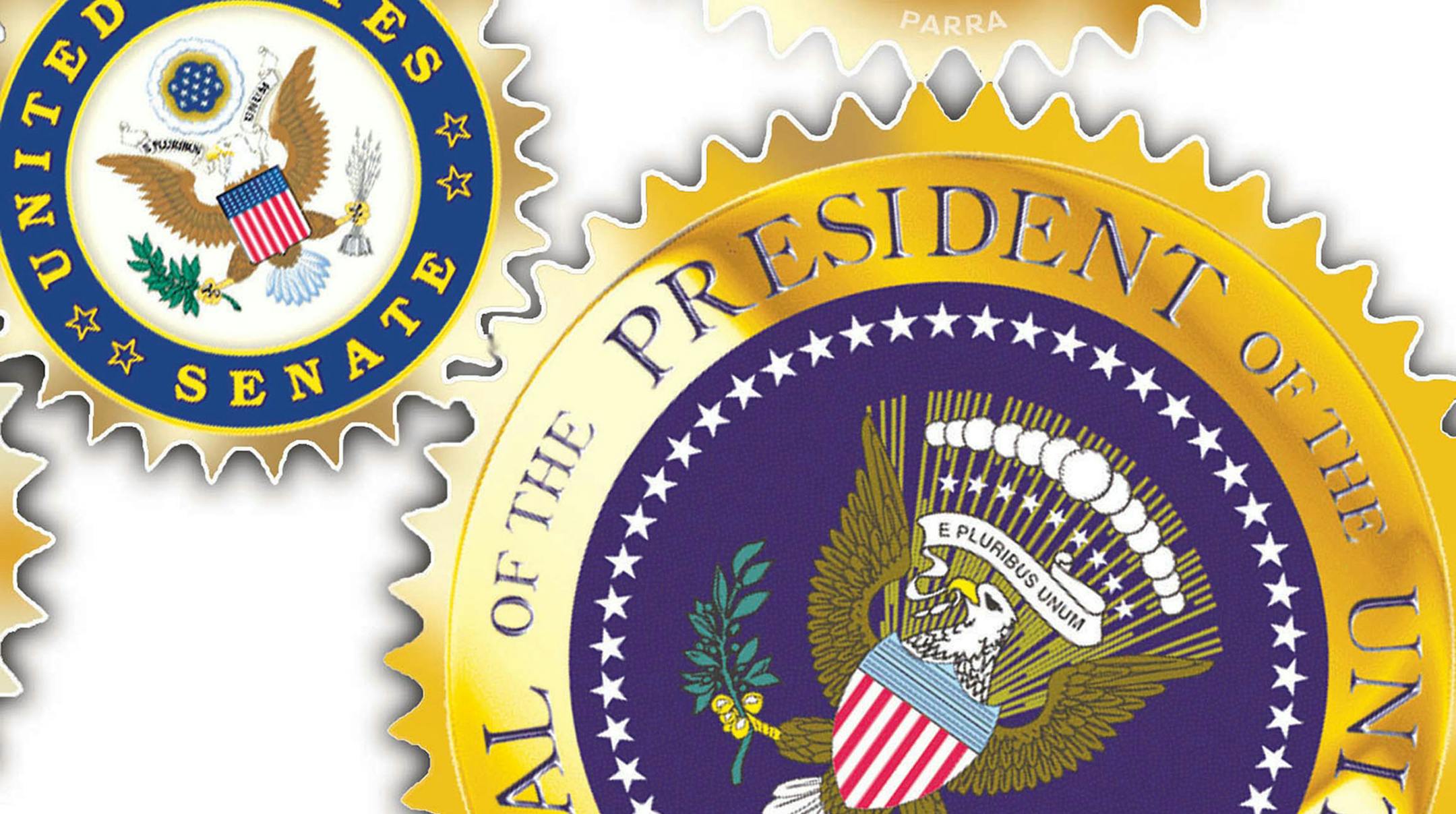
Last week's news from Washington: A dysfunctional Congress managed to function just long enough to bludgeon President Obama into ceding his prerogative to enter into an executive agreement with Iran regarding its nuclear program.
That's unfortunate. I wish the president had had the votes to hang tough on this important right, in part because of the precedent it sets for future executive agreements and the pall it casts over his fight for the legality of his recent executive orders on immigration, climate change and other matters.
Over the past four decades, Congress — with an occasional assist from the courts — has gradually, and regrettably, eroded the powers of the presidency.
Take, as one small example, Obama's sensible proposal in 2012 to consolidate several departments and agencies into a new Cabinet department that would manage trade and business-related functions. Until 1984, a president could have implemented this type of reorganization on his own authority, just as private-sector chief executives routinely do. However, with the expiration of a Depression-era law, the president needed Congress' assent, and Congress was in no mood to give it, in part because the powerful Senate Finance Committee would have lost some of its oversight responsibility.
The need to reverse the slide in presidential authority would perhaps be less urgent if Congress were actually doing anything. But the last two Congresses have passed fewer than 300 laws each, the fewest in modern history. By comparison, the famous "do-nothing" Congress of 1947-48 passed 906 laws.
I saw the problem firsthand when I served in the Treasury early in the Obama administration. Obama was able to inject about $80 billion into the automobile industry without congressional approval because, in a panicked moment in the fall of 2008, Congress had given George W. Bush's administration a $700 billion virtually discretionary rescue fund. But when it came to similar challenges — such as reforming the insolvent housing finance giants Fannie Mae and Freddie Mac — the administration was powerless. Today, more than six years after the Bush administration correctly put them into "temporary" conservatorship, they sit exactly as they did in 2008, as if preserved in amber.
The assault on presidential authority dates from at least the early 1970s, when a mix of the Vietnam War, Watergate and a mushrooming executive branch raised fears of an "Imperial Presidency," as the historian Arthur M. Schlesinger Jr. titled his influential 1973 book.
While the War Powers Resolution of 1973 is perhaps the best-known product of these fears, Congress also restricted the president's ability to withhold funds that had been appropriated. In addition, Congress required that the text of any new international executive agreement be sent to it promptly.


