

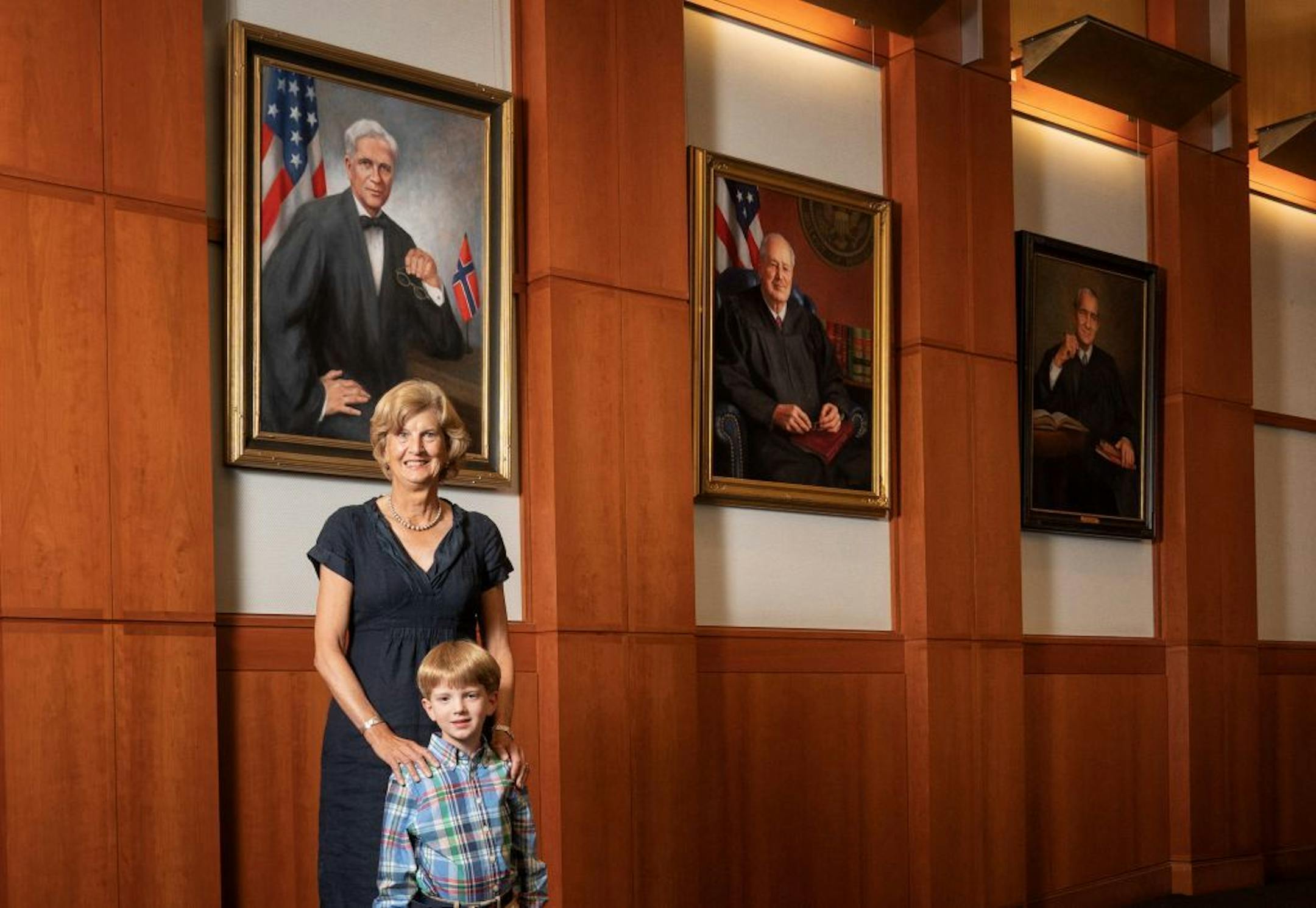
Gunnar Nordbye tried associates of the infamous gangster John Dillinger. He dined with royals from his native Norway, and from his Minneapolis courtroom he ruled on the ownership of newly discovered writings from Capt. William Clark's historic expedition.
But in the 40 years since his death, a fading black-and-white photo was all that remained inside the state's courthouses to remember one of the longest serving federal judges in Minnesota history.
Nordbye's likeness returned this month to a perch looking over a Minneapolis courtroom when his became the first of four portraits commissioned by the court to commemorate judges who have long since passed.
The project, paid for with nonappropriated funds, has demanded some detective work to track down relatives and others who can help revive pieces of local judicial lore that are threatening to recede from public view.
"It's keeping this judge alive," said Cyd Wicker, the Minneapolis portrait artist working on the project.
Wicker has painted many of the federal judicial portraits on display in Minnesota, a practice that only began in the 1990s and almost exclusively for living judges who assumed senior status. Working around a judge's schedule and within their standards for their portraits — a large black robe is a must and prominently displayed American flags are common — can pose a challenge for any artist.
With the portrait of Nordbye, and the three judges to follow, Wicker must work to bring to life a judge no longer here.
Last fall, Judge John Tunheim asked for the artist's help on part of his latest task to preserve the court's history. A pair of books — including a history of Minnesota's federal courthouses — are also in the works.
![Minneapolis portrait artist Cyd Wicker, who has been commissioned to paint several posthumous portraits of Minnesota federal judges, stood for a photo in her studio Tuesday. ] ANTHONY SOUFFLE ï anthony.souffle@startribune.com Minneapolis portrait artist Cyd Wicker, who has been commissioned to paint several posthumous portraits of Minnesota federal judges, stood for a photo in her studio Tuesday, July 24, 2018 in Minneapolis.](https://arc.stimg.co/startribunemedia/UNBOTKQFWHYGFBN5JWXYU7LDH4.jpg?&w=1080)
![Grandaughter of Gunnar Nordbye Andrea Bassett and and great-great grandson of Gunnar Nordbye Gunnar Bassett with the judge's newly hung portrait in the Chief Judges chamber on the 15th floor of the Minneapolis federal courthouse. Nordbye's portrait now hang in the courtroom where Chief Judge John Tunheim presides. ] GLEN STUBBE ï glen.stubbe@startribune.com Friday, July 27, 2018](https://arc.stimg.co/startribunemedia/C2TCDVFE4X36LN66BWLJEXYYUI.jpg?&w=1080)
![Grandaughter of Gunnar Nordbye Andrea Bassett and and great-great grandson of Gunnar Nordbye Gunnar Bassett with the judge's newly hung portrait in the Chief Judges chamber on the 15th floor of the Minneapolis federal courthouse. Nordbye's portrait now hang in the courtroom where Chief Judge John Tunheim presides. ] GLEN STUBBE ï glen.stubbe@startribune.com Friday, July 27, 2018 Gunnar Bassett is six.](https://arc.stimg.co/startribunemedia/7VQUYFZ6TONMVBKJTUQD7VVJ3E.jpg?&w=1080)


