

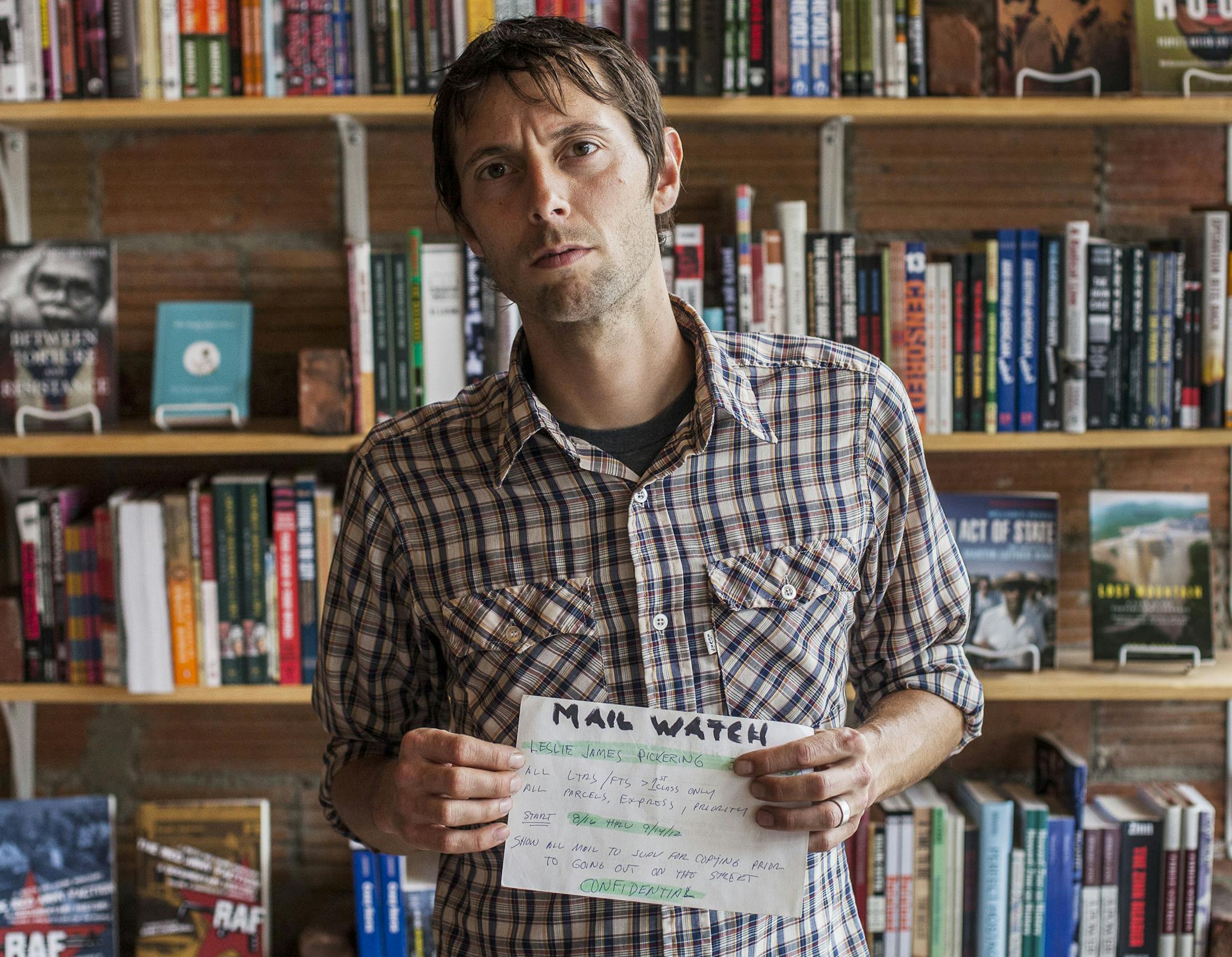
WASHINGTON – Leslie James Pickering noticed something odd in his mail last September: a handwritten card, apparently delivered by mistake, with instructions for postal workers to pay special attention to the letters and packages sent to his home.
"Show all mail to supv" — supervisor — "for copying prior to going out on the street," read the card. It included Pickering's name, address and the type of mail that needed to be monitored. The word "confidential" was highlighted in green.
"It was a bit of a shock to see it," said Pickering, who owns a small bookstore in Buffalo, N.Y. More than 10 years ago, he was a spokesman for the Earth Liberation Front, a radical environmental group labeled eco-terrorists by the FBI. Postal officials confirmed that they were indeed tracking Pickering's mail but told him nothing else.
As the world focuses on the high-tech spying of the National Security Agency (NSA), the misplaced card offers a glimpse inside the seemingly low-tech but prevalent snooping of the U.S. Postal Service.
Pickering was targeted by a longtime surveillance system called mail covers, but that is only a forerunner of a vastly more expansive effort, the Mail Isolation Control and Tracking program, in which Postal Service computers photograph the exterior of every piece of paper mail that is processed in the United States — about 160 billion pieces last year. It is not known how long the government saves the images.
Together, the two programs show that snail mail is subject to the same kind of scrutiny the NSA has given to telephone calls and e-mail.
The mail covers program, used to monitor Pickering, is more than 100 years old but still is considered a powerful tool. At the request of law-enforcement officials, postal workers record information from the outside of letters and parcels. (Opening the mail requires a warrant.) The information is sent to whatever law-enforcement agency asked for it. Tens of thousands of pieces of mail each year undergo this scrutiny.
The Mail Isolation Control and Tracking program was created after the anthrax attacks in late 2001 that killed five people, including two postal workers. Highly secret, it seeped into public view last month when the FBI cited it in its investigation of ricin-laced letters sent to President Obama and New York Mayor Michael Bloomberg.


