

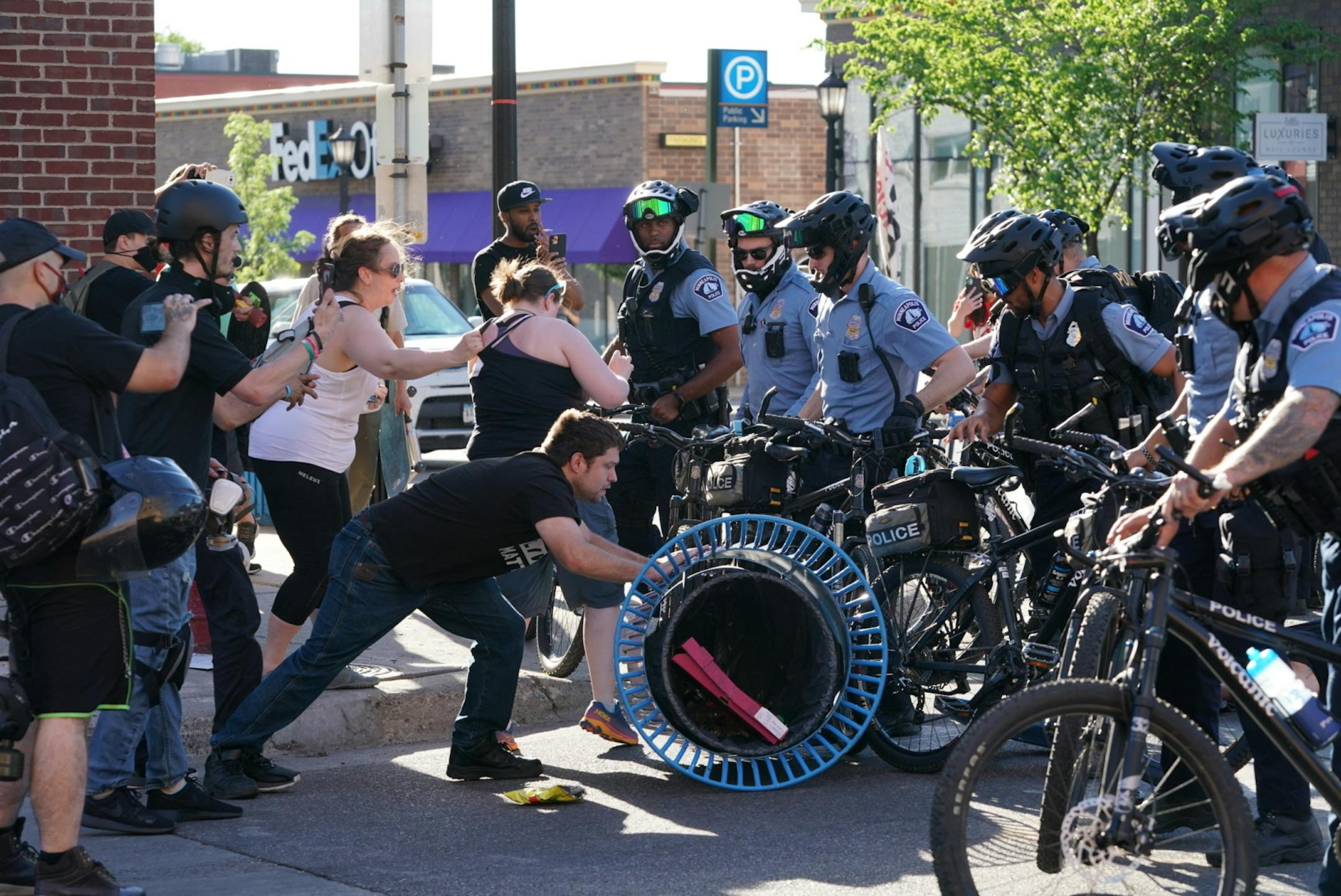
Minnesota's police licensing board approved new model policies on officer misconduct and protest response on Thursday, but acknowledged its limited ability to address violations.
The Peace Officer Standards and Training (POST) Board advanced the new policies in its first meeting since the Legislature adjourned amid demands for more action on police accountability reforms. But under its existing rules, the board can only enforce violations by police chiefs and sheriffs, not by individual law enforcement officers.
"That still blows my mind," said Mendota Heights Police Chief Kelly McCarthy, the POST Board's chairwoman. "I think there is such a big gap between what the public expects a licensing board to do and what we have the ability to do."
Among the major changes to the board's misconduct model policy approved Thursday is a ramping up of data collection. And its new guidelines for responding to protests set standards for when and how police can disperse crowds and limit the use of weapons in nonemergency situations.
After the divided Legislature adjourned without passing many of the dozen police reforms sought by activists and Democrats, attention turned to the POST Board as an alternate path toward changing policing in Minnesota. Gov. Tim Walz, through executive action, is leaning on the board to make more data on police licensing available to the public and to follow up on ongoing efforts to redo its rule making and compliance processes.
The board is also still considering 30 reform proposals called for by the governor and members of the DFL's People of Color and Indigenous Caucus this year — including new policies for releasing body camera footage and meeting as a board more regularly than four times a year.
Justin Terrell, a board member who represents the public, on Thursday called for the board to consider meeting more frequently to consider next steps on the reform proposals. McCarthy said Thursday that she would consider calling more meetings if members believed they were needed.
Terrell encouraged the board to meet more often so that community groups asking for changes in policing can work with the board.


