
Portland, Ore., tests 'safe sleep policy' for the homeless

Portland, Ore., allows tents overnight on public land.

May 11, 2016 at 11:48PM
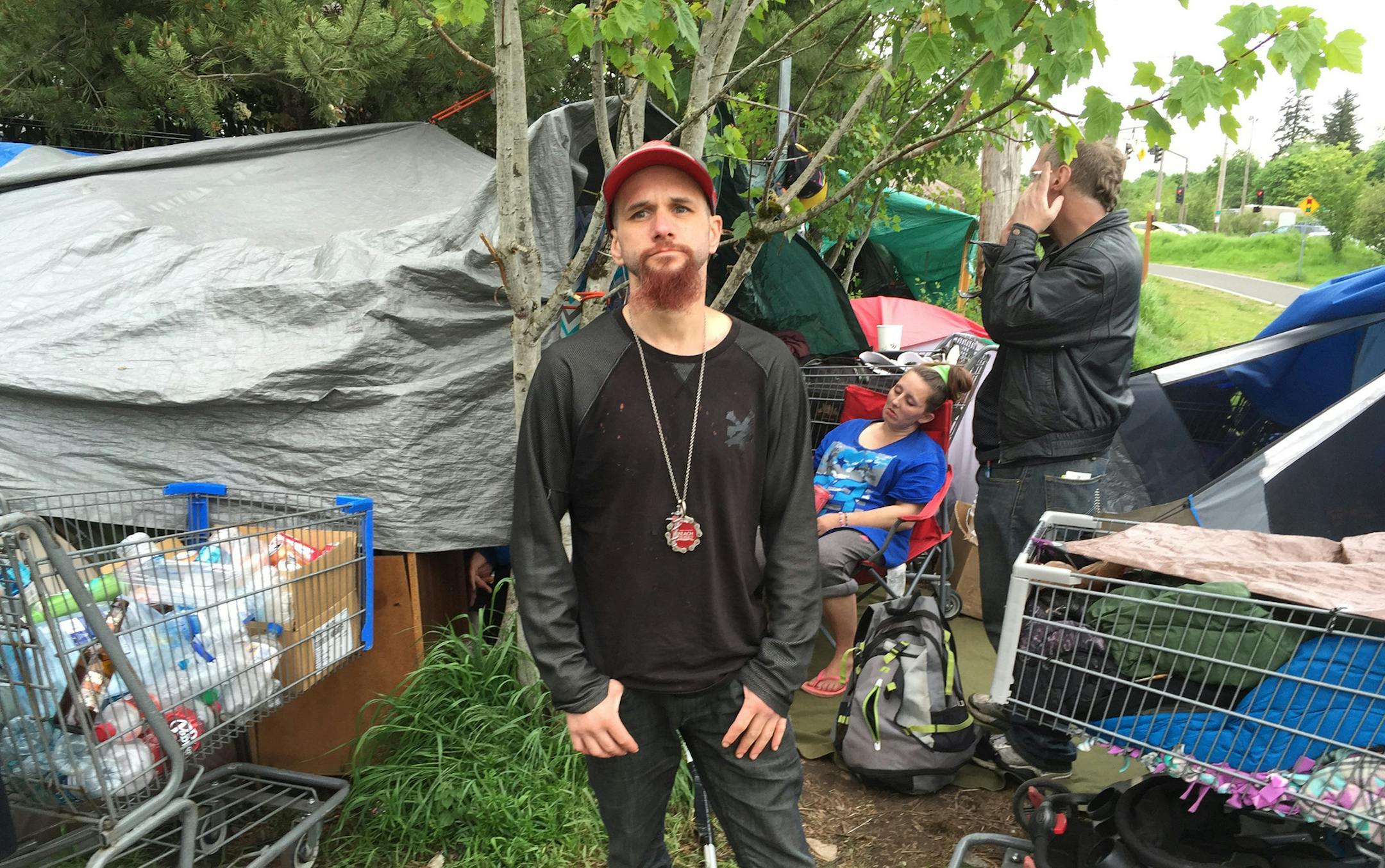
Robert Mendez has been living in this tent camp off the Springwater Corridor, a biking path and greenbelt, in southeast Portland. Under a new "safe sleep policy," tents must be taken down during the day, and this camp has been targeted to be taken down by police. (Hal Bernton/Seattle Times/TNS)
Robert Mendez has been living in this tent camp off a biking path in Portland, Ore., under a new “safe sleep policy.” (The Minnesota Star Tribune)

PORTLAND, Ore. – On a narrow strip of land between the sidewalk and the street, Becky Niemi draped her tarp over two shopping carts. Then she spread out a purple quilt and settled in for the night.

Her snug spot offered protection from sporadic spring showers, and so long as she vacated by 7 a.m., a "safe sleep policy" for the homeless is supposed to keep her from getting harassed by police.

"Before, they would threaten to throw you in jail if you had this up," said Niemi.

Portland Mayor Charlie Hales rolled out the new rules in February as a six-month experiment that explicitly authorizes — from 9 p.m. to 7 a.m. — sleeping bags on the sidewalks and tents or other temporary structures on rights of way and other city spaces.

Among cities grappling with homelessness, Hales' policy represents a controversial move to establish rules for the homeless who end up outside of organized camps and shelters.

The mayor has linked this initiative to other efforts that include police sweeps of large, illegal camps where the rules are not followed, and a push to establish more authorized tent encampments for shelter.

"Most of our homeless population are simply looking for a safe night's sleep, and have suffered needless trauma that comes with uncertainty about where that safe night's sleep can be," said a statement released by the city.

In Portland, some have already rejected the idea.

In April, a half-dozen business and neighborhood groups filed a lawsuit against the city. The plaintiffs said that Hales overstepped his authority when he crafted the rules without City Council approval.

"We're not solving anything," said Paul Conable, a Portland attorney who represents the plaintiffs.

Homeless advocates welcomed the acknowledgment that there should be a way for those without shelter to sleep without fear of being rousted by police. But it's not easy for people to pack up in the morning and stay on the move.

"It doesn't create the type of stability that allows them to rebuild their lives," said Yurij Rudensky at Columbia Legal Services in Seattle.

As development has intensified, the homeless have increasingly moved from downtown to other parts of the city. Their camps proliferate along sidewalks, in parks and near residential areas.

That has tensions on the rise. A spate of fires has hit homeless camps since January, along with high-profile crimes. A homeless man was shot in March by another camper as he slept in a tent blocks from an elementary school.

about the writer

about the writer

Hal Bernton, The Seattle Times

More from No Section

See More
FILE -- A rent deposit slot at an apartment complex in Tucker, Ga., on July 21, 2020. As an eviction crisis has seemed increasingly likely this summer, everyone in the housing market has made the same plea to Washington: Send money — lots of it — that would keep renters in their homes and landlords afloat. (Melissa Golden/The New York Times) ORG XMIT: XNYT58
Melissa Golden/The New York Times

It’s too soon to tell how much the immigration crackdown is to blame.