

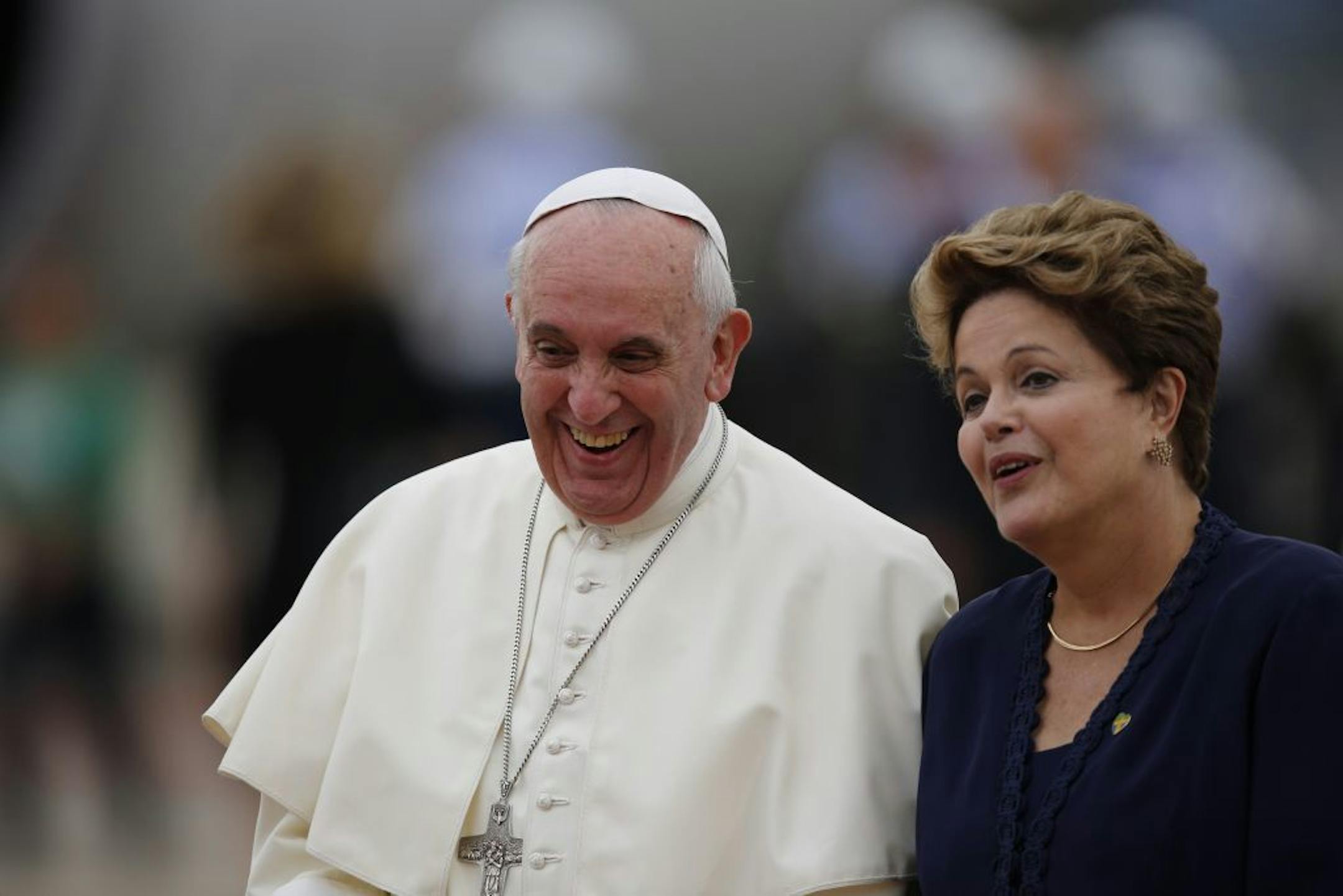
It was startling to hear Pope Francis declare, "Who am I to judge a gay person of goodwill who seeks the Lord?" He is, after all, the supreme pontiff of the world's 1.2 billion Catholics, arbiter of moral issues and symbol of ecclesiastical rectitude.
If he is not prepared to judge, why should anyone?
That is precisely the pope's point. His words did not signal a doctrinal change in the church position that homosexual acts are a sin. Nor did he retreat from the church's position against the ordination of women.
But he sent a clear and important message about "gay" people - the word he used in response to a question about gays in the priesthood - that marks an encouraging change in attitude, perhaps a new approach for the church in dealing with those with a same-sex orientation.
They should not be marginalized by the church, he said - nor, by implication, society at large. Who are we to judge?
This change in tone should not be lost on anyone, nor should the larger message of inclusiveness. That message was brought home by the pope's remarkable visit to Brazil, home of the world's largest Catholic population.
Get out of the sanctuary and talk to the people, the pope admonished members of the clergy. He set the example by visiting a crowded favela, talking to inmates as well as students and young people in small groups.
He waded unafraid in his popemobile into tumultuous crowds eager to see him up close and preached to millions on the beaches of Rio de Janeiro.


